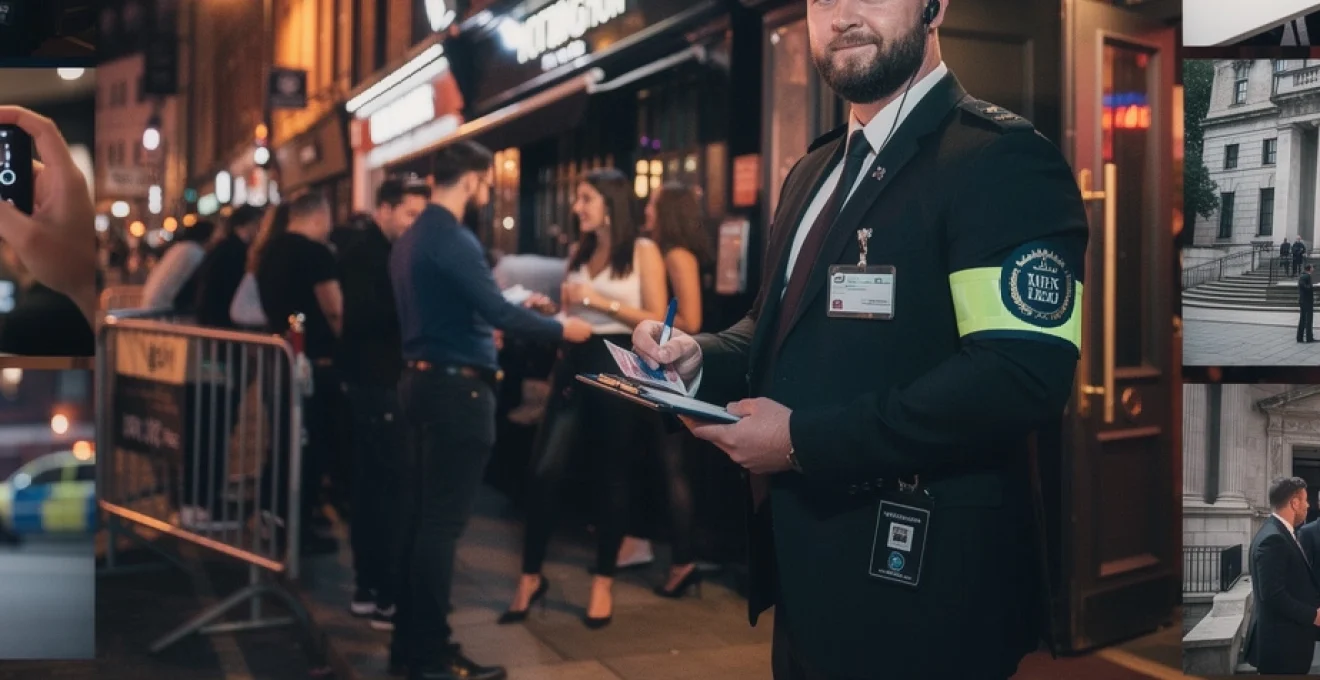
Chris Bailey has become a notable figure within Nottingham’s nightlife security industry, earning recognition through his extensive career as a door supervisor and his connections to various business ventures across the city. His name has surfaced in multiple contexts, from legitimate security operations to controversial incidents that have attracted media attention. Understanding Bailey’s background provides insight into the complex world of Nottingham’s nighttime economy and the individuals who shape its security landscape.
The security industry in Nottingham, like many urban centres, operates within a network of established professionals who have built reputations over decades of service. Bailey represents one such figure whose influence extends beyond traditional bouncer duties into business management and industry leadership roles. His career trajectory illustrates the evolution of door supervision from basic crowd control to sophisticated security operations that require extensive training, licensing, and professional development.
Chris bailey’s professional background in nottingham’s security industry
Career trajectory from Entry-Level security to head door supervisor
Chris Bailey’s journey through Nottingham’s security sector began in the traditional manner, starting as an entry-level door supervisor before advancing to more senior positions. His progression reflects the typical career path within the industry, where experience, reliability, and professional conduct determine advancement opportunities. Over the years, Bailey established himself as a respected figure among venue operators and fellow security professionals, building a network that would later prove valuable in business ventures.
The security industry demands individuals who can balance firm authority with diplomatic customer service skills. Bailey’s reputation suggests he mastered this balance early in his career, earning the trust of venue managers who recognised his ability to maintain order while preserving the welcoming atmosphere essential for successful nightlife establishments. This skill set became the foundation for his eventual transition into management roles within larger security operations.
SIA licensing credentials and specialised training certifications
Professional door supervision in the UK requires adherence to strict licensing standards set by the Security Industry Authority (SIA). Bailey’s long-standing career indicates compliance with these regulatory requirements, including the completion of mandatory training programmes covering conflict resolution, physical intervention techniques, and legal responsibilities. The SIA framework ensures that licensed door supervisors possess the knowledge and skills necessary to operate effectively within legal boundaries.
Beyond basic SIA licensing, many experienced security professionals pursue additional certifications in areas such as crowd dynamics, emergency response, and venue-specific security protocols. Bailey’s career longevity suggests engagement with continuing professional development, staying current with evolving industry standards and best practices that reflect changes in both technology and legal requirements.
Employment history at nottingham’s premier nightlife venues
Nottingham’s nightlife scene encompasses everything from intimate cocktail bars to large-capacity nightclubs, each requiring tailored security approaches. Bailey’s experience spans multiple venue types, providing him with comprehensive knowledge of different operational requirements and customer demographics. This diverse background proved valuable when he later transitioned into roles involving security service provision across multiple establishments.
Working at premier venues requires security personnel to maintain higher standards of professionalism and customer interaction. These establishments attract clientele with elevated expectations regarding service quality, making the role more demanding than traditional pub or club security positions. Bailey’s success in these environments demonstrates his ability to adapt his approach to different venue requirements and customer expectations.
Professional affiliations with security industry associations
The security industry benefits from professional associations that provide networking opportunities, training resources, and advocacy for improved standards. Bailey’s involvement with industry organisations reflects his commitment to professional development and industry advancement. These affiliations often provide access to specialised training programmes, industry updates, and networking events that help security professionals stay connected with evolving best practices.
Professional associations also serve as valuable resources for business development within the security sector. Members gain access to industry directories, referral networks, and collaborative opportunities that can lead to new business relationships and career advancement. Bailey’s network within these organisations likely contributed to his ability to establish and maintain business relationships throughout his career.
High-profile incidents and media coverage surrounding chris bailey
Viral social media confrontations at nottingham city centre venues
The digital age has transformed how security incidents are documented and shared, with smartphone cameras turning routine confrontations into viral content. Bailey’s involvement in recorded altercations has brought unwanted attention to his professional activities, highlighting the challenges modern security professionals face when their
actions are broadcast beyond the immediate venue. Once video clips circulate on platforms such as Facebook, TikTok, and YouTube, a single confrontation can shape the public narrative around a particular bouncer or security firm for years. For figures like Chris Bailey, this means that handling conflict in a measured, proportionate way is not only a legal obligation but also a reputational necessity. Incidents that might once have been considered “part of the job” now become permanent digital records, dissected by viewers who often see only a few seconds of context.
In several widely shared clips allegedly featuring Bailey or door teams linked to his operations, the footage typically shows tense exchanges outside busy Nottingham city centre venues. These range from disputes over entry refusal to the removal of intoxicated or aggressive patrons. While such work is inherently confrontational, the viral framing can make it appear as though bouncers are the primary aggressors, even when they are responding to provocation. This highlights why professional communication, visible de-escalation attempts, and adherence to clear use-of-force guidelines are central to modern door supervision practice.
Legal proceedings and magistrates’ court appearances
When incidents on the door escalate beyond routine conflict management, they can result in complaints to the police and, in some cases, legal proceedings in the magistrates’ court. Over the years, individuals connected to Nottingham’s door supervision scene, including associates of Chris Bailey, have been drawn into formal investigations relating to alleged assaults, public order offences, or licensing breaches. In such cases, the court examines not only the incident itself but also whether the security staff acted within the scope of their training, SIA licence conditions, and the law on reasonable force.
It is important to distinguish between allegations and proven wrongdoing. Security work often involves intervening in volatile situations where witnesses may have conflicting accounts, and where partial video clips do not capture the full sequence of events. Nevertheless, repeated appearances in court, even as a witness or interested party, can place a spotlight on a door supervisor or security company. This can prompt venue owners and local authorities to review their contracts and risk management policies, especially when the same names appear across multiple case files or complaint logs.
Press coverage in nottingham post and regional broadcasting
Regional media outlets such as the Nottingham Post and local broadcasters have periodically reported on incidents linked to Nottingham’s nightlife security sector. Chris Bailey’s name has emerged in news coverage not only in the context of door work but also in relation to business ventures and historic links to other high-profile cases in the region. Press articles have referenced companies associated with Bailey, including firms involved in providing doormen to bars and nightclubs, as well as later ventures in property and commercial security.
For example, historic coverage around major drug investigations in Nottinghamshire referenced testimony about cash collections from a “Christopher Bailey in Bulwell, who ran a business providing doormen”. While Bailey was not the central figure in those prosecutions, such mentions inevitably colour public perception of anyone working in a high-visibility role on city centre doors. Media narratives tend to compress complex histories into simple storylines, which means that any bouncer or security manager with past press mentions must work harder to demonstrate current compliance, professionalism, and separation from previous controversies.
Customer complaint investigations by local licensing authorities
Local licensing authorities, often in partnership with Nottinghamshire Police, play a central role in monitoring how door supervisors conduct themselves. Complaints relating to excessive force, discriminatory entry policies, or unprofessional behaviour can trigger formal investigations, even if no criminal charges are ultimately brought. For a high-profile figure like Chris Bailey, whose operations have spanned multiple venues, this regulatory scrutiny is a constant backdrop to daily work on the doors.
Licensing reviews typically examine CCTV footage, incident logs, staff training records, and witness statements. If patterns of concern emerge, authorities may impose additional licence conditions on the venue, recommend changes to the security provider, or, in extreme cases, review the premises licence itself. In practical terms, this means that any sustained controversy around a particular bouncer or door team can directly affect a venue’s trading conditions and opening hours. As a result, experienced operators invest in clear policies, written incident reports, and regular refresher training to minimise the risk that a late-night dispute turns into a licensing problem the next morning.
Operational methods and door supervision techniques
Behind the headlines and online debates, much of Chris Bailey’s professional identity as a Nottingham bouncer rests on his operational methods and door supervision techniques. Modern door work is far removed from the old stereotype of the “big bloke on the door”; instead, it resembles a structured risk management process that starts before customers even arrive. From staff briefings and radio protocols to search procedures and capacity control, effective door supervision is a system rather than a single person.
At a basic level, door teams must balance three core objectives: keeping people safe, protecting the venue’s licence, and preserving a positive customer experience. This means that even decisions that appear simple—such as refusing entry to an intoxicated individual—are grounded in legal duties under licensing and health and safety law. Experienced supervisors like Bailey are expected to oversee these decisions, ensure consistency across the team, and intervene early when they see situations that might escalate, much like a conductor keeping an orchestra in time before any discord becomes obvious to the audience.
Physical intervention is, in most cases, a last resort. Effective door teams rely heavily on situational awareness, early verbal engagement, and clear boundaries to prevent issues from escalating. Techniques such as “verbal judo”—using calm, controlled language to redirect anger—and positioning staff in visible, non-threatening stances can defuse many confrontations before they turn physical. Where force is necessary, it must be reasonable, proportionate, and documented, reflecting SIA training guidance. In practice, this often means team-based holds designed to move an individual away from danger rather than strikes intended to cause harm, a distinction that can be critical if footage is later reviewed by police or licensing officers.
Another key component of operational practice is communication, both within the team and with external partners. Radios, agreed call-signs, and structured incident reporting allow a head door supervisor to coordinate responses across multiple entrances and floors, particularly in large city centre venues. You can think of it like air traffic control for nightlife: security staff monitor flows of people, spot potential “near misses”, and adjust doors or search points in real time to prevent collisions. For someone in Bailey’s position, this involves not just reacting to problems but anticipating them based on patterns of trade, events calendars, and local crime trends.
Professional door supervisors in Nottingham also increasingly rely on data and technology. Venue CCTV, body-worn cameras, digital incident logs, and ID scanning systems help create an evidential record of what actually happened during an incident. These tools can protect both customers and staff by providing objective footage when allegations are made. However, they also raise questions about privacy, data retention, and proportionality, which is why responsible operators ensure they follow UK GDPR guidance and local police partnership protocols. For a bouncer with a complex professional history like Chris Bailey, embracing transparent, documented processes is one of the most effective ways to counter simplistic or outdated stereotypes about door work.
Impact on nottingham’s nighttime economy and venue operations
The conduct of high-profile door supervisors such as Chris Bailey has a direct bearing on Nottingham’s nighttime economy. Door teams are often the first and last point of contact customers have with a venue; their approach can either encourage repeat business or drive people to choose different parts of the city. A professional, well-managed security presence helps create an environment where patrons feel safe spending time and money, which in turn supports jobs in hospitality, transport, and ancillary services.
Conversely, when bouncers or security firms become associated with heavy-handed tactics or recurring incidents, the reputational damage can spread well beyond a single doorway. Negative social media posts, online reviews, or local news reports can give potential visitors the impression that an area is unsafe or unwelcoming. For operators in Nottingham’s city centre, this is more than a public relations issue: it can influence footfall patterns, average spend per head, and even investors’ willingness to back new venues. Experienced supervisors understand that their behaviour on a busy Saturday night can contribute either to the long-term vibrancy or gradual decline of a nightlife district.
There is also a regulatory dimension to this impact. Nottingham City Council and Nottinghamshire Police run various partnership schemes and licensing initiatives designed to reduce alcohol-related harm and promote responsible venue management. Participation in such schemes often requires venues to demonstrate that their door teams, including any head doormen like Bailey, are appropriately trained, briefed, and monitored. When security staff maintain strong working relationships with police and council officers—sharing intelligence about problem individuals, counterfeit IDs, or emerging crime patterns—it creates a virtuous circle that benefits the entire nighttime economy.
From an operational standpoint, skilled bouncers can significantly reduce the number of serious incidents that occur inside venues. Early intervention at the door, clear communication about dress codes and entry requirements, and firm but fair enforcement of house rules can stop conflicts from ever reaching the dance floor. This reduces the likelihood of assaults, accidents, and ambulance call-outs, which are critical metrics for both insurers and licensing bodies. In this sense, a competent head door supervisor acts as a form of preventative policing, delivering tangible economic value by keeping venues open and compliant.
However, the same visibility that allows a figure like Chris Bailey to influence Nottingham’s nightlife positively also means that missteps are magnified. When door staff with prominent reputations are linked—fairly or unfairly—to controversial incidents or historic criminal investigations, it can spark broader public debate about who controls access to city centre spaces at night. Are these gatekeepers perceived as community guardians, or as private enforcers with opaque backgrounds? The answer to that question shapes not only individual careers but the wider trust that residents and visitors place in the city’s nightlife offer.
Current professional status and future career prospects
As with many long-serving figures in the security industry, Chris Bailey’s current professional status reflects a blend of past experience, evolving regulation, and changing market conditions. Public records show that he has been involved in a range of companies over the years, from door supervision and security firms to property and commercial ventures, some of which are now dissolved or in liquidation. This pattern is not unusual in sectors where contracts are competitive, margins are tight, and regulatory pressure is intense, but it does mean that any future role he takes on will be examined through the lens of his business history as well as his personal reputation.
Looking ahead, demand for experienced security professionals in Nottingham remains strong. The city’s nightlife continues to expand, with new bars, late-night venues, and events requiring compliant, SIA-licensed door staff. At the same time, the bar for acceptable behaviour has been raised. Door supervisors must navigate stricter social media policies, more robust complaints procedures, and a licensing environment that places greater emphasis on safeguarding and vulnerability awareness. For someone with Bailey’s background, the ability to demonstrate continuous professional development, strong governance, and transparent operational standards will be central to sustaining any ongoing career in frontline security or management.
There is also scope for experienced bouncers to transition into consultancy, training, or advisory roles. Individuals who have spent years managing complex city centre doors often possess valuable insights into crowd management, conflict de-escalation, and partnership working with police and local authorities. If leveraged constructively, this knowledge can be channelled into delivering accredited training programmes, advising venues on security policy, or supporting community safety initiatives. The key question is whether past associations and controversies can be balanced by a demonstrable commitment to current best practice and ethical standards.
Ultimately, the future prospects of any Nottingham bouncer with a high public profile, including Chris Bailey, will depend on how they adapt to an industry that is still evolving. We now live in an era where every shift has the potential to be recorded, shared, and scrutinised, and where licensing bodies expect a professional standard closer to regulated professions than casual security work. Those who recognise this shift, embrace transparency, and align themselves with the highest standards of training and accountability are the ones most likely to maintain or rebuild trust with venues, authorities, and the public. For observers trying to understand “who is Chris Bailey, Nottingham bouncer?”, the answer lies not only in his past but in how he and the wider industry respond to the demands of a more visible, more regulated nighttime economy.