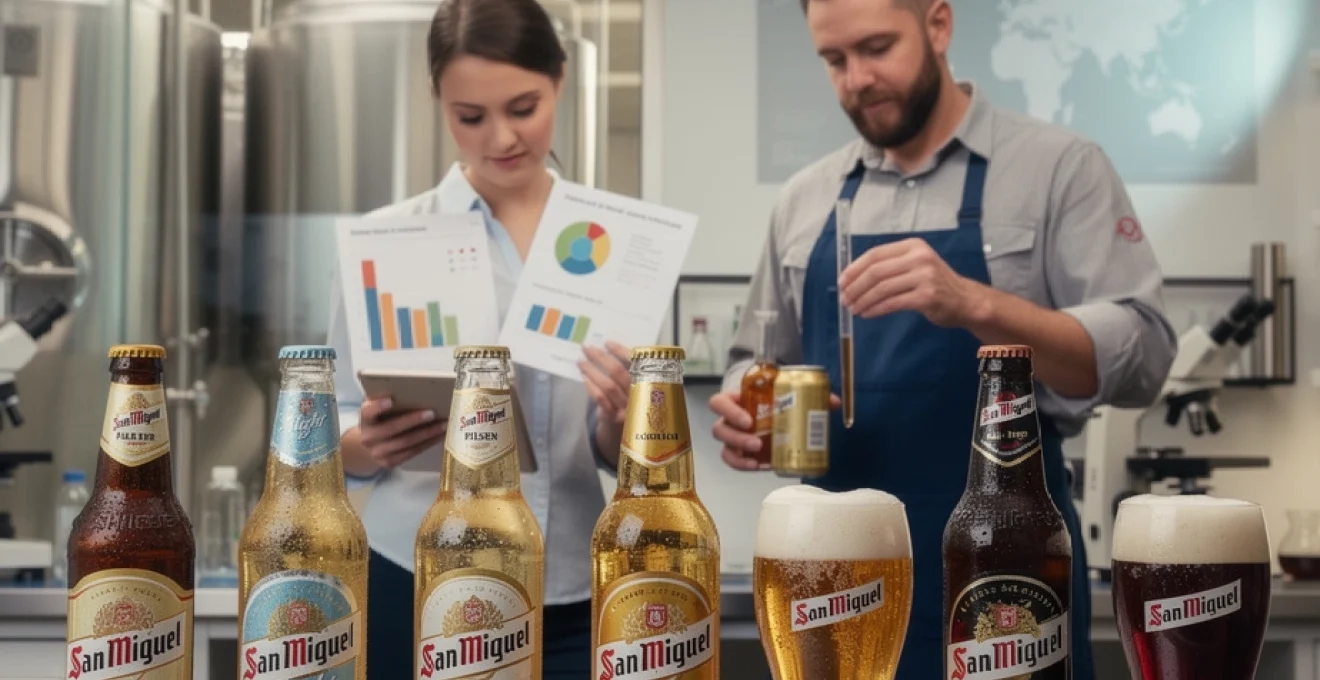
San Miguel beer stands as one of Asia’s most recognisable brewery brands, with its distinctive golden appearance and crisp taste capturing the attention of beer enthusiasts worldwide. The alcohol content of San Miguel beer varies significantly across its diverse product portfolio, ranging from light variants to premium offerings. Understanding the specific alcohol by volume (ABV) percentages becomes crucial for consumers seeking to make informed choices about their beverage preferences. The brand’s rich heritage, dating back to 1890 when it was first brewed in Manila’s San Miguel district, has evolved into a comprehensive range of products each with distinct alcohol strengths tailored to different market segments and consumer preferences.
San miguel beer alcohol by volume specifications across global markets
The San Miguel brand encompasses multiple beer variants, each crafted with specific alcohol content to meet diverse consumer preferences and regulatory requirements across international markets. The flagship San Miguel Especial maintains a consistent 5.0% ABV in most European markets, including Spain and the United Kingdom, where it has established a strong presence since its introduction in 1946. This pilsner-style lager delivers the perfect balance between refreshment and alcohol content, making it suitable for various social occasions and food pairings.
San miguel pale pilsen 5.0% ABV standard formula
San Miguel Pale Pilsen represents the brewery’s core offering, maintaining a steady 5.0% alcohol by volume across most international markets. This golden-coloured lager exhibits the classic characteristics of a premium pilsner, featuring a generous white creamy head and sparkling appearance that has become synonymous with the brand. The 5.0% ABV strikes an optimal balance, providing sufficient alcohol strength to deliver the full-bodied flavour profile whilst remaining accessible to a broad consumer base. The brewing process for this variant utilises carefully selected malted barley and precise fermentation control to achieve consistent alcohol levels.
San miguel light 3.5% ABV reduced alcohol variant
The San Miguel Light variant caters to consumers seeking a reduced alcohol option without compromising on taste quality. At 3.5% ABV, this lighter version maintains the distinctive San Miguel flavour characteristics whilst offering approximately 30% less alcohol content than the standard formula. The brewing technique for this variant involves modified fermentation processes and careful ingredient selection to preserve the beer’s refreshing qualities whilst achieving the lower alcohol percentage. This option proves particularly popular in markets where consumers prefer moderate alcohol consumption or during extended social gatherings.
San miguel premium all malt 5.4% ABV premium range
San Miguel’s premium offerings reach 5.4% ABV, representing the higher end of the brand’s alcohol content spectrum. This slightly elevated alcohol percentage enhances the beer’s complexity and depth, delivering a more robust flavour profile that appeals to discerning beer enthusiasts. The Premium All Malt variant utilises 100% malted ingredients, eschewing adjuncts commonly found in standard lagers to create a more authentic and flavourful drinking experience. The additional 0.4% alcohol content contributes to the beer’s enhanced body and longer finish, making it particularly suitable for pairing with rich foods and sophisticated dining experiences.
San miguel cerveza negra 5.4% ABV dark beer specifications
San Miguel Cerveza Negra, the brand’s dark beer offering, also maintains a 5.4% ABV, matching the premium lager variants in alcohol strength. This darker variant achieves its distinctive colour and flavour through the use of roasted malts and extended brewing processes, whilst maintaining the same alcohol content as other premium offerings. The 5.4% ABV complements the richer, more complex flavour profile inherent in dark beers, providing sufficient alcohol presence to support the enhanced malt characteristics without overwhelming the palate. The consistent alcohol content across premium variants demonstrates San Miguel’s commitment to maintaining quality standards across different beer styles.
Regional ABV variations between philippines and international markets
Alcohol content variations exist between San Miguel products sold in the Philippines and those distributed internationally, primarily due to local preferences and regulatory requirements. In the Philippine market, San Miguel Pale Pilsen typically maintains a 5.0% ABV, aligning with international standards, whilst some regional variants may exhibit slight variations. International markets, particularly in Europe, often feature standardised alcohol contents to comply with local regulations and taxation
requirements. For example, San Miguel Especial in some export markets is fixed at 5.0% ABV, whereas domestic Spanish versions and certain premium lines may reach 5.4% ABV. Light and flavoured variants, such as San Miguel Light or San Miguel Radler, typically range from about 3.2% to 3.5% ABV, appealing to consumers who prefer a lower-strength option. These regional ABV variations allow the brand to align with local tastes, cultural drinking habits, and specific tax brackets that are often tied directly to alcohol percentage. As a result, when you ask, “What percentage is San Miguel beer?”, the precise answer can depend on which country’s shelves you are buying from and which expression of the brand you choose.
Brewing process impact on san miguel beer alcohol content
The brewing process of San Miguel beer plays a decisive role in determining its final alcohol content and overall flavour profile. While recipes and ingredient choices shape the character of each variant, it is the technical control of fermentation and wort composition that ultimately fixes the ABV. From the moment the malt is mashed to the final stages of conditioning, brewers monitor temperature, sugar levels, and yeast performance to keep each San Miguel product within tight alcohol tolerances. Understanding how these factors interact helps explain why San Miguel Pale Pilsen reliably lands at around 5.0% ABV, while San Miguel Light sits closer to 3.5% ABV without losing its core identity. In many ways, managing alcohol content is like steering a ship: subtle adjustments along the way ensure you arrive exactly at the desired destination.
Fermentation temperature control and yeast strain selection
Fermentation temperature is one of the primary levers San Miguel’s brewers use to control alcohol levels and maintain consistency across geographies. Lager yeasts typically operate best at cooler temperatures than ale yeasts, and San Miguel’s pilsner-style beers are no exception, fermenting under carefully regulated conditions to achieve clean, crisp flavours. Slight shifts in temperature can influence how quickly yeast converts sugars into alcohol, which in turn affects the final ABV and the balance between esters, phenols, and other flavour compounds. To keep San Miguel Especial at its target 5.0% ABV, brewers use specific, proprietary yeast strains selected for predictable attenuation — the degree to which they consume fermentable sugars. These strains are cultivated and maintained under strict lab conditions, ensuring that whether the beer is brewed in Manila, Madrid, or Milton Keynes, the alcohol percentage stays within a narrow, predefined range.
Yeast strain selection also allows San Miguel to differentiate between its standard and light variants while still retaining the brand’s signature profile. For lighter beers such as San Miguel Light or lower-ABV products sold in markets with stricter alcohol regulations, brewers may employ yeast strains that naturally ferment more slowly or less completely. This biological “speed governor” helps limit alcohol production even when other brewing parameters are similar to the flagship recipes. Temperature control then fine-tunes the process, preventing runaway fermentation that could push the beer beyond legal or brand-specified ABV thresholds. In effect, yeast choice and temperature act together like the accelerator and brakes of a car, giving San Miguel precise control over how far the fermentation journey goes in terms of alcohol content.
Malt extract density and sugar conversion efficiency
Another crucial factor in defining what percentage San Miguel beer reaches is the original wort density, often expressed as original gravity. This measure reflects how much dissolved sugar is present in the liquid extracted from malted barley and other grains before fermentation begins. The more fermentable sugars in the wort, the higher the potential alcohol content once yeast has done its work. For core products like San Miguel Pale Pilsen, the recipe is formulated to achieve a specific gravity that, when fermented to a known degree, yields the target 5.0% ABV. Premium versions such as San Miguel Premium All Malt or Cerveza Negra start with a slightly denser wort, enabling them to reach around 5.4% ABV and deliver a fuller body.
Conversion efficiency during mashing is equally important, as it determines how much of the grain’s starch is turned into fermentable sugar. San Miguel’s brewers manage mash temperatures, pH levels, and enzyme activity to optimise this conversion while aligning with the desired ABV. For light variants aiming for 3.5% ABV or less, the mash schedule may be adjusted so that a higher proportion of non-fermentable dextrins remains in the wort. These sugars contribute to mouthfeel and perceived sweetness without being converted into alcohol, helping the beer taste fuller than its lower ABV might suggest. Think of it as designing a “light” beer that still feels like a complete meal, rather than a watered-down version of the original.
Primary and secondary fermentation duration effects
The length of primary and secondary fermentation stages also shapes the final alcohol percentage in San Miguel beers. During primary fermentation, yeast rapidly converts the bulk of fermentable sugars into alcohol and carbon dioxide, and this period is carefully timed to hit the target attenuation level. Extending primary fermentation can push ABV slightly higher, while shortening it may leave residual sugars unfermented, resulting in a lower-strength beer with more sweetness. San Miguel’s production teams, therefore, rely on frequent gravity measurements to decide when to cool or transfer the beer, effectively “locking in” the desired alcohol content.
Secondary fermentation and conditioning, whether in tanks or kegs, typically focus more on flavour refinement, carbonation, and clarity than on significant changes in ABV. However, small amounts of fermentable sugar may remain, and if yeast is still active, minor shifts in alcohol percentage can occur. To prevent unintended increases in strength, San Miguel closely monitors temperature and time during this stage, especially for export products that must comply with tight labelling laws. By standardising these durations across multiple breweries, the company ensures that a 5.0% San Miguel Especial brewed for the UK will closely match the same label brewed for other European markets. This time management is akin to letting bread proof just long enough to develop flavour without over-expanding and collapsing.
Quality control measures for consistent ABV levels
Maintaining consistent alcohol content across millions of hectolitres of beer requires rigorous quality control protocols. San Miguel employs laboratory testing at several points in the brewing cycle, including pre-fermentation wort analysis, in-process fermentation checks, and final product verification. Using tools such as densitometers, gas chromatography, and, in some facilities, automated inline sensors, technicians verify that the beer’s ABV falls within a narrow tolerance of the labelled value, typically within ±0.1–0.2%. If deviations appear, batches can be segregated, adjusted where permissible, or downgraded to alternative uses, ensuring that consumers receive an accurate indication of what percentage San Miguel beer they are consuming.
Quality systems such as ISO certifications, Hazard Analysis and Critical Control Points (HACCP), and periodic third-party audits further support this consistency. These frameworks require documented procedures for monitoring ABV, handling non-conforming product, and calibrating instruments. For San Miguel, this means that every facility brewing its flagship or licensed products must follow harmonised standards for testing and record-keeping. The result is that you can rely on a San Miguel Light labelled at 3.5% ABV or a Cerveza Negra at 5.4% ABV to be very close to those figures in practice, regardless of where you purchase them. In a marketplace where consumers are more mindful of responsible drinking limits, this accuracy is not just a legal requirement but a key component of brand trust.
San miguel corporation product portfolio alcohol strength analysis
San Miguel Corporation oversees a broad beer portfolio that spans mainstream lagers, premium specialties, light beers, and flavoured or mixed beverages, each with distinct alcohol strengths. At the centre of this range sits San Miguel Pale Pilsen and San Miguel Especial, both typically at 5.0% ABV, forming the “benchmark” strength for many consumers in Asia and Europe. Above this core level are premium products such as San Miguel Premium All Malt and San Miguel Cerveza Negra, often reaching around 5.4% ABV to deliver greater body and complexity. Below the standard tier sit options like San Miguel Light at about 3.5% ABV and citrus-based mixes such as San Miguel Radler at around 3.2% ABV, which appeal to drinkers seeking moderation or sessionability.
From a portfolio management perspective, these different alcohol percentages allow San Miguel to cover multiple consumption occasions and price points. Higher-ABV offerings can compete in the premium segment, where consumers often look for richer flavours and are willing to pay more per litre, while low-ABV alternatives attract those monitoring their intake or following local regulations that favour lighter beers. In many markets, beer taxation increases with alcohol strength, so keeping flagship products at or near 5.0% ABV helps maintain competitive shelf prices. Meanwhile, line extensions such as radlers and light beers give San Miguel tools to respond to global trends toward health-conscious and responsible drinking. If you are comparing which San Miguel beer suits a specific event, thinking in terms of ABV “tiers” can be a practical way to shortlist your options.
The portfolio’s ABV spread also supports export and licensing strategies. In some countries, certain San Miguel variants are brewed under licence by local partners, who must reproduce not just the flavour but also the declared alcohol content with high fidelity. For example, a San Miguel Premium Lager in pint cans at 5% ABV in the UK must deliver the same experience as one brewed in continental Europe, helping the brand maintain a consistent identity worldwide. In the Philippines, flagship pale lagers at 5.0% ABV coexist with strong beers and specialty labels that may exceed these levels, tailored for markets where higher-strength beer has a dedicated following. This layered approach to alcohol content ensures that San Miguel can answer a wide variety of consumer questions, from “Which beer is lightest?” to “Which has the most robust kick?”.
Regulatory compliance and labelling standards for san miguel beer ABV
Alcohol labelling regulations vary significantly across jurisdictions, and San Miguel must align each product’s declared ABV with local legal requirements in every market it serves. In the European Union and the United Kingdom, for instance, beer labels must typically display alcohol by volume to one decimal place, and the actual alcohol content must fall within a permitted tolerance of the stated value, often around ±0.5% ABV for beer. In the Philippines and many Asian countries, similar rules govern how breweries describe strength levels, though specific tolerances and labelling formats may differ. This means that when San Miguel labels a product as 5.0% ABV, internal controls are configured to ensure real-world values stay very close to that mark. Failure to meet these standards can result in product recalls, fines, or reputational damage.
Beyond basic ABV disclosure, some regions also enforce additional statements related to responsible drinking and health warnings. Markets such as the United States require government warnings about drinking during pregnancy and operating machinery, while European labels increasingly direct consumers to resources promoting moderate consumption. San Miguel’s packaging often incorporates these messages alongside the alcohol percentage, helping drinkers gauge how a 3.5% San Miguel Light or a 5.4% premium variant fits within recommended daily or weekly limits. For venue operators and retailers, accurate ABV labelling is also critical when calculating licensing obligations, taxation rates, and serving sizes. If you run a bar or restaurant, understanding these percentages can help you design menus that clearly indicate which San Miguel beers are lighter options for guests who prefer a more moderate evening.
Another dimension of regulatory compliance concerns marketing claims around “light”, “low alcohol”, or “non-alcoholic” descriptors. Each region sets its own thresholds for when such terms can be used, often tying them to specific maximum percentages like 3.5% ABV or lower. San Miguel must, therefore, tailor naming conventions — such as “Light” or “Radler” — and related promotional materials to reflect local definitions. For example, what qualifies as a low-alcohol beer in one country might be categorised simply as “standard” in another, even at identical ABV levels. By carefully aligning product names and descriptions with legal standards, San Miguel avoids misleading consumers about what percentage of alcohol each beer contains and how it fits into national health guidelines. For you as a consumer, this means that checking both the label and the product name can give you a clearer picture of the beer’s true strength.
Comparative analysis: san miguel vs major asian beer brands alcohol content
When comparing what percentage San Miguel beer is to other major Asian beer brands, a clear pattern emerges: many mainstream lagers cluster around the 4.5%–5.0% ABV range. Popular competitors such as Tiger Beer from Singapore, Tsingtao from China, and Asahi Super Dry from Japan all typically sit close to 5% ABV for their flagship products. In this context, San Miguel Pale Pilsen and San Miguel Especial at 5.0% ABV align squarely with regional norms, offering comparable strength for everyday drinking occasions. Premium extensions across these brands often push the envelope slightly higher, reaching 5.3%–6.0% ABV to provide a richer, more intense experience. As a result, choosing between San Miguel and another leading Asian lager often comes down to flavour preference and brand loyalty rather than large differences in alcohol content.
Where San Miguel differentiates itself more clearly is in the breadth of its ABV spectrum across light, premium, and speciality products. San Miguel Light at around 3.5% ABV offers a lower-alcohol alternative that is directly comparable to “lite” versions from competitors, such as some variants of Asahi or local light lagers tailored for calorie-conscious markets. At the same time, the brand’s premium 5.4% ABV offerings, like San Miguel Premium All Malt and Cerveza Negra, position it strongly alongside other regional strong lagers and dark beers. Mixed beverages such as San Miguel Radler at approximately 3.2% ABV mirror a global move toward sessionable, fruit-infused beers, a trend also visible in Japanese and Korean breweries. For drinkers evaluating how strong their beer should be, this means San Miguel can compete at nearly every step of the alcohol-strength ladder that major Asian players occupy.
From a responsible drinking perspective, understanding these comparative ABV levels helps you pace yourself when sampling beers from different Asian brands in a single occasion. Since many flagship lagers hover around the 5% mark, alternating between San Miguel and its regional rivals will not usually result in dramatic shifts in alcohol intake per serving. However, stepping up to premium variants — whether a 5.4% San Miguel or a similar-strength strong lager from another brand — will incrementally increase your alcohol consumption, especially over multiple pints. On the other hand, integrating light or radler-style options into your choices can help moderate your overall intake while still letting you enjoy a range of flavours. In essence, by knowing what percentage San Miguel beer is relative to other Asian favourites, you can make more informed, balanced decisions tailored to your taste, tolerance, and the occasion at hand.