# What are car kits? complete beginner’s guide
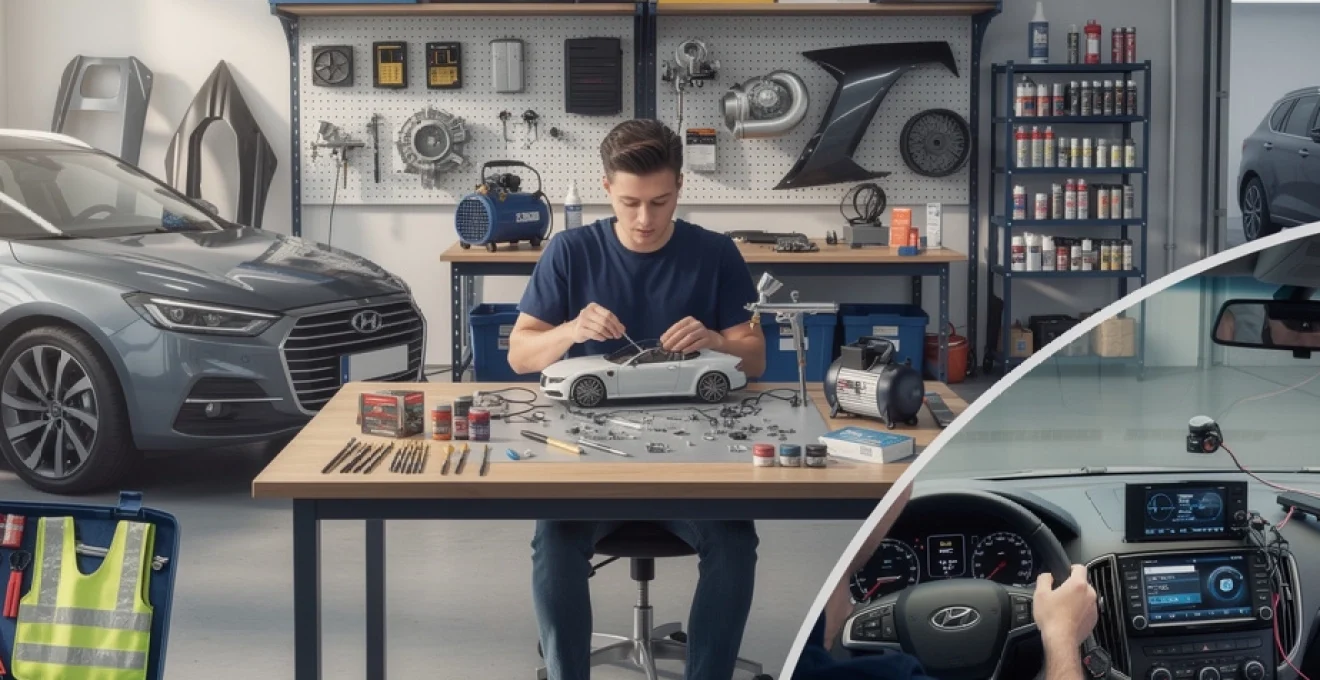
Car kits represent a surprisingly diverse category that spans from miniature hobby projects to essential automotive safety equipment. Whether you’re considering building a detailed scale model of a classic Ferrari, installing a hands-free Bluetooth system in your vehicle, or assembling an emergency roadside assistance kit, understanding the various types of car kits available can help you make informed purchasing decisions. The term “car kit” has evolved significantly over recent decades, encompassing everything from traditional plastic model building sets to modern vehicle connectivity solutions and safety equipment that every motorist should carry.
The global market for automotive aftermarket products, which includes various types of car kits, was valued at approximately £283 billion in 2023 and continues to grow as vehicle ownership increases worldwide. From hobbyists seeking relaxation through scale model construction to drivers prioritising safety and connectivity, car kits serve remarkably different purposes whilst sharing a common thread: they all enhance the automotive experience in meaningful ways. Understanding which type of car kit suits your specific needs requires examining the distinct categories, their components, and their intended applications.
Defining car kits: from scale models to bluetooth Hands-Free systems
The term “car kit” encompasses several distinct product categories, each serving entirely different purposes within the automotive ecosystem. Scale model car kits appeal to hobbyists and collectors who appreciate the craftsmanship involved in creating miniature replicas of iconic vehicles. These kits typically include precisely moulded plastic components that replicate everything from the engine block to the smallest dashboard details. Meanwhile, automotive technology car kits refer to aftermarket electronic systems designed to enhance vehicle functionality, particularly in areas of communication, navigation, and entertainment. Finally, emergency and maintenance car kits contain essential tools and supplies that every responsible motorist should keep in their vehicle for unforeseen situations.
Each category addresses fundamentally different consumer needs. A scale model enthusiast might spend dozens of hours painstakingly assembling and painting a 1:24 scale replica of a 1967 Shelby Mustang GT500, viewing the process as a form of creative expression and stress relief. In contrast, a professional driver installing a Bluetooth hands-free car kit prioritises legal compliance and safety, seeking a practical solution to stay connected whilst keeping both hands on the wheel. Understanding these distinctions helps consumers navigate what can initially seem like a confusing marketplace where the same terminology describes vastly different products.
Plastic scale model car kits by revell, tamiya and airfix
Scale model car kits from manufacturers like Revell, Tamiya, and Airfix represent the traditional heart of the car kit market. These injection-moulded plastic kits have captivated enthusiasts since the 1950s, offering varying levels of complexity from simple snap-together models suitable for children to highly detailed replicas requiring advanced modelling skills. Revell of Germany, for instance, produces kits ranging from skill level 1 (beginner) to skill level 5 (expert), with piece counts spanning from fewer than 20 components to well over 200 individual parts. The most sophisticated kits feature opening doors, detailed engine compartments with separate ignition leads, articulated suspension systems, and photo-etched metal components for ultimate realism.
Tamiya, the Japanese manufacturer renowned for exceptional quality, has built a reputation around precision engineering and superior fit of components. Their 1:24 scale automotive kits typically retail between £25 and £65, with limited edition releases commanding significantly higher prices. Airfix, Britain’s oldest plastic model company founded in 1939, offers a heritage range featuring classic British vehicles alongside contemporary supercars. What distinguishes modern scale model kits from their predecessors is the level of detail achievable through computer-aided design and advanced moulding techniques. Contemporary kits can replicate individual Phillips-head screws, detailed tread patterns on tyres, and even the texture of leather upholstery at miniature scale.
Automotive emergency roadside assistance kits
Emergency roadside assistance kits serve an entirely different but equally important function within the car kit spectrum. According to the RAC, approximately 7.9 million vehicle breakdowns occur annually in the UK, with many situations being resolvable with basic equipment and knowledge. A comprehensive emergency car kit typically contains jump leads, a warning triangle, a high-visibility vest
, basic hand tools, a tow rope or recovery strap, and a compact tyre inflator or can of tyre sealant. More advanced emergency roadside assistance kits might also include a reflective blanket, a litre of screenwash, a compact fire extinguisher rated for automotive use, and heavy-duty work gloves. In winter, UK motoring organisations recommend supplementing your car emergency kit with de-icer, an ice scraper, extra warm clothing, bottled water, and non-perishable snacks in case you are stranded for an extended period.
When evaluating pre-assembled emergency car kits versus building your own, consider both the quality of components and how closely the contents match your driving patterns. Generic kits advertised as “200-piece emergency sets” often include many low-value items such as adhesive plasters and cable ties whilst omitting higher-quality jump leads or an adequately bright torch. For most UK drivers, especially those commuting on motorways or travelling with family, assembling a custom roadside assistance kit using reputable brands for critical items like jumper cables and tyre inflators offers better long-term value and reliability than the cheapest pre-packaged solution.
Bluetooth hands-free car kits and FM transmitters
Bluetooth hands-free car kits occupy a distinct niche within the broader car kit landscape, bridging older vehicles and modern smartphone connectivity. Before factory-fitted infotainment systems became common from the mid-2010s onwards, aftermarket Bluetooth kits such as visor-mounted speakers, wired microphone systems, and plug-in FM transmitters provided a practical route to legal, hands-free calling. In the UK, using a handheld mobile phone whilst driving has been illegal since 2003, with penalties updated in 2017 to six penalty points and a £200 fine, making a reliable Bluetooth hands-free kit more than a convenience; it is a compliance tool.
Contemporary Bluetooth car kits fall into three main categories: integrated systems wired into the vehicle’s audio loom, plug-in devices that connect via the 12V socket or USB and broadcast over FM, and simple clip-on speakerphones that operate independently of the radio. Integrated systems generally provide the best audio quality and automatic muting of the car stereo but require professional installation in many vehicles. FM transmitter car kits offer a plug-and-play route to stream music and calls from your phone through the existing stereo but can suffer from interference in congested urban radio bands. Standalone visor-mounted kits are the easiest to install but provide sound only through their built-in speaker, which may be less immersive for music playback.
DIY vehicle conversion kits: electric, turbo and body modifications
At the more involved end of the spectrum are DIY vehicle conversion kits, which fundamentally alter a car’s performance, powertrain, or appearance. Electric car conversion kits, for example, replace an internal combustion engine with an electric motor, controller, and battery pack, allowing enthusiasts to transform classic vehicles into zero-emission commuters. While still a niche segment, the UK has seen increased interest in EV conversion kits as low- and zero-emission zones expand in major cities. These kits demand significant mechanical and electrical competence and are typically installed by specialist workshops, even when marketed as “DIY-capable”.
Turbocharger and supercharger kits represent another popular category of performance-oriented car kit. These packages usually include a forced induction unit, intercooler, upgraded injectors, revised engine management software, and all necessary pipework and brackets. Unlike cosmetic body kits, which mainly alter a car’s visual styling through bumpers, side skirts, and spoilers, turbo and supercharger kits directly affect drivetrain load, emissions, and insurance classification. In the UK, any major modification, including engine tuning kits, should be declared to your insurer and may require updating the vehicle’s V5C and, in some cases, notifying the DVLA if power output changes substantially.
First aid and safety equipment kits for vehicles
First aid car kits overlap with emergency roadside assistance sets but focus specifically on medical response rather than mechanical issues. Many European countries legally require carrying a first aid kit, high-visibility vests, and warning triangles; while this is not currently mandatory for private motorists in the UK, it is strongly recommended by organisations such as the Red Cross and St John Ambulance. A typical vehicle first aid kit includes sterile dressings, bandages, adhesive plasters, antiseptic wipes, adhesive tape, disposable gloves, and a basic first aid guide. Higher-specification kits might add burn dressings, eye wash, trauma shears, and a resuscitation face shield.
Safety equipment kits for vehicles extend beyond medical supplies and often include items such as seatbelt cutters, glass-breaking hammers, and compact fire extinguishers rated for petrol and electrical fires. When you think about it, a well-prepared safety kit acts much like an insurance policy you hope never to use. Quality is crucial: a cheaply made seatbelt cutter that fails under stress or an extinguisher without proper certification could be dangerous. For most drivers, pairing a compact BS 8599-2 compliant first aid kit with a reputable 1 kg dry powder extinguisher and an emergency escape tool offers a balanced, space-efficient safety package.
Scale model car kit components and assembly techniques
For many enthusiasts, the phrase “car kit” first conjures the image of a boxed plastic model complete with artwork of a gleaming supercar or period rally machine. Understanding the core components and basic assembly techniques of scale model car kits will help beginners choose the right starter set and avoid common pitfalls. Much like flat-pack furniture, the quality of the finished model depends as much on preparation and method as on the parts supplied in the box. Fortunately, modern kits from brands like Tamiya, Revell, and Airfix are engineered to be as user-friendly as possible while still offering impressive detail.
Injection-moulded plastic sprues and part identification
The backbone of almost all scale model car kits is the injection-moulded plastic sprue, sometimes called the parts tree or runner. During manufacture, molten polystyrene is forced into precision metal moulds, creating frames that hold individual components connected by thin gates of plastic. When you open a new kit, you will typically find several sprues grouped by function—one for the chassis and suspension, one for the interior, another for the body details, and so on. Each sprue is marked with a letter, and each part carries a number, allowing you to locate it quickly using the instruction manual diagrams.
New builders are often tempted to remove every part from the sprues at once, but this usually leads to confusion and misplaced components. It is far more effective to cut only the parts required for the current assembly step and leave the rest attached until needed. Side cutters designed for plastic modelling provide a clean cut close to the part, reducing the need for heavy sanding. Any remaining nub of plastic at the attachment point can be carefully trimmed with a hobby knife and smoothed using fine sanding sticks. Treat each sprue as a labelled parts bin, and you will find following the assembly sequence much less daunting.
Polystyrene cement bonding and cyanoacrylate adhesives
Most plastic model car kits are moulded from polystyrene, a material that responds well to solvent-based cements. Unlike household glues, polystyrene cement works by slightly melting the plastic surfaces it contacts, allowing them to fuse together into a strong, seamless joint. Thin liquid cements, such as Tamiya Extra Thin, are particularly popular because they flow into gaps by capillary action; you simply hold the parts together and touch the brush to the seam. After a few seconds, the joint begins to set, and within several hours it hardens to full strength. For beginners, this behaviour can feel almost magical, but it also means you should test-fit parts carefully before committing to glue.
Cyanoacrylate adhesives—commonly known as superglue—play a complementary role in model car assembly. They do not melt plastic but instead cure rapidly to create a rigid bond between dissimilar materials such as metal, resin, or clear parts. Superglue is useful for attaching photo-etched details, fixing tiny pieces that need an instant grab, or filling small gaps with gel formulations. However, it can fog clear parts and leave visible residue if applied excessively. Think of polystyrene cement as your main structural adhesive for plastic-to-plastic joints and cyanoacrylate as a specialist tool for tricky situations where traditional cement is less effective.
Decal application methods: water-slide transfers and dry rub-ons
Decals transform a plain painted body shell into a convincing miniature replica with number plates, sponsor logos, dashboard instruments, and tyre sidewall markings. The most common type found in scale model car kits is the water-slide decal, a printed design on a thin film that releases from its backing paper when soaked. To apply a water-slide decal, you cut it from the sheet, soak it briefly in clean water, then slide it gently into position on the model’s surface. Setting solutions such as Micro Set and Micro Sol soften the decal film, helping it conform to complex curves and panel lines for a painted-on appearance.
Dry rub-on transfers are less common in mainstream automotive kits but sometimes appear in special edition releases and aftermarket detail sets. These function like the transfers used in graphic design: you place the sheet over the model surface and burnish the design through with a blunt tool, transferring the pigment directly. While rub-on decals avoid the risk of visible carrier film, they offer less opportunity for repositioning once applied and can be unforgiving for beginners. Regardless of the type, the key to a successful decal application is surface preparation: a smooth, glossy clear coat allows decals to sit flat without silvering, whereas a rough or matte finish traps microscopic air pockets that dull the effect.
Airbrushing techniques with tamiya acrylics and enamel paints
Although many entry-level car kits can be built with simple brush painting or even using the bare plastic colours, airbrushing opens the door to more realistic finishes and subtle weathering. Tamiya acrylic paints are a popular choice for airbrush work due to their fine pigment and predictable thinning behaviour. When thinned with the manufacturer’s dedicated thinner or an appropriate alcohol-based alternative, they spray smoothly at low pressures, allowing for even coats on body shells and small components. Enamel paints, while slower to dry, offer excellent self-levelling properties and a hard-wearing finish, making them well-suited for metallic body colours and high-gloss surfaces when used with proper ventilation.
For beginners, mastering the airbrush is best approached incrementally. Practise on scrap plastic or old kit parts to learn how changes in air pressure, paint viscosity, and distance from the surface affect the spray pattern. Just as you would not attempt a complex three-stage pearl finish on your first full-size respray, it is wise to start with a single-colour body and work up to multi-tone racing liveries. Light, overlapping passes about 15–20 cm from the surface minimise runs and orange peel. Between coats, allow adequate drying time and, if necessary, gently sand imperfections with fine-grit abrasives before applying clear coat. With patience, an airbrushed finish can rival the deep shine of a showroom car, even at 1:24 scale.
Automotive technology car kits: connectivity and entertainment
Beyond the workbench, many drivers encounter car kits in the form of aftermarket technology designed to modernise older vehicles. As smartphones have become central to communication, navigation, and media consumption, demand has surged for connectivity solutions that bring older dashboards closer to the functionality of a new car. From Bluetooth integration to full infotainment replacements, these automotive technology car kits allow you to upgrade only the features you lack rather than replacing the entire vehicle. This can be more sustainable and cost-effective than trading in a mechanically sound car purely to gain Apple CarPlay or Android Auto.
Parrot CK3100 and jabra freeway bluetooth integration
Early dedicated Bluetooth hands-free car kits such as the Parrot CK3100 helped define the category and remain relevant in many vehicles today. The CK3100 integrates with the car’s audio system via ISO connectors, providing a small dashboard-mounted screen and microphone for managing calls. When wired correctly, it automatically mutes the radio and routes call audio through the existing speakers, giving a factory-like experience even in older cars. Although Parrot has shifted its focus away from consumer Bluetooth kits, many units are still in circulation, and similar integrated systems from other brands follow the same concept.
In contrast, devices like the Jabra Freeway function as stand-alone Bluetooth speakerphones that clip to the sun visor and incorporate their own speakers and microphones. Rather than interfacing with the car’s audio system, they operate independently, pairing with your phone for calls and, in some cases, for GPS instructions or music playback. Installation is as simple as charging the unit, clipping it in place, and pairing it via Bluetooth, making these car kits attractive for lease vehicles or drivers who prefer not to alter factory wiring. The trade-off is that sound quality, particularly for music, is typically inferior to integrated solutions that leverage the car’s built-in speakers.
Apple CarPlay and android auto retrofit installation kits
As connected infotainment has moved from luxury to mainstream, retrofit installation kits for Apple CarPlay and Android Auto have become one of the fastest-growing segments of the car kit market. These systems, often based around a replacement head unit or an add-on interface module, allow drivers to mirror essential smartphone apps onto a dashboard screen. Navigation via Apple Maps, Google Maps, or Waze, streaming services like Spotify, and voice assistants such as Siri or Google Assistant can all be accessed with minimal distraction. For UK drivers regularly navigating congested urban areas or unfamiliar routes, this kind of integrated navigation car kit can dramatically reduce reliance on separate sat-nav devices stuck to the windscreen.
Retrofit kits vary widely in complexity. Some are true plug-and-play solutions that interface with existing steering wheel controls and factory screens, particularly in vehicles from premium brands with modular infotainment architectures. Others require replacing the entire head unit with an aftermarket screen, adding fascia adapters, harnesses, and sometimes CAN-bus interfaces to maintain functions like parking sensors and climate displays. Before purchasing, it is crucial to confirm compatibility with your specific make, model, and year of vehicle and to decide whether you are confident installing the kit yourself or would prefer professional fitting. A high-quality CarPlay or Android Auto kit, correctly installed, can make a ten-year-old car feel significantly more contemporary.
Pioneer and kenwood head unit replacement kits
Head unit replacement kits from established audio brands such as Pioneer and Kenwood remain a cornerstone of the in-car entertainment aftermarket. These kits typically combine a double-DIN or single-DIN stereo unit with wiring harness adapters, mounting brackets, and, where necessary, vehicle-specific fascia panels to ensure a neat, integrated appearance. Compared with simple Bluetooth add-ons, full head unit replacements offer more extensive features: higher-output amplifiers, advanced equalisation, multiple USB inputs, DAB+ radio, and, in many cases, built-in support for CarPlay and Android Auto. For enthusiasts who value sound quality as well as connectivity, this type of car kit provides the most comprehensive upgrade path.
However, head unit replacements can also be among the most technically demanding car kits to install correctly. Modern vehicles often integrate the factory radio with on-board computer functions, steering wheel controls, and even security systems. Removing the original unit without the correct adapters can lead to warning lights, disabled controls, or loss of functionality. As a rule of thumb, the older and simpler your car’s electronics, the easier a head unit upgrade will be. If you drive a recent model with a fully integrated infotainment system, it is wise to consult vehicle-specific forums or professional installers to understand exactly what is involved before purchasing a replacement kit.
Dash camera installation kits: nextbase and garmin systems
Dash cameras have evolved from niche gadgets to mainstream safety and insurance tools, with many UK insurers now offering discounts for drivers who use recognised devices. Installation kits from brands like Nextbase and Garmin typically include the camera unit itself, a windscreen mount, a long power cable designed to route around interior trim, and sometimes a hardwire kit that connects directly to the vehicle’s fuse box. Some packages also offer rear-view cameras, cabin-facing cameras for professional drivers, and parking mode modules that keep the camera active when the car is unattended.
When installing a dash cam car kit, you can choose between using the supplied 12V plug or hardwiring the system. The former is quicker and reversible but leaves a visible cable trailing from the windscreen to the power socket. Hardwire kits provide a cleaner, more permanent installation and free up the accessory socket for other devices but require confidence in identifying an appropriate fuse and routing the cable discreetly behind trim panels. As with all electrical modifications, if you are unsure, it is safer to have a professional installer complete the work. Properly installed, a dash camera kit can provide crucial evidence in the event of an accident, protect against fraudulent claims, and offer peace of mind when parking in public areas.
Emergency and maintenance car kits for vehicle owners
Beyond one-off upgrades, many motorists benefit from a curated selection of emergency and maintenance car kits designed to keep vehicles running smoothly and occupants safe. These range from compact tyre repair sets to more comprehensive tool rolls tailored for basic servicing tasks. In an era of extended service intervals and sealed components, you might wonder whether carrying tools still makes sense. Yet even with modern vehicles, simple items like a digital tyre pressure gauge, jump starter pack, or quality torch can turn a potential call-out into a quick roadside fix.
Maintenance-focused kits often include essentials such as a set of spanners or sockets in common metric sizes, screwdrivers, pliers, a tyre tread depth gauge, and a torque wrench for correctly tightening wheel nuts after changing a tyre. Some drivers also keep consumables like screenwash concentrate, engine oil in the correct specification, and spare bulbs, particularly for older cars without complex LED lighting. Think of these maintenance kits as the automotive equivalent of a household tool box: you may not use them every week, but when a minor issue arises, you will be glad they are within reach. For those who undertake their own servicing, more advanced kits incorporating brake bleeding tools, diagnostic code readers, and battery chargers can significantly reduce ongoing running costs.
Selecting the right car kit based on skill level and purpose
Given the sheer diversity of products called “car kits”, selecting the right one starts with a clear understanding of your objectives and your own experience. Are you looking to relax at the weekend with a scale model project, improve day-to-day driving safety, or modernise an older vehicle’s connectivity? Each goal points to a different slice of the car kit market, and each requires a different level of technical confidence. A beginner-friendly snap-together plastic model or visor-mounted Bluetooth speakerphone has a far lower barrier to entry than an electric conversion kit or full double-DIN head unit replacement.
As a practical approach, consider three factors before purchasing any car kit: complexity, reversibility, and support. Complexity encompasses the number of steps, the tools required, and the potential consequences of mistakes. Reversibility asks how easily you can revert to the previous state if things go wrong—unplugging an FM transmitter is trivial, whereas undoing a poorly installed body kit is anything but. Support covers the availability of clear instructions, customer service, and community knowledge. Well-established brands and popular models tend to attract active online forums, detailed video tutorials, and vehicle-specific guides that can be invaluable when you encounter an unexpected connector or mounting bracket.
Purchasing channels: halfords, amazon UK and specialist hobby retailers
Once you know which type of car kit suits your needs, the next question is where to buy it. In the UK, mainstream retailers such as Halfords offer a wide range of emergency car kits, Bluetooth hands-free solutions, dash cameras, and basic maintenance tools. The advantage of purchasing from a bricks-and-mortar store is the ability to see products in person, ask staff for fitting advice, and, in many cases, arrange professional installation for head units, dash cams, and parking sensors. Halfords and similar chains often bundle fitting services with their more complex car kits, reducing the risk of wiring errors or poorly mounted hardware.
Online marketplaces like Amazon UK provide enormous choice and competitive pricing on everything from scale model car kits to EV chargers and diagnostic tools. Customer reviews and Q&A sections can help you gauge real-world performance and compatibility, although you should remain cautious of unbranded electronics or safety-critical items with limited documentation. For specialist products—particularly high-end scale models, advanced performance conversion kits, or niche retrofit modules—dedicated hobby retailers and marque-specific specialists are often the best option. These businesses may charge a modest premium but typically offer deeper technical knowledge, better after-sales support, and curated product ranges that prioritise quality over headline features.