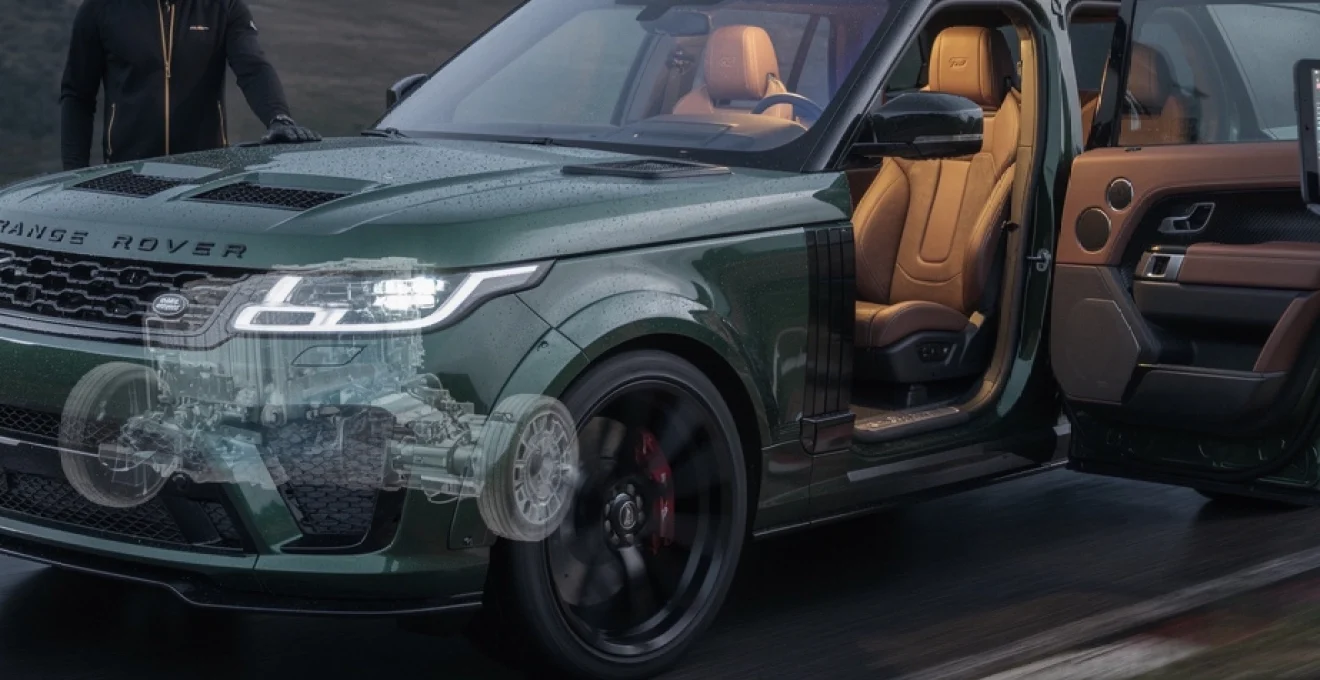
The Range Rover SVR represents the pinnacle of high-performance luxury SUV engineering, combining Land Rover’s legendary off-road capability with supercar-rivalling dynamics. Since its introduction, the SVR variant has carved out a unique niche in the automotive landscape, offering enthusiasts a vehicle that refuses to compromise between boardroom sophistication and track-day prowess. With its distinctive supercharged V8 soundtrack and commanding road presence, the SVR challenges conventional thinking about what a luxury SUV can deliver when engineers prioritize performance alongside refinement.
In an era where electrification dominates automotive discourse, the Range Rover SVR makes an unapologetic statement about the enduring appeal of internal combustion excellence. This isn’t merely a fast SUV—it’s a comprehensive engineering exercise that addresses every aspect of performance, from aerodynamics to suspension control, whilst maintaining the opulent interior appointments and advanced technology that Range Rover customers demand. For those seeking the ultimate expression of performance luxury, understanding what makes the SVR special requires examining the intricate technical solutions that enable its remarkable capabilities.
Supercharged 5.0-litre V8 powertrain architecture and performance metrics
At the heart of the Range Rover SVR lies a thoroughly engineered supercharged 5.0-litre V8 petrol engine that delivers performance statistics typically reserved for dedicated sports cars. This powerplant represents the culmination of decades of refinement, utilizing forced induction technology to extract maximum performance whilst maintaining the reliability expected from a premium manufacturer. The engine’s architecture features lightweight aluminum construction throughout, reducing overall weight whilst providing excellent heat dissipation characteristics essential for sustained high-performance driving.
575 PS output and 700 nm torque delivery analysis
The supercharged V8 develops an impressive 575 PS (567 bhp) at 6,500 rpm, accompanied by a substantial 700 Nm (516 lb-ft) of torque available from just 3,500 rpm. This torque curve characteristic ensures that massive pulling power is accessible across a broad rev range, eliminating the need for constant gearchanges during spirited driving. The Eaton supercharger feeding the engine provides immediate throttle response without the lag associated with turbocharged alternatives, delivering a linear power delivery that feels both predictable and exhilarating. Engineers have calibrated the throttle mapping to provide progressive response in normal driving modes whilst sharpening reactions considerably when Dynamic mode is selected, allowing drivers to tailor the vehicle’s character to suit prevailing conditions.
ZF Eight-Speed automatic transmission calibration
Power reaches all four wheels through a specially calibrated ZF eight-speed automatic transmission that has been extensively modified to handle the SVR’s prodigious outputs. The transmission features unique software mapping that prioritizes rapid gearchanges in performance driving scenarios, with shift times reduced by approximately 50% compared to standard Range Rover applications. Paddle shifters mounted behind the steering wheel provide manual override capability, allowing drivers to hold gears through corners or select optimal ratios for overtaking maneuvers. The transmission’s torque converter features upgraded friction materials and revised lockup characteristics to minimize energy losses during acceleration whilst maintaining smooth operation during urban driving.
0-60 mph acceleration in 4.3 seconds: Real-World testing
Land Rover claims the Range Rover SVR accelerates from standstill to 60 mph in just 4.3 seconds, a figure that positions it amongst the fastest SUVs available. Real-world testing confirms these numbers are entirely achievable, with the SVR launching with minimal wheelspin thanks to sophisticated traction control systems that apportion torque between axles and individual wheels. The acceleration experience is accompanied by a characterful soundtrack from the active exhaust system, creating an acoustic signature that rivals dedicated performance cars. Quarter-mile times hover around 12.8 seconds with trap speeds exceeding 110 mph, demonstrating sustained acceleration that doesn’t diminish as speeds climb. Top speed is electronically limited to 176 mph, a velocity few owners will explore but which underscores the SVR’s genuine performance credentials.
Active exhaust system with quad tailpipe configuration
Flaps within the exhaust system open and close depending on drive mode and throttle position, allowing the SVR to transition from a subdued burble at idle to a full-blooded V8 roar under load. In Comfort settings, valves remain mostly closed at low revs to preserve refinement, only opening progressively as engine speed increases. Switch to Dynamic mode or use the manual shift function, and the calibration becomes much more aggressive, with pronounced upshift cracks and downshift pops that heighten driver engagement. For many owners, this active exhaust system is more than a cosmetic feature; it is a core part of the SVR experience, turning even short journeys into an occasion. The quad tailpipe configuration not only reinforces the visual drama at the rear but also optimises exhaust gas flow, helping the engine breathe more efficiently at higher rpm.
Dynamic handling systems and adaptive air suspension technology
Delivering supercar-chasing performance in a two-and-a-half-tonne luxury SUV requires more than just power; it demands a sophisticated chassis ecosystem working in harmony. The Range Rover SVR deploys an interconnected suite of dynamic systems designed to maintain composure whether you are carving through a mountain pass or cruising on a motorway. Think of these systems as a network of digital and hydraulic “referees”, constantly monitoring body movement, wheel slip and steering input, and then making micro-adjustments in milliseconds. The result is a driving experience that feels far more agile and controlled than the vehicle’s dimensions might suggest.
Electronic active rear differential torque vectoring capability
Central to the SVR’s ability to hide its mass is the electronically controlled active rear differential and associated torque vectoring by braking. In simple terms, the system can apportion more drive to one rear wheel than the other, helping the car pivot into a corner rather than simply pushing wide. Under enthusiastic driving, you feel this as a willingness to rotate that is unusual in an SUV of this size, particularly on tighter bends and roundabouts. The control unit reads steering angle, yaw rate and throttle position, then decides where to send torque to maximise grip and stability.
Torque vectoring also works in conjunction with the all-wheel-drive system to maintain traction in low-grip scenarios, whether that is a wet B-road or a loose gravel track. If the outside rear tyre begins to overload, the system can subtly brake it while transferring torque across the axle, helping to pull the front end back on line. For drivers, the beauty of this technology is that it functions invisibly in the background; you simply sense that the Range Rover SVR turns in more keenly than you expect from a high-riding luxury SUV. It’s akin to having a skilled co-driver constantly trimming your line for maximum precision.
Dynamic response pro with 48-volt Anti-Roll control
Body control is further enhanced by Dynamic Response Pro, Land Rover’s 48-volt active anti-roll system. Traditional anti-roll bars are passive components that rely on mechanical twist to resist body lean, inevitably requiring a compromise between comfort and cornering flatness. In the SVR, hydraulic actuators at each axle can actively counteract roll by applying torque in the opposite direction to body movement. The 48-volt electrical architecture ensures there is enough energy on tap for rapid responses, even during prolonged dynamic driving.
On the road, the effect is immediately noticeable. In fast sweepers, the SVR remains impressively level, allowing the tyres to maintain a consistent contact patch for improved grip and steering feedback. Yet, when you are simply navigating urban potholes or motorway expansion joints, the system relaxes its resistance, permitting more natural suspension travel and a cushioned ride. This duality is what separates a genuine performance SUV from one that is simply stiff: you get flat, confidence-inspiring handling when you want it, without sacrificing day-to-day comfort for you and your passengers.
Adaptive dynamics II continuously variable damping system
Working in parallel with Dynamic Response Pro is the Adaptive Dynamics II continuously variable damping system. Each damper contains electronically controlled valves that can adjust stiffness in real time based on inputs from body and wheel sensors. The system samples data up to 500 times per second, effectively reading the road and driver behaviour in high definition. When you accelerate hard or brake firmly, the dampers can firm up to control pitch; when you cruise on a smooth surface, they soften to enhance refinement.
From behind the wheel, Adaptive Dynamics II gives the Range Rover SVR an almost chameleon-like character. In its more relaxed settings, the SUV glides over imperfections with the sort of suppleness expected from a traditional Range Rover. Select Dynamic mode, and the body feels more tightly tied down, with reduced vertical movement and sharper responses to steering inputs. For owners who plan to use the SVR as both family transport and weekend toy, this breadth of adjustability is invaluable. It is like owning two cars in one: a comfortable long-distance cruiser and a surprisingly capable back-road companion.
Terrain response 2 integration for On-Road performance
Although Terrain Response 2 is often associated with off-road prowess, in the SVR it also plays a meaningful role in on-road performance. The system offers multiple drive modes—including Comfort, Dynamic, Grass/Gravel/Snow and Mud & Ruts—each of which optimises throttle sensitivity, transmission mapping, differential behaviour and stability control thresholds. On a wet or icy road, selecting a low-grip mode can dramatically increase confidence by smoothing throttle response and pre-conditioning the driveline for slippage. For spirited on-road driving, Dynamic mode sharpens every parameter, turning up the SVR’s responsiveness without compromising safety.
What makes Terrain Response 2 particularly intelligent is its automatic mode, which can detect surface conditions and adjust settings without driver intervention. Imagine transitioning from a dry dual carriageway to a damp, leaf-strewn lane—Terrain Response 2 can alter its strategy in the background to maintain grip and stability. This integration between off-road software and on-road dynamics is a hallmark of the Range Rover SVR’s engineering ethos. You are not forced to choose between capability and performance; you get a vehicle that feels equally at home on a track day or a muddy field.
Svr-specific aerodynamic enhancements and carbon fibre components
The aggressive exterior styling of the Range Rover SVR is not mere theatre; many of its visual flourishes serve genuine aerodynamic and cooling functions. The enlarged front bumper intakes channel additional airflow to the engine, intercoolers and brake systems, helping to manage temperatures during sustained high-speed running. A reshaped front splitter and revised lower valance work together to reduce front-end lift, improving stability at motorway and autobahn velocities. Along the sides, sculpted sills help to manage airflow under the vehicle, while at the rear a subtle spoiler and diffuser elements contribute to a more planted stance.
Carbon fibre components play a key supporting role in this aero package. Depending on specification, the SVR can be equipped with a carbon fibre bonnet centre section, mirror caps, front bumper blades and rear diffuser trim. Beyond their obvious aesthetic appeal, these parts save weight high up on the vehicle, marginally lowering the centre of gravity. While the kilogram savings might seem modest in isolation, the cumulative effect contributes to sharper turn-in and reduced body roll. For buyers who value both performance and visual differentiation, the SVR’s carbon fibre details offer a compelling blend of form and function.
Even the quad exhaust finishers are carefully integrated into the rear bumper to minimise drag-inducing turbulence. Land Rover’s aerodynamicists used computational fluid dynamics and wind tunnel testing to fine-tune how air detaches from the vehicle at speed, aiming to reduce both drag and wind noise. The result is a luxury performance SUV that feels composed and quiet on long journeys, yet visually telegraphs its capability. If you are stepping out of a sports car and into an SUV, this cohesive aero package helps the SVR feel like a natural upgrade rather than a compromise.
Pivi pro infotainment with curved glass display and meridian signature audio
Inside the cabin, the Range Rover SVR’s technology suite is anchored by Land Rover’s latest Pivi Pro infotainment platform. A curved glass touchscreen—typically around 13.1 inches, depending on model year—sits proudly in the centre of the dashboard, offering crisp graphics and intuitive menus. The interface is designed to be smartphone-like in its responsiveness, with home-screen shortcuts and configurable tiles allowing you to prioritise navigation, media or vehicle settings. Over-the-air software updates ensure the system can evolve over time, adding new features or refinements without requiring a dealership visit.
For daily usability, Pivi Pro supports wireless Apple CarPlay and Android Auto, as well as integrated navigation with real-time traffic data. Voice control and natural-language recognition make it easy to set a destination or adjust climate settings without taking your hands off the wheel. Secondary controls for frequently used functions—such as temperature and volume—are retained as physical or haptic-feedback elements, meaning you are not constantly hunting through sub-menus while driving. This balance between digital sophistication and tactile simplicity is crucial in a high-performance SUV, where your attention should remain primarily on the road.
Complementing the visual technology is the available Meridian Signature Sound System, which transforms the SVR’s cabin into a rolling listening studio. With up to 22 or more speakers (depending on specification) and output exceeding 1,300 watts, the system uses advanced processing such as Meridian’s Trifield™ technology to create a three-dimensional soundstage. High-mounted tweeters, door woofers and a dedicated subwoofer work together to deliver clarity and depth across all genres, from classical to heavy rock. If you enjoy the emotional connection of a V8 soundtrack but also value audiophile-grade music reproduction, this combination is difficult to beat.
Some configurations may also integrate advanced features like active noise cancellation, using microphones in the cabin to detect unwanted frequencies and emit counteracting sound waves. The result is an interior that remains serene at cruising speeds, allowing conversations to flow naturally even when the SVR is covering ground at an impressive pace. For long journeys, this level of refinement significantly reduces fatigue for both driver and passengers. It underscores the central promise of the Range Rover SVR: you can enjoy supercar-level performance without sacrificing the comfort and connectivity expected of a flagship luxury SUV.
Extended leather and windsor leather interior craftsmanship
Open the door of the Range Rover SVR and you are immediately greeted by an interior that blends sporting intent with traditional Range Rover opulence. Extended leather packages wrap the dashboard, door tops and centre console in soft-touch hides, often with contrast stitching and piping that echo the exterior colour scheme. Windsor leather upholstery—renowned for its supple feel and durability—is typically reserved for the SVR’s deeply bolstered sports seats. These chairs are designed to hold you securely during enthusiastic driving while remaining comfortable on long motorway stints, with multi-way electric adjustment, memory functions and heating as standard on most specifications.
Craftsmanship details help differentiate the SVR from lesser models in the Range Rover Sport line-up. Embossed SVR logos, perforated leather patterns and optional carbon fibre or aluminium trim inlays all contribute to a sense of bespoke tailoring. Touchpoints such as the steering wheel, gear selector and door handles are finished in high-quality materials, often with a mix of leather and satin metal that feels both modern and substantial. Ambient interior lighting allows you to subtly alter the cabin’s mood at night, a small but meaningful feature if you spend significant time on the road.
Practicality has not been forgotten in pursuit of luxury. The rear bench provides ample legroom and headroom for adult passengers, with seat heating available in many configurations. The boot offers generous capacity for luggage, golf bags or weekend adventure gear, maintaining the usability that draws many buyers to the Range Rover platform in the first place. In combination, these elements create an interior environment that feels just as special at a standstill as it does when the supercharged V8 is working hard. If you are looking for a performance SUV that can genuinely replace both a sports car and a luxury saloon, the SVR’s cabin makes a persuasive case.
Fuel economy, CO2 emissions, and running costs analysis
Predictably, a supercharged 5.0-litre V8 combined with a substantial kerb weight does not produce hybrid-rivalling efficiency figures. Official fuel economy for the Range Rover SVR typically hovers in the low-20s mpg on the combined WLTP cycle, with real-world consumption often closer to 18–20 mpg depending on driving style. If you frequently exploit the full breadth of the SVR’s performance, you should not be surprised to see figures drop into the mid-teens. For many prospective owners, fuel economy is a secondary concern, but it remains an important factor when considering overall running costs over several years.
CO2 emissions are correspondingly high, placing the SVR in the upper tiers of vehicle taxation bands in many markets, particularly across Europe and the UK. Company car users will face significant Benefit-in-Kind charges, making the SVR a more viable proposition as a privately funded purchase or through tailored finance solutions. Insurance premiums will also reflect the vehicle’s performance potential and value, so it is wise to obtain quotes in advance, especially if you are upgrading from a less powerful SUV. Servicing is typically required annually or at mileage-based intervals, with costs aligned to the SVR’s position at the top of the Range Rover Sport hierarchy.
On the flip side, residual values for well-maintained high-performance Range Rover models have historically been strong, particularly for desirable specifications and limited-production variants. If you keep the vehicle in good condition and adhere to the recommended service schedule, a proportion of the initial outlay can be recouped at resale. Tyre and brake wear will naturally be higher than on a conventional SUV, especially if you regularly explore the SVR’s acceleration and braking capabilities. Opting for high-quality replacement components, ideally to OEM or better standard, will help preserve both safety and value.
Ultimately, the Range Rover SVR is not a rational choice for those focused on minimising cost per mile; it is a statement vehicle for drivers who prioritise performance, luxury and capability in equal measure. If you are comfortable with its thirst for fuel and associated taxation, the reward is a driving experience that few rivals can match. In a market increasingly dominated by downsized engines and electrified powertrains, the 2024 Range Rover SVR stands out as a last-of-its-kind proposition: a supercharged V8 luxury SUV that delivers theatre, speed and craftsmanship every time you press the start button.