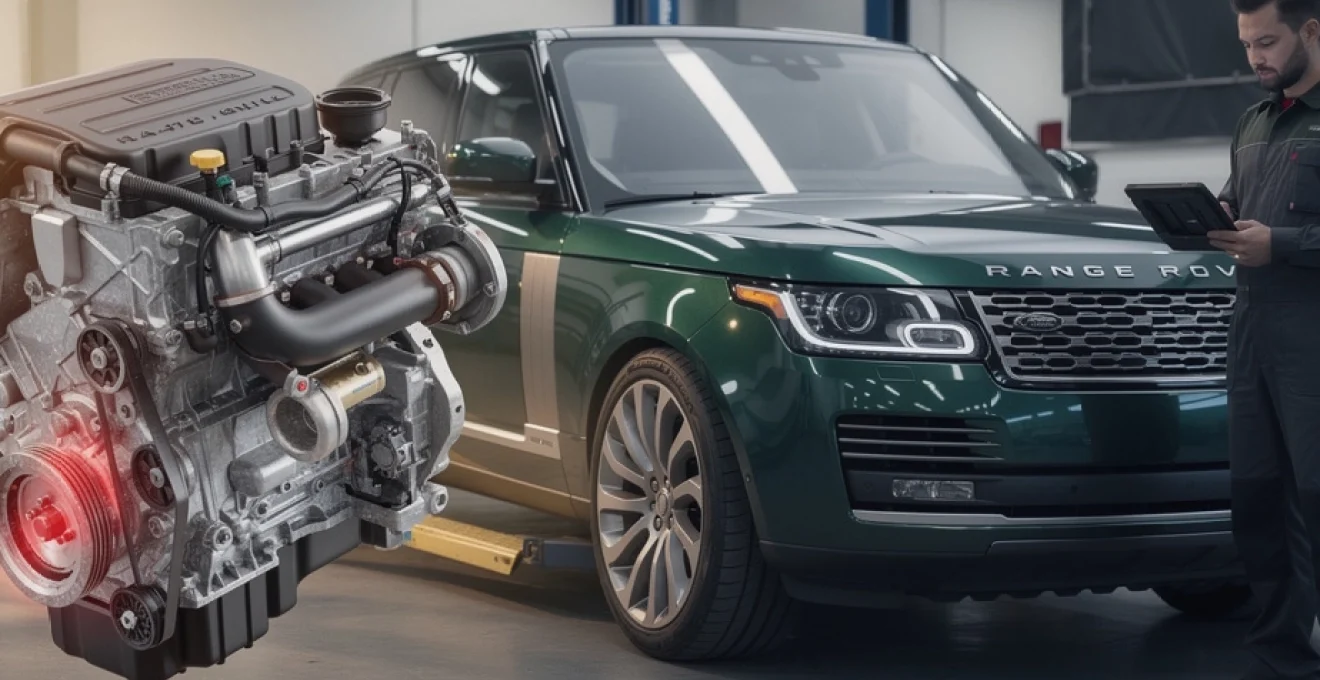
The Range Rover 4.4 TDV8 represents a significant milestone in Land Rover’s diesel engine development, offering a compelling blend of luxury performance and practical capability. This twin-turbocharged V8 diesel powerplant has earned recognition among automotive enthusiasts for delivering impressive torque figures whilst maintaining the refinement expected from a premium SUV. Introduced as part of Land Rover’s transition towards more sophisticated diesel technology, the 4.4 TDV8 addresses the growing demand for powerful yet efficient engines in the luxury off-road segment. Understanding this engine’s technical characteristics, performance capabilities, and long-term reliability becomes crucial for prospective owners considering this substantial investment in automotive excellence.
Range rover 4.4 TDV8 engine architecture and technical specifications
Twin-turbo V8 diesel configuration and ford AJD-V8 platform origins
The 4.4 TDV8 engine builds upon Ford’s AJD-V8 diesel platform, representing years of collaborative engineering between Ford and Land Rover before the latter’s acquisition by Tata Motors. This 4,367cc displacement engine features a sophisticated 90-degree V8 configuration, designed specifically to handle the demanding requirements of heavy luxury vehicles. The engine block utilises compacted graphite iron construction, providing enhanced strength-to-weight ratios compared to traditional cast iron whilst maintaining thermal stability under extreme operating conditions.
The cylinder heads incorporate advanced four-valve-per-cylinder technology, featuring dual overhead camshafts driven by maintenance-free timing chains rather than belts. This design choice significantly reduces long-term maintenance requirements whilst improving durability. The engine’s bore and stroke measurements of 81mm x 90mm respectively create an optimal balance between high-rpm breathing capability and low-end torque production, essential characteristics for both on-road performance and off-road capability.
Sequential turbocharging system with variable geometry turbines
The heart of the 4.4 TDV8’s performance lies in its sophisticated sequential twin-turbocharging system, featuring two variable geometry turbochargers working in concert to eliminate turbo lag across the engine’s operating range. This system employs a smaller turbocharger for low-rpm response and a larger unit for high-rpm power delivery, with advanced electronic controls managing the transition between operational modes. The variable geometry technology allows each turbocharger to adjust its turbine housing geometry in real-time, optimising boost pressure delivery across varying engine loads and speeds.
The sequential arrangement delivers boost pressure as low as 1,500 rpm, providing immediate throttle response that feels remarkably similar to naturally aspirated engines. This characteristic proves particularly beneficial during off-road driving scenarios where precise power modulation becomes critical. The system generates maximum boost pressure of approximately 2.2 bar, contributing to the engine’s impressive power output whilst maintaining emissions compliance with Euro 5 standards.
Common rail direct injection technology and piezoelectric injectors
Advanced Bosch common rail technology forms the foundation of the 4.4 TDV8’s fuel delivery system, operating at pressures reaching 2,000 bar to ensure optimal fuel atomisation and combustion efficiency. The system incorporates eight piezoelectric fuel injectors, each capable of multiple injection events per combustion cycle to minimise noise, vibration, and emissions whilst maximising power output. These piezoelectric units respond significantly faster than conventional solenoid injectors, enabling precise fuel metering that contributes to the engine’s refined operation.
The injection strategy includes pilot, main, and post-injection phases, with the engine management system dynamically adjusting timing and quantity based on operating conditions. This sophisticated approach reduces combustion noise typically associated with diesel engines whilst optimising fuel economy across varying load conditions. The high-pressure fuel pump, driven directly from the engine’s camshaft, maintains consistent rail pressure even under demanding acceleration scenarios.
Engine management system integration with bosch EDC17 ECU
The Bosch EDC17 engine control unit represents state-of-the-art diesel engine management technology, processing inputs from over 40 sensors throughout the engine bay to optimise performance, emissions, and reliability. This 32-bit processor manages everything from injection timing and turbo
timing with millisecond precision, coordinating turbocharger vane position, exhaust gas recirculation rates, and diesel particulate filter regeneration events. The EDC17 ECU also integrates closely with the Range Rover’s adaptive automatic transmission and terrain response systems, allowing engine characteristics to be tailored to different driving modes. For example, in “Sand” or “Rock Crawl” settings, throttle mapping and turbo response are adjusted to deliver more progressive torque, improving traction and control. This tight integration between engine management and chassis systems is one of the reasons the 4.4 TDV8 feels so composed despite the vehicle’s considerable mass.
From a diagnostic perspective, the EDC17 platform supports comprehensive on-board monitoring and fault-logging, which can be accessed via standard OBD protocols or specialist Land Rover diagnostic tools. This capability helps technicians pinpoint emerging issues such as marginal boost control performance, injector imbalance, or EGR flow deviations before they escalate into major failures. Software updates released by Land Rover over the engine’s lifecycle have also refined driveability, improved cold-start emissions, and in some cases enhanced reliability by adjusting control strategies for known weak points. For buyers of used Range Rover 4.4 TDV8 models, confirming that all relevant software updates have been applied is a simple but valuable step in protecting long-term reliability.
Performance characteristics and power delivery analysis
Torque curve performance from 1500-3000 RPM range
One of the most compelling aspects of the Range Rover 4.4 TDV8 is its torque delivery in the 1,500–3,000 rpm band, where most day-to-day driving occurs. Factory figures quote up to around 700 Nm of torque (model and market dependent), available from as low as 1,500 rpm and maintained across a broad plateau. In practical terms, this means the engine responds with effortless thrust even with minimal throttle input, whether you are pulling away from junctions, climbing long motorway inclines, or towing a heavy trailer. Instead of building power in a dramatic surge, the TDV8 delivers a smooth, linear shove that feels more like a powerful petrol V8 than a traditional diesel.
The combination of sequential twin-turbocharging and advanced injection control allows the torque curve to remain remarkably flat, providing consistent acceleration without the “on-off” boost sensation of older turbo-diesels. This broad spread of torque also reduces the need for frequent gear changes, especially when paired with the ZF eight-speed automatic transmission found in later L322 models. Because you rarely have to rev the engine beyond 3,000 rpm to tap into its performance, the 4.4 TDV8 maintains impressive refinement, low cabin noise, and a relaxed cruising demeanour even under load.
Fuel economy statistics across different driving conditions
Despite its size and power, the Range Rover 4.4 TDV8 offers respectable fuel economy for a luxury SUV weighing well over 2.5 tonnes. Official combined cycle figures typically sit in the low 30 mpg range (around 30–32 mpg UK), with motorway cruising sometimes exceeding that in ideal conditions. Real-world owner reports, however, paint a more nuanced picture: many drivers see mid-to-high 20s mpg in mixed use, dropping to the low 20s around town, especially on short journeys where the engine and emissions systems do not reach optimal operating temperatures. Factors such as tyre choice, wheel size, roof racks, and driving style all have a noticeable impact on consumption.
On longer motorway runs at steady speeds, the 4.4 TDV8 can return close to or just above 30 mpg, particularly when driven with a light right foot and using the gearbox’s taller ratios. The engine’s strong low-end torque allows it to maintain speed with minimal throttle openings, which significantly aids fuel efficiency. For buyers cross-shopping petrol V8 Range Rovers, the TDV8 often represents a 25–35% improvement in fuel economy in similar use, translating into meaningful savings over high annual mileages. That said, you should still budget for fuel consumption that reflects the vehicle’s weight and frontal area; this is not an economy car, but an efficient engine in a very capable luxury 4×4.
Acceleration metrics and real-world performance testing
In objective performance terms, the 4.4 TDV8-equipped L322 Range Rover is no sports car, but it delivers brisk and confidence-inspiring acceleration for its class. Depending on model year and exact specification, 0–60 mph times typically fall in the 7.5–8.0 second range, with in-gear acceleration being the engine’s real party trick. Overtakes from 30–70 mph or 50–80 mph are dispatched with minimal drama, thanks to that wave of torque and the quick-shifting ZF automatic. The result is a vehicle that feels effortlessly quick rather than outright fast, perfectly aligned with its luxury off-roader brief.
In real-world testing, what stands out most is the engine’s composure and flexibility rather than headline figures. You can waft along at low revs with only a whisper of throttle, yet still have immediate performance in reserve if you need to make a sudden overtake or merge onto a busy motorway. This relaxed yet potent character reduces driver fatigue on long journeys, as you rarely need to work the engine hard. Think of the 4.4 TDV8 not as a sprinter, but as a heavyweight powerlifter: it may not leap off the line, but it can haul serious mass with apparent ease whenever you ask it to.
Towing capacity assessment with 3500kg braked trailer loads
The Range Rover 4.4 TDV8 is rated to tow up to 3,500 kg of braked trailer, matching or exceeding many dedicated utility 4x4s and making it an excellent choice for caravans, horseboxes, and car trailers. The engine’s high torque output at low rpm means it can pull heavy loads from rest without excessive clutch slip or high revs, while the advanced cooling and transmission systems are engineered to cope with sustained towing on steep gradients. When properly set up with the correct towing equipment, the TDV8 feels unflustered even when towing near its maximum rated capacity, offering strong acceleration and confident motorway stability.
From a practical standpoint, the combination of self-levelling air suspension and intelligent stability systems further enhances the 4.4 TDV8’s towing credentials. The suspension automatically compensates for nose weight, maintaining a level stance and optimal headlight alignment, while trailer stability assist can intervene if oscillations are detected. Owners who regularly tow should pay close attention to maintenance, particularly of the cooling system, gearbox fluid, and rear suspension components, as these areas experience higher loads under towing conditions. When maintained correctly, the 4.4 TDV8-powered Range Rover is one of the most capable and refined towing platforms available in the used luxury SUV market.
Known reliability issues and common failure points
Crankshaft pulley separation problems in early production models
Early production versions of the 4.4 TDV8 engine experienced issues related to crankshaft pulley (harmonic balancer) separation, where the bonded rubber layer between the inner hub and outer ring could degrade over time. When this occurs, the pulley may begin to wobble, create abnormal noises, or in worst cases detach, leading to loss of auxiliary belt drive and potential collateral damage to surrounding components. Symptoms often include squealing or chirping sounds from the front of the engine, visible pulley misalignment, and intermittent charging or power steering issues. Left unattended, complete failure can occur without much warning.
Land Rover addressed this issue through revised pulley designs and, in some cases, technical service bulletins or goodwill repairs. Prospective buyers of early L322 4.4 TDV8 models should confirm whether the crankshaft pulley has been replaced with the updated part, particularly on vehicles with higher mileage. A proactive inspection by a specialist, checking for visible cracks, wobble, or rubber degradation, can provide peace of mind. Replacing the crank pulley pre-emptively is often considered cheap insurance compared to the potential fallout from a catastrophic failure that could leave you stranded or damage ancillary systems.
Turbocharger actuator failures and variable geometry issues
Given the complexity of its sequential twin-turbo system, the 4.4 TDV8 is vulnerable to turbocharger-related faults, particularly involving the electronic actuators and the variable geometry mechanisms. Over time, soot build-up, corrosion, or wear in the vane control linkage can cause the vanes to stick, leading to overboost, underboost, or erratic boost control. The electronic actuators themselves can also fail, either due to internal electronics degradation or water ingress. Drivers may notice loss of power, limp-home mode, increased smoke, or diagnostic trouble codes relating to boost control or turbo performance.
In many cases, early intervention can avoid full turbocharger replacement. Cleaning or freeing off the variable geometry mechanism, repairing or replacing actuators, and ensuring proper heat shielding and drainage around the turbo area can restore normal function. However, severe wear or neglect may necessitate replacement turbos, which can be expensive due to the tight packaging and labour involved. Regular high-quality oil changes, allowing the engine to warm up and cool down properly, and avoiding extended low-speed, short-trip usage can all help extend turbocharger life on the Range Rover 4.4 TDV8.
EGR valve carbon build-up and intake manifold blockages
Like many modern diesel engines designed to meet stringent emissions regulations, the 4.4 TDV8 uses exhaust gas recirculation (EGR) to reduce NOx emissions. Over time, especially in vehicles subjected to repeated short journeys or prolonged idling, the EGR valves and intake tracts can accumulate significant carbon deposits. This build-up can restrict airflow, disrupt combustion, and trigger fault codes or limp-home conditions. Symptoms often include hesitation, rough idle, increased fuel consumption, and occasionally visible smoke under load.
Addressing EGR-related issues on a Range Rover 4.4 TDV8 typically involves removal and cleaning or replacement of the EGR valves, along with cleaning of the intake manifold and associated pipework. While this can be a labour-intensive process, it often restores lost performance and efficiency, making it a worthwhile investment on higher-mileage vehicles. Owners who predominantly drive in urban environments may benefit from more frequent EGR system inspections, while those regularly undertaking longer motorway journeys naturally help keep the system cleaner by allowing higher exhaust temperatures to burn off deposits.
Diesel particulate filter regeneration cycle complications
The diesel particulate filter (DPF) is another emissions-control component that can cause headaches if the vehicle’s usage pattern does not align with its design assumptions. The DPF in the 4.4 TDV8 relies on periodic regeneration cycles, where exhaust temperatures are raised to burn off accumulated soot. Frequent short trips, stop-start traffic, or repeated interruptions of regeneration can prevent the process from completing, leading to soot saturation of the filter. When this happens, the engine management system may limit performance, display warning messages, and eventually require a forced regeneration or physical intervention.
To minimise DPF-related issues on a Range Rover 4.4 TDV8, owners should include regular longer runs at sustained speeds in their driving routine, allowing the system to complete passive or active regeneration cycles. If you notice a slight increase in idle speed, exhaust smell, or fuel consumption, the vehicle may be in the midst of a regeneration event; wherever possible, avoid shutting the engine off mid-cycle. For vehicles used primarily for local journeys, occasional targeted motorway drives can be a simple but effective DPF maintenance strategy. Ignoring DPF warnings or continuing to drive with a severely blocked filter can result in expensive repairs or replacement.
High-pressure fuel pump wear and injector seal deterioration
The high-pressure fuel system on the 4.4 TDV8, while generally robust, is sensitive to fuel quality and maintenance practices. Over time, the high-pressure fuel pump (HPFP) can suffer from internal wear, particularly if contaminated fuel or poor-quality diesel has been used. Early signs may include hard starting, hesitation under load, or metallic debris found in the fuel system during inspection. In worst-case scenarios, pump failure can send swarf through the rail and injectors, necessitating extensive and expensive system cleaning and component replacement.
Injector seal deterioration is another known issue, typically manifesting as combustion gas leakage around the injector seat. This can produce a characteristic chuffing noise (often described as a “chuffing” or “puffing” sound), along with a smell of exhaust in the cabin or oily residue around the injector base. Left unaddressed, leaking injector seals can erode the cylinder head seating surfaces and lead to more complex repairs. Regular inspection of the injector area for signs of leakage, prompt replacement of suspect seals, and adherence to fuel filter change intervals significantly reduce the likelihood of these problems becoming serious.
Maintenance requirements and service intervals
Maintaining a Range Rover 4.4 TDV8 to a high standard is crucial if you want to enjoy its performance and luxury without constant reliability concerns. Land Rover’s official service schedule typically specifies annual or 12,000–16,000 mile intervals (market dependent), but many specialists recommend more frequent oil changes, particularly for vehicles used in demanding conditions such as heavy towing or urban stop-start driving. High-quality, manufacturer-approved low-ash synthetic oil is essential to protect the turbochargers, high-pressure fuel system, and emissions-control components. Skipping or extending oil change intervals can accelerate wear in some of the engine’s most expensive parts.
In addition to regular oil and filter changes, the 4.4 TDV8 demands periodic replacement of fuel filters, air filters, and cabin filters, as well as coolant and brake fluid at recommended intervals. The timing chains are designed for the life of the engine and are not a scheduled replacement item, but tensioners and guides should be monitored for noise or wear as mileages climb. The cooling system, which must manage significant thermal loads, should be inspected regularly for leaks, degraded hoses, and proper operation of thermostats and electric fans. Proactive replacement of ageing components can prevent overheating episodes that might otherwise compromise head gaskets or turbochargers.
Beyond the engine itself, owners must remember that the L322 platform is a complex vehicle bristling with air suspension hardware, electronic control units, and comfort features. Air struts, compressors, and valve blocks are wear items that can fail with age, particularly on higher-mileage or heavily loaded vehicles. Similarly, regular gearbox fluid and filter changes, although not always specified in the original “sealed for life” literature, are strongly advised by independent specialists to preserve the ZF automatic’s smooth operation. If you are budgeting for ownership, factor in both routine maintenance and an allowance for periodic suspension, brake, and transmission refurbishments alongside engine servicing.
Model year variations and production changes
The 4.4 TDV8 engine was introduced to the L322 Range Rover range as part of a significant mid-cycle update, replacing the earlier 3.6 TDV8 in many markets. This later engine offered more power, higher torque, and improved fuel efficiency, alongside tighter emissions compliance. Early 4.4 TDV8 models benefited from the lessons learned on the 3.6, including improvements in turbocharger durability, crankcase ventilation, and engine management strategies. Over the course of its production run, Land Rover implemented incremental updates to address emerging issues, refine drivability, and align the engine with evolving emissions standards.
Not all 4.4 TDV8-equipped Range Rovers are identical, however, and prospective buyers should pay close attention to model year changes. Later L322 models with the 4.4 TDV8 are paired with the excellent ZF 8HP eight-speed automatic gearbox, which significantly enhances both performance and fuel economy compared to earlier six-speed units. Software calibrations for the EDC17 ECU and transmission also evolved, improving shift quality, throttle response, and cold-start behaviour. In addition, later vehicles may feature updated ancillary components—such as revised crank pulleys, improved turbo actuators, or updated EGR hardware—that reduce the likelihood of certain early-life failures.
Trim levels and equipment packages also vary by year and market, influencing overall ownership experience and potential repair complexity. For instance, vehicles with more advanced infotainment and driver-assistance systems can be more costly to troubleshoot when electronics inevitably age. When shopping for a used Range Rover 4.4 TDV8, it is wise to research the specific model year you are considering, understand which updates it includes, and prioritise vehicles with comprehensive service histories that demonstrate adherence to maintenance schedules and completion of any recall or service campaign work.
Ownership cost analysis and long-term reliability assessment
Owning a Range Rover 4.4 TDV8 can be rewarding, but it is not a low-cost proposition. While the engine itself is generally considered more robust than some earlier Land Rover diesel units, the combination of complex twin-turbo hardware, advanced emissions systems, and the L322’s extensive luxury equipment means running costs will be above average. Routine servicing at an independent specialist is typically more affordable than main dealer rates, but you should still budget several hundred pounds per year for standard maintenance alone. When factoring in occasional larger jobs—such as suspension air strut replacement, turbocharger repairs, or DPF and EGR work—it is prudent to keep a contingency fund for unexpected expenses.
From a long-term reliability standpoint, many 4.4 TDV8 engines have comfortably exceeded 150,000–200,000 miles when properly maintained, with some owners reporting relatively trouble-free experiences compared to the 3.6 TDV8. The key determinants of longevity are maintenance discipline, driving patterns, and the quality of prior ownership. Vehicles that have seen frequent short trips, neglected servicing, or repeated towing at maximum capacity without corresponding maintenance tend to develop issues earlier. Conversely, examples used primarily for longer journeys, with documented servicing and timely replacement of known weak components, can offer years of dependable service.
If you are considering purchasing a Range Rover 4.4 TDV8, a thorough pre-purchase inspection by a marque specialist is strongly recommended. Such an inspection should include diagnostic scans for stored fault codes, assessment of turbo operation and boost control, checks for injector seal leakage, DPF load status, and close evaluation of the cooling and suspension systems. You should also verify the service history, paying particular attention to engine oil change intervals, gearbox servicing, and evidence of any major repairs or recalls. Approached with realistic expectations and a willingness to maintain it properly, the Range Rover 4.4 TDV8 can be both a capable workhorse and a luxurious long-distance companion, offering a blend of performance, refinement, and off-road ability that few rivals can match.