Driving a manual transmission vehicle when your licence only permits automatic vehicles represents a serious legal violation in the United Kingdom. This seemingly minor distinction between licence categories carries significant consequences that many drivers underestimate until they find themselves facing penalties. The UK’s licencing system maintains strict boundaries between automatic and manual transmission entitlements, and crossing these boundaries—even unknowingly—can result in penalty points, substantial fines, and potentially catastrophic insurance complications. Understanding these restrictions isn’t merely about legal compliance; it’s about protecting yourself from enforcement actions that could significantly impact your driving privileges and financial wellbeing.
The confusion surrounding transmission-based licence restrictions stems partly from how straightforward the upgrade process appears on government websites, leading some drivers to mistakenly believe the restrictions are merely advisory rather than legally enforceable. In reality, operating a manual vehicle with only automatic authorisation constitutes driving otherwise than in accordance with your licence—an offence prosecuted under Section 87 of the Road Traffic Act 1988. The penalties for this violation extend far beyond the immediate legal sanctions, potentially affecting your insurance coverage, employment prospects if you drive professionally, and your ability to maintain valid motoring credentials.
UK driving licence categories: manual vs automatic transmission restrictions
The United Kingdom’s driving licence framework establishes clear distinctions between various vehicle categories and transmission types. These classifications exist to ensure drivers possess the specific skills required for different vehicle types and control mechanisms. When you pass your practical driving test in an automatic vehicle, you receive a restricted licence that legally limits your driving to automatic transmission vehicles only. This restriction applies across all relevant vehicle categories on your licence, creating a comprehensive limitation that affects what you’re legally permitted to drive.
Category B Automatic-Only restriction code 78
The Driver and Vehicle Licensing Agency (DVLA) uses specific endorsement codes to indicate restrictions on driving licences. For automatic-only entitlements, Code 78 appears in the relevant category column on your photocard licence. This numerical code serves as the official marker that limits your Category B entitlement to automatic transmission vehicles exclusively. When Code 78 appears alongside Category B on your licence, it means you’re legally prohibited from operating any manual transmission car, van, or other Category B vehicle on public roads. The code appears in column 12 of your photocard licence, directly adjacent to the vehicle category it restricts.
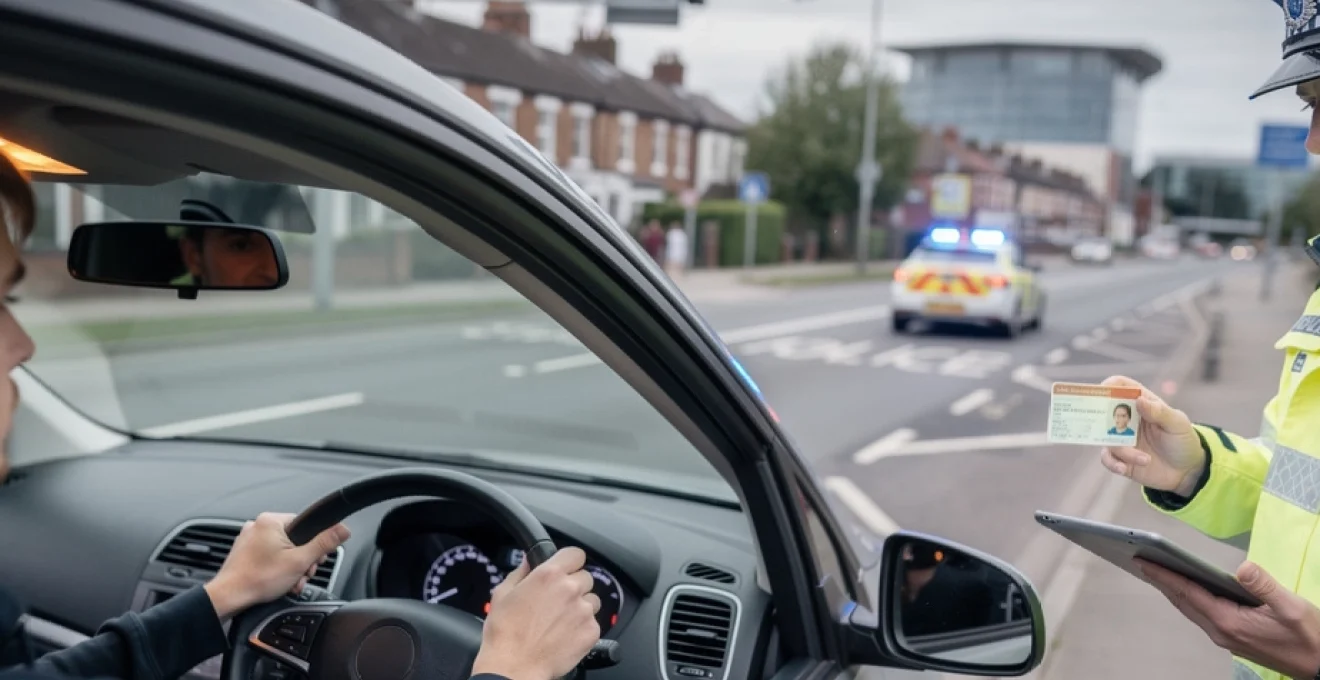
Understanding this coding system is essential because the restriction isn’t merely administrative—it carries the full force of law. Police officers conducting roadside checks can immediately identify automatic-only restrictions by examining your licence photocard. Modern digital verification systems used by law enforcement also flag these restrictions instantly when your licence details are checked against DVLA databases. The Code 78 restriction remains in place indefinitely until you successfully complete a manual transmission driving test, meaning years or even decades of driving experience in automatic vehicles doesn’t diminish or remove this legal limitation.
Differences between manual and automatic licence entitlements
The fundamental distinction between manual and automatic licence entitlements centres on transmission control mechanisms and the skills required to operate them. A full Category B licence without restrictions permits you to drive both manual and automatic vehicles, providing maximum flexibility. Conversely, a Category B licence bearing Code 78 restricts you to automatic transmissions exclusively, regardless of your experience level or driving competence. This creates a hierarchical structure where manual licence holders enjoy broader privileges than their automatic-only counterparts.
The practical implications of this distinction extend beyond simple vehicle choice. Many hire car companies, for instance, stock predominantly manual vehicles in the UK and Europe, meaning automatic-only licence holders face reduced availability and often higher rental costs. Fleet vehicles used by employers frequently include manual transmissions, potentially limiting employment opportunities for drivers restricted to automatics. Additionally, the second-hand vehicle market in the UK still features far more manual than automatic options, particularly in affordable price brackets, which can restrict purchasing choices for automatic-only licence holders.
DVLA licence classification system for motor vehicles
The DVLA employs a comprehensive classification system that categorizes vehicles by type, weight, passenger capacity, and transmission method. Category B—the standard car licence—covers vehicles up to 3,500kg maximum authorised mass, with up to eight passenger seats beyond the driver’s seat. However, this category subdivides based on transmission type, creating the automatic-only restriction that affects thousands of drivers. The classification system extends to other
categories too, such as Category C (large goods vehicles) and Category D (buses and coaches), where similar automatic-only restrictions can apply if tests are passed in vehicles with automatic gearboxes. Although the most common issue arises with Category B car licences, the underlying principle remains the same across the system: your entitlement is defined not just by the class of vehicle, but also by the way that vehicle is controlled. When you drive outside that entitlement, even if the vehicle seems similar in size or power, you are treated in law as unlicensed for that particular class and control type.
How automatic test pass limitations appear on photocard licences
Your photocard licence provides a visual record of your driving entitlements and any limitations that apply. On the back of the card, you will see a table listing vehicle categories in column 9, the start date of entitlement in column 10, the expiry date in column 11, and any restriction codes in column 12. For an automatic-only Category B licence, Code 78 appears in column 12 next to “B”, clearly signalling that you may only drive vehicles in that category with automatic transmission.
This layout sometimes causes confusion, particularly when licences are renewed or upgraded. The front of your photocard shows a “licence valid from” date that may change when the card is reissued, for example due to a change of address or photo renewal. However, the crucial information for transmission entitlement is on the rear, where the original test pass dates and codes are preserved. Police officers and insurers rely on this detailed table rather than just the front-page dates, which means any attempt to argue ignorance of a Code 78 restriction is unlikely to succeed.
Legal penalties for operating manual vehicles without proper authorisation
When you drive a manual car on an automatic-only licence, the law does not treat this as a minor technicality. Instead, it categorises the behaviour as driving otherwise than in accordance with a licence. This is a standalone motoring offence and can also trigger related issues such as driving without valid insurance. Even if you are a careful, experienced driver in an automatic, the moment you take control of a manual vehicle on a public road without the correct entitlement, you expose yourself to potential prosecution, penalty points, and serious financial consequences.
Driving without valid licence endorsement under road traffic act 1988
The core legal provision is found in Section 87 of the Road Traffic Act 1988. It states that it is an offence for a person to drive a motor vehicle of any class on a road “otherwise than in accordance with a licence” authorising them to drive a motor vehicle of that class. In practice, this means that if your licence authorises you to drive Category B automatic vehicles only, and you drive a Category B manual vehicle, you fall squarely within this offence. The law focuses on whether your entitlement matches the vehicle type and control method, not on whether you have any prior driving experience in general.
This distinction can feel harsh, especially for drivers who believe that the only difference between manual and automatic is the presence of a clutch pedal. However, from the perspective of road safety law, manual vehicles require specific competence in clutch control, gear selection, and hill starts, which must be demonstrated in a practical test. Without that test pass, the law presumes that you have not proved your ability to handle those risks safely. As a result, driving a manual on an automatic-only licence is treated in the same legal category as driving without ever having passed a test for that class of vehicle.
Fixed penalty notices and court prosecution procedures
If police stop you driving a manual car and your licence shows Code 78, they will usually report you for driving otherwise than in accordance with a licence. In many straightforward cases, this is dealt with by way of a Fixed Penalty Notice (FPN). An FPN typically offers a set number of penalty points and a financial penalty, allowing you to avoid a full court hearing if you accept guilt and pay the fine. For a lot of motorists, this is the simplest route, although it still leads to points on your driving record.
However, not all cases are handled by fixed penalty. If circumstances are more serious—perhaps because you were involved in an accident, you have previous convictions, or you also lacked valid insurance—the matter may be referred directly to the Magistrates’ Court. There, you will receive a formal summons or Single Justice Procedure Notice. You will have the opportunity to plead guilty or not guilty, but if convicted, the court can impose higher penalties than those available under a fixed penalty scheme. This includes increased fines and, in particularly serious or repeated cases, disqualification.
CU80 endorsement code: driving not in accordance with licence
Endorsement codes on your driving record provide insurers and courts with a shorthand summary of your motoring history. For offences involving driving otherwise than in accordance with a licence, the relevant endorsement code is usually LC20 (driving otherwise than in accordance with a licence) rather than CU80. The CU80 code is typically associated with using a mobile phone while driving. That said, some drivers and even informal online sources occasionally conflate different endorsement codes, adding to public confusion about the exact label attached to this offence.
What matters most for you is not the letters themselves but the practical impact on your record. An LC20 endorsement remains on your driving record for four years from the date of the offence, and insurers are likely to treat it as a significant risk factor. From their perspective, driving outside your licence category shows a disregard for licensing rules and suggests a higher probability of future non-compliance. When you disclose convictions during an insurance quote, you must include any LC20 endorsements, and failure to do so could itself invalidate your insurance.
Fine amounts and penalty points on driving record
The standard sentencing range for driving otherwise than in accordance with a licence is 3 to 6 penalty points, plus a fine. Under current Magistrates’ Court Sentencing Guidelines, the fine is typically calculated as a Band A fine—around 50% of your relevant weekly income—up to a statutory maximum of £1,000 for most vehicles. If the case is linked to a more serious context, such as an accident, other offences may be charged alongside, increasing the overall penalty exposure. Points imposed for this offence count towards “totting up” disqualification thresholds just like any other endorsable offence.
For new drivers, the stakes are even higher. Under the New Drivers Act, accumulating 6 or more penalty points within the first two years of passing your first full driving test triggers automatic licence revocation. That means that a single incident of driving a manual vehicle on an automatic-only licence could, at the upper end of the sentencing range, result in you losing your licence entirely and being forced to retake your theory and practical tests. Even if you avoid revocation, 3 to 6 points can significantly increase your insurance premiums for several years.
Vehicle insurance policy invalidation consequences
Perhaps the most financially devastating consequence of driving a manual on an automatic-only licence is the risk to your insurance coverage. Most insurance policies require that you hold a valid licence for the vehicle you are driving and that you comply with all licence restrictions. If you breach those terms by driving a manual car without the correct entitlement, your insurer may argue that the policy is invalid in relation to that incident. In effect, they can treat you as if you were driving without insurance for the purposes of your own cover.
In practice, many insurers will still be required to meet third-party claims under Road Traffic Act obligations, but they may then seek to recover those costs from you. Imagine causing a serious collision in a manual vehicle that you are not licensed to drive; you could find yourself personally liable for tens of thousands of pounds in damages. Additionally, your insurer could decline to repair your own vehicle, refuse any personal injury cover you might otherwise have benefited from, and cancel or void your policy. Future insurers will then see a history of licence-related non-compliance and potential policy cancellation, which usually translates into much higher premiums—or in some cases, outright refusal to quote.
DVLA enforcement and detection methods for licence violations
Many drivers assume that as long as they “don’t get caught”, driving a manual on an automatic-only licence is a low-risk shortcut. In reality, modern enforcement methods make it easier than ever for police and insurers to detect licence irregularities. The DVLA maintains centralised electronic records that can be accessed quickly by authorised bodies, and routine traffic operations regularly uncover drivers whose licence categories do not match the vehicles they are using. Even minor traffic stops for issues such as a broken light or speeding can rapidly escalate into more serious consequences once your licence is checked.
Police ANPR systems and roadside verification checks
Automatic Number Plate Recognition (ANPR) systems are widely used by UK police forces to scan vehicle registrations in real time. While ANPR itself does not directly show whether you are driving a manual on an automatic licence, it does flag vehicles associated with expired MOTs, lack of insurance, or other anomalies that often trigger a roadside stop. Once stopped, officers will typically verify the driver’s details against the Police National Computer and DVLA databases, where any Code 78 restriction is immediately visible. A quick check of the vehicle’s interior will confirm whether it is manual or automatic, leaving little room for ambiguity.
Even without ANPR, routine roadside operations, drink-drive campaigns, and random checks frequently involve licence inspection. Officers are trained to scrutinise the back of the photocard licence, where restriction codes are clearly displayed. If you are driving a friend’s manual car or a courtesy vehicle and assume nobody will notice, you are effectively relying on officers overlooking the very information they are specifically trained to examine. As enforcement technology continues to improve, the chances of such an oversight are steadily diminishing.
Traffic offence reporting and investigation protocols
When an officer suspects that a driver is operating a vehicle outside their licence entitlement, they follow established traffic offence reporting protocols. Typically, the officer will record your details, examine your licence, and may seize the vehicle if there is also an insurance issue. A formal Traffic Offence Report (TOR) might be issued at the roadside, which then passes through a central processing unit to determine whether a fixed penalty, a driver awareness course (where applicable), or a court summons is appropriate. In more complex cases, such as collisions with injuries, a more detailed investigation is carried out.
DVLA records can be requested to confirm the precise categories and restrictions on your licence at the time of the offence. If you challenge the allegation and claim that your licence entitles you to drive manual vehicles, the prosecution can produce certified copies of your driver record to prove otherwise. Because these records are centrally maintained and time-stamped, it is difficult to argue that you “thought” you had manual entitlement if the database shows a clear and consistent Code 78 restriction. In court, such documentary evidence is usually decisive.
Insurance company database cross-referencing procedures
Insurance companies also make extensive use of shared databases and cross-referencing tools to verify driver information. When you apply for a policy and state how long you have held your licence or what categories you possess, that information can be checked against DVLA records via services such as MyLicence. If there is a discrepancy—for example, if you claim to hold a full manual Category B licence when you actually have Code 78—insurers may either decline cover or place special conditions on the policy. Some may simply quote a higher premium based on perceived dishonesty or increased risk.
After an accident, insurers often carry out more detailed checks, particularly if the claim is high-value or circumstances appear unusual. At that point, any mismatch between your declared entitlement and your actual licence status can become a key factor in determining whether your policy responds. Have you ever ticked a box on an insurance form without really thinking it through? When it comes to transmission entitlement, a casual or inaccurate answer can later be used as grounds to reduce or refuse payment, especially if you were driving a manual vehicle that your licence does not cover.
Upgrading from automatic to manual driving entitlement
Given the potential penalties and insurance issues, many automatic-only drivers sensibly decide to upgrade to a full manual entitlement. Fortunately, the process for removing the Code 78 restriction is relatively straightforward compared to obtaining your first licence. You do not need a new provisional licence, nor are you required to retake the theory test if it is still valid for your existing entitlement. Instead, the key step is to pass a practical driving test in a manual transmission car that meets DVSA test vehicle requirements.
DVSA practical test requirements for manual transmission
To upgrade to a manual licence, you must book and pass a DVSA practical test in a suitable manual car. The vehicle must have a clutch pedal, a manual gear lever that the driver operates, and meet all standard test vehicle criteria such as roadworthiness, mirrors, L-plates, and insurance. The content of the test itself is essentially the same as the standard Category B practical test: you will be assessed on general driving ability, manoeuvres, independent driving, and your capability to operate the vehicle safely in various traffic conditions.
The crucial difference is that examiners will specifically observe your control of the manual transmission. This includes smooth gear changes, effective clutch control, appropriate gear selection for speed and conditions, and safe use of the handbrake and clutch on hills. Passing the manual test demonstrates to the DVSA that you have mastered skills that were not assessed when you passed in an automatic vehicle. Once you have successfully completed the test, the examiner will update your entitlement, and the Code 78 restriction will be removed from your Category B licence when the new photocard is issued.
Approved driving instructor selection and training hours
Although you may already be an experienced automatic driver, it is wise to take professional instruction before attempting the manual upgrade test. Selecting an Approved Driving Instructor (ADI) with experience in transitioning automatic drivers to manual can make a substantial difference to your confidence and pass probability. Look for instructors who provide dual-controlled manual vehicles and are familiar with the specific challenges automatic drivers face, such as clutch bite point control, co-ordination between pedals, and gear anticipation.
The number of training hours you need will depend on your existing skills and comfort level. Some automatic drivers may be test-ready after 10 to 15 hours of focused manual training, while others may need more time to unlearn automatic habits and build smooth clutch control. Your instructor can assess your progress and advise when you are likely to meet the test standard. Remember, the cost and time invested in proper training are minor compared with the potential penalties, fines, and insurance complications that could arise from driving manual vehicles without full entitlement.
Removing code 78 restriction through re-examination
Once you pass the manual driving test, the process of removing Code 78 is largely administrative. The DVSA forwards your pass details to the DVLA, which then issues a new photocard licence. On the rear of this card, the Category B entry will no longer show Code 78 in column 12, indicating that you are now entitled to drive both manual and automatic vehicles within that category. You will not usually receive a separate “manual licence”; instead, your existing licence is updated to reflect your expanded entitlement.
Some drivers worry that upgrading to manual might reset the “start date” of their licence and make them appear to insurers as newly qualified. In practice, while the front of the photocard may show a new issue date, the back will continue to list the original entitlement start dates for each category. Insurers that check DVLA records can see both your long-standing automatic entitlement and your newer manual authorisation. If there is any doubt, you can request written confirmation of your entitlement history from DVLA and share this with your insurer to avoid being incorrectly rated as a brand-new driver.
Case law precedents and magistrates’ court sentencing guidelines
While driving a manual on an automatic-only licence rarely results in headline-grabbing court cases, the legal principles behind prosecution and sentencing are well established. Magistrates rely on statutory provisions and sentencing guidelines rather than needing fresh case law for each incident. However, past cases about driving without a licence, insurance, or proper entitlement provide a framework for how courts view culpability, aggravating factors, and mitigation. Understanding this landscape gives you a clearer sense of how a court might respond if your case moves beyond a fixed penalty.
Magistrates’ Court Sentencing Guidelines emphasise proportionality: penalties should reflect the seriousness of the offence and the level of risk caused. For driving otherwise than in accordance with a licence, factors such as deliberate non-compliance, previous convictions, and whether the offence occurred in conjunction with an accident are treated as aggravating features. On the other hand, genuine misunderstanding, early guilty pleas, and strong evidence of an otherwise clean driving record can count in your favour as mitigation, potentially keeping points and fines towards the lower end of the available range.
Case law on “special reasons” can also be relevant, although it is not a complete defence. For example, if you can show that you were misled into believing that you held the correct entitlement—perhaps due to an administrative error or incorrect written confirmation—it may be possible to argue for a more lenient outcome or reduced penalty. However, courts are cautious about accepting claims of ignorance, particularly where licence cards and DVLA records clearly display restrictions. As a result, relying on special reasons is inherently uncertain and far less reliable than simply ensuring you hold the correct manual entitlement before driving such vehicles.
Motor insurance implications and claims rejection scenarios
From an insurance perspective, driving a manual vehicle on an automatic-only licence represents a double problem: it increases the risk of an accident due to unfamiliar vehicle control, and it creates a contractual breach of the policy conditions. Insurers structure their premiums around the assumption that drivers will comply with all legal requirements, including licence categories. When this assumption is broken, especially in the context of a claim, insurers often revisit the entire risk basis of the policy, asking whether they would have offered cover—or done so at the same price—if they had known the true facts.
Common claim rejection scenarios include situations where a driver has a collision in a manual courtesy car, borrows a friend’s manual vehicle, or hires a manual car abroad while holding only an automatic licence. In each of these cases, the insurer may argue that the driver was not legally permitted to operate the vehicle and therefore was in breach of policy terms. While third-party victims will usually still be compensated under UK law, the insurer may then seek recovery from the driver, leaving them with a substantial debt. Additionally, the insurer may cancel the policy, and future applications will need to declare that cancellation, which is itself a red flag across the industry.
To protect yourself, the safest approach is straightforward: never drive a manual vehicle on public roads unless your licence clearly entitles you to do so. If you are unsure, check the back of your photocard for Code 78 and verify your driver record through official DVLA channels. If you are considering upgrading, factor in not only the greater flexibility of a manual licence but also the significant reduction in legal and insurance risk. In a world where a moment’s decision can have long-term consequences, having the correct licence entitlement is one of the simplest and most effective ways to safeguard your driving future.