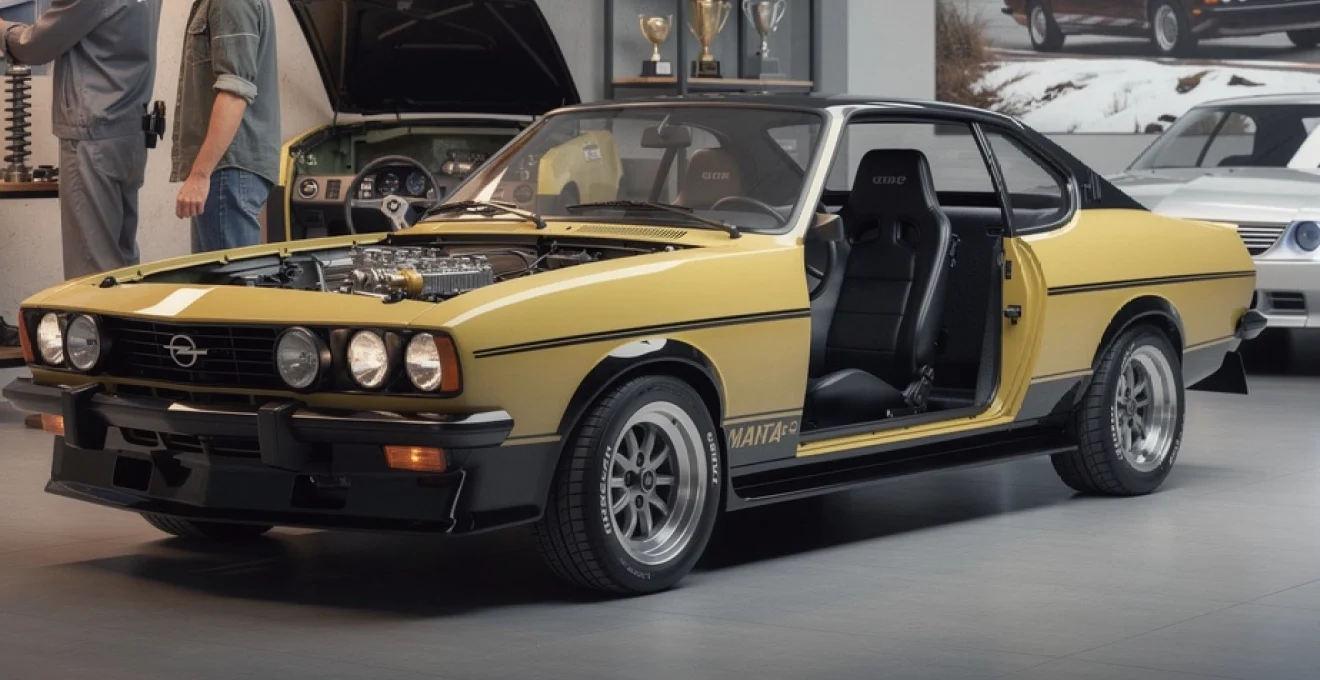
The Opel Manta GTE stands as one of European automotive history’s most compelling sports coupes, representing a perfect synthesis of accessible performance, distinctive styling, and German engineering excellence. Emerging during the transformative period of the early 1980s, this rear-wheel-drive coupe challenged conventional notions about what a mainstream manufacturer could achieve in the performance segment. Its distinctive wedge profile, fuel-injected powerplant, and motorsport-derived aerodynamic enhancements created a vehicle that transcended its humble mechanical origins to become a genuine enthusiast favourite.
The GTE variant represented the pinnacle of Manta B2 development, introducing sophisticated fuel injection technology and performance-oriented suspension tuning that elevated the driving experience considerably. This model successfully bridged the gap between everyday usability and weekend sporting prowess, offering drivers an engaging experience that few contemporary rivals could match. The combination of lightweight construction, balanced chassis dynamics, and responsive engine characteristics created a package that remains highly regarded among classic car enthusiasts today.
Opel manta GTE engineering specifications and performance metrics
2.0-litre CIH engine architecture and bosch K-Jetronic fuel injection system
The heart of the Manta GTE’s performance credentials lay in its sophisticated 1,979cc CIH (Cam-in-Head) four-cylinder engine, which represented a significant technological advancement over earlier carburetted powerplants. This overhead camshaft design featured the camshaft positioned directly above the combustion chambers, operating the valves through lightweight rocker arms and hydraulic tappets. The cam-in-head configuration provided superior valve control and reduced reciprocating mass compared to pushrod alternatives, enabling higher-revving operation and improved breathing characteristics.
Bosch K-Jetronic mechanical fuel injection replaced the traditional twin-choke Weber carburettors found in lesser variants, delivering precise fuel metering across the entire rev range. This continuous injection system employed an airflow sensor to determine engine load, automatically adjusting fuel delivery without requiring electronic intervention. The result was consistent performance characteristics, improved fuel economy, and reduced emissions compared to carburetted alternatives. Peak power output reached 110 brake horsepower at 5,400 rpm, with maximum torque of 119 lb-ft delivered at 3,600 rpm.
Five-speed getrag manual transmission dynamics and gear ratios
The Manta GTE employed a five-speed Getrag manual transmission renowned for its precise shift action and robust construction. This gearbox featured close-ratio gearing optimised for sporting applications, with a final drive ratio of 3.73:1 providing excellent acceleration while maintaining reasonable fuel consumption at motorway speeds. The transmission’s distinctive dog-leg first gear configuration placed second gear directly behind reverse, allowing for rapid sequential shifts during spirited driving.
Gear ratios were carefully selected to maximise the CIH engine’s torque characteristics, with first gear providing strong acceleration from standstill while fifth gear offered relaxed cruising capabilities. The lightweight flywheel and progressive clutch engagement characteristics contributed to the GTE’s reputation for engaging driving dynamics. Professional road tests consistently praised the transmission’s mechanical precision, with many reviewers noting the satisfying tactile feedback provided during gear changes.
Macpherson strut front suspension and panhard rod rear axle configuration
Front suspension utilised MacPherson struts with coil springs and an anti-roll bar, providing precise steering response and excellent road holding characteristics. The strut design incorporated gas-filled Bilstein dampers tuned specifically for the GTE variant, offering firmer damping rates than standard Manta models. This configuration delivered exceptional wheel control and minimised body roll during cornering while maintaining reasonable ride comfort for daily driving applications.
The rear suspension employed a live axle with semi-elliptic leaf springs, supplemented by a Panhard rod for lateral location and an anti-roll bar for enhanced stability. While seemingly archaic compared to independent rear suspension systems, this arrangement provided predictable handling characteristics and exceptional traction under acceleration. The relatively lightweight rear axle assembly contributed to the vehicle’s balanced weight distribution, enhancing both acceleration and braking performance.
Ventilated disc brake technology and ATE brake system integration
Complementing its performance-focused drivetrain, the Opel Manta GTE featured a braking system engineered to cope with sustained high-speed use. At the front, ventilated disc brakes were paired with ATE calipers, a configuration derived from higher-segment Opel models. The ventilated rotor design allowed air to flow between the disc faces, dissipating heat more effectively than solid discs and reducing the risk of brake fade during spirited driving or mountain descent. At the rear, robust drum brakes provided reliable stopping power while helping to contain unsprung weight and overall cost.
The ATE hydraulic system was calibrated to deliver a progressive pedal feel, with a vacuum-assisted servo providing additional assistance under heavy braking. Period road tests frequently praised the Opel Manta GTE for its reassuring stability under hard deceleration, noting that the car tracked straight even under emergency stops. While the model pre-dated widespread ABS adoption in mainstream coupes, the balanced chassis and linear brake response made it relatively easy for an attentive driver to modulate braking effort, particularly in wet conditions. For today’s classic car enthusiasts, ensuring that calipers, hoses, and master cylinders are in top condition is essential to preserving the car’s original braking performance.
Distinctive GTE aerodynamic package and visual identity elements
Irmscher-influenced front spoiler design and airflow management
Visually, the Opel Manta GTE distinguished itself through an integrated aerodynamic package that owed much to Opel’s close relationship with German tuning specialist Irmscher. The most obvious component was the deep front spoiler, carefully profiled to reduce front-end lift at motorway speeds while directing additional cooling air towards the radiator and front brakes. Unlike many aftermarket add-ons of the era, the GTE’s spoiler was wind-tunnel tested and integrated into the overall body design, giving the coupe a cohesive, purposeful stance.
At the rear, a large yet neatly moulded spoiler sat atop the bootlid or hatchback edge, depending on body style. Working in concert with the front air dam, this rear element improved high-speed stability by managing airflow separation and reducing turbulence over the tail. Side sill extensions and subtly flared wheelarches further reinforced the coupe’s sporting intent without appearing overly aggressive. For drivers who value both form and function, this factory-fitted aerodynamic package remains one of the key reasons the Opel Manta GTE still looks modern and composed, even when parked next to contemporary performance cars.
Retractable headlamp mechanism and sealed beam technology
Lighting technology on the Opel Manta GTE reflected both practical engineering and period styling cues. While some rivals experimented with pop-up headlights, the Manta instead employed fixed, faired-in lamp units integrated into its aerodynamic nose cone. These lamps typically used sealed beam or H4 halogen technology, delivering a clean, white light that was a noticeable improvement over earlier tungsten units. The flush-fitting bezels and carefully shaped surrounds helped reduce drag while giving the front end a distinctive, focused expression.
On certain markets and specials, auxiliary driving lamps were recessed into the front spoiler or grille area, echoing the rally-bred Manta 400 and reinforcing the coupe’s motorsport association. The combination of main and supplementary beams provided excellent illumination for high-speed night driving, a quality still appreciated by owners who regularly use their classic on unlit roads. For today’s enthusiasts, upgrading to modern halogen or period-correct LED replacement bulbs, while preserving the original housings, can subtly improve safety without diluting the Opel Manta GTE’s authentic appearance.
BBS cross-spoke alloy wheel design and tyre specifications
Few elements contribute more to the Opel Manta GTE’s timeless stance than its factory alloy wheels. Many cars were equipped with cross-spoke designs reminiscent of BBS competition wheels, featuring intricate lattice patterns that combined light weight with impressive rigidity. Typically measuring 14 inches in diameter with a modest width, these alloys were shod with performance-biased tyres that balanced grip with reasonable ride comfort and road noise levels. The relatively tall sidewalls, by modern standards, also contributed to the car’s progressive breakaway characteristics at the limit.
From an engineering perspective, these lightweight wheels helped reduce unsprung mass, improving suspension response and steering precision. Period tyre sizes often revolved around 185/70 R14 or similar specifications, which today can be replicated using modern compounds from specialist classic tyre manufacturers. Enthusiasts seeking to preserve the Opel Manta GTE’s original driving feel are well advised to resist the temptation to fit oversized modern rims; the car’s chassis tuning, steering geometry, and visual proportions were all optimised around its original wheel and tyre package.
Recaro sport seat integration and cabin ergonomics
Inside, the Opel Manta GTE’s cabin struck a thoughtful balance between everyday usability and motorsport-inspired focus. Many examples featured deeply bolstered Recaro front seats, trimmed in hard-wearing velour or cloth fabrics that resisted wear while providing excellent lateral support. These seats were designed to hold the driver and front passenger securely in place during enthusiastic cornering, yet remained comfortable over long distances thanks to carefully shaped backrests and adjustable head restraints.
The driving position was deliberately low-slung, with a slightly inclined steering wheel and a clear view of the comprehensive instrument cluster. Large, legible dials for speed, engine revs, temperature, and fuel level were supplemented by auxiliary gauges on certain variants, underlining the coupe’s sporting intentions. Controls for ventilation, lighting, and audio were positioned logically and within easy reach, reflecting an era when driver distraction was minimised through simplicity rather than touchscreens. Even today, owners often remark that slipping into an Opel Manta GTE feels like putting on a well-tailored jacket: familiar, supportive, and purpose-built.
Market positioning against BMW 323i and ford capri 2.8 injection
When new, the Opel Manta GTE occupied a fascinating niche in the European performance car market. It was frequently cross-shopped against premium rivals such as the BMW 323i E21 and blue-collar icons like the Ford Capri 2.8 Injection. While the BMW offered six-cylinder refinement and the Ford boasted muscular V6 torque, the Opel Manta GTE presented a compelling alternative by combining crisp handling, a rev-happy four-cylinder engine, and a more accessible price point. For many buyers, it delivered 80–90% of the performance of its rivals at a significantly lower cost of ownership.
Contemporary road tests often highlighted the Opel Manta GTE’s superior steering feel and chassis balance, particularly on twisty secondary roads where raw power played a smaller role than precision and composure. Insurance premiums and fuel consumption were also typically lower than those of larger-engined competitors, making the Manta an attractive proposition for younger enthusiasts and company car drivers. In markets like the UK, strong dealer support and competitive finance packages further strengthened its appeal. From a modern perspective, this combination of affordability, usability, and character explains why the Opel Manta GTE is now considered one of the most desirable classic coupes of its era.
Motorsport heritage through group 4 homologation and rally championship success
Walter röhrl’s monte carlo rally victories and technical adaptations
Although the most extreme rally successes were associated with the Ascona 400 and Manta 400, the Opel Manta GTE’s engineering DNA was deeply intertwined with these competition machines. Legendary driver Walter Röhrl achieved Monte Carlo Rally victories in Opel competition cars, showcasing the inherent potential of the brand’s rear-wheel-drive platforms. While his wins pre-dated the GTE-badged Manta B2, the lessons learned from tarmac and gravel stages fed directly into the development of the road-going coupe’s suspension, steering, and braking systems.
Technical adaptations for rally use included reinforced bodyshells with additional spot-welding, uprated Bilstein or Bilstein–Öhlins dampers, and bespoke spring rates tuned for each event’s surface. Wider track widths, adjustable Panhard rods, and competition-spec differentials improved traction and stability on loose surfaces. On the engine side, higher compression ratios, reprofiled camshafts, and revised fuel injection mapping extracted significantly more power from the basic CIH architecture, sometimes exceeding 240 bhp in full Group 4 trim. For enthusiasts, it is this direct lineage between the rally stages and the showroom that underpins the Opel Manta GTE’s enduring motorsport credibility.
Circuit racing modifications for DRM and european touring car championships
Beyond rallying, Opel’s coupes also made their presence felt in circuit racing, including the Deutsche Rennsport Meisterschaft (DRM) and various European touring car series. Here, the chassis strengths of the Opel Manta GTE and its close relatives were tested in an entirely different environment: long, high-speed circuits that demanded consistent braking, precise turn-in, and stable high-speed handling. Race-prepared cars typically featured stripped interiors, roll cages, and comprehensive safety equipment, along with upgraded cooling systems and dry-sump lubrication for sustained high-rpm running.
Suspension geometry was often revised with adjustable top mounts, stiffer anti-roll bars, and rose-jointed linkages, allowing engineers to fine-tune camber, caster, and toe settings for each track. Wider wheels with slick or semi-slick tyres dramatically increased lateral grip, while larger ATE or AP Racing brake packages ensured repeatable stopping performance from racing speeds. Although the Opel Manta GTE did not always dominate outright, it built a reputation as a tough, dependable platform that rewarded skilled drivers. This racing heritage has since inspired many private owners to build track-focused restomods that pay homage to period DRM and touring car liveries.
Ascona 400 platform sharing and homologation requirements
The story of the Opel Manta GTE cannot be told without reference to the Ascona 400, the Group 4 homologation special that shared much of its underpinnings. To comply with FIA regulations of the era, manufacturers were required to build a minimum number of road-legal examples featuring key mechanical components used in competition. Opel chose to base its homologation effort around the Ascona saloon, but many of the suspension, drivetrain, and engine developments quickly migrated to the Manta platform, both in competition and on the road.
The Ascona 400’s evolution included advanced cylinder head designs, revised intake and exhaust systems, and the use of lightweight materials such as Kevlar and fibreglass for body panels. The Manta 400 rally car, itself derived from the GT/E, took this a step further, combining an aerodynamically aggressive wide-body kit with a highly tuned four-cylinder engine developed in conjunction with Cosworth. Although the road-going Opel Manta GTE was more modest in specification, owners benefited from this technology transfer in the form of improved durability, better high-speed stability, and a clear upgrade path using homologated components. In many ways, owning a GTE was like owning the base canvas for a potential competition car.
Restoration challenges and original parts sourcing for classic car enthusiasts
For today’s classic car enthusiasts, restoring an Opel Manta GTE to its former glory can be both rewarding and challenging. While the car’s mechanical components are generally robust and shared with other Opel and Vauxhall models, bodywork and trim items are increasingly difficult to source in original-condition. Rust is a particular concern, especially around the sills, wheelarches, chassis rails, and rear suspension mounting points. As with many 1970s and 1980s coupes, the key to a successful restoration lies in starting with the soundest possible shell or being prepared for extensive metalwork.
On the mechanical side, the CIH engine and Getrag gearbox are known for their longevity when maintained correctly, but age-related wear still demands attention. Rebuilding the injection system, refreshing suspension bushes, and overhauling the braking system should all be considered essential steps rather than optional extras. Fortunately, a growing network of specialists and owners’ clubs across Europe supports the Opel Manta GTE community, offering access to reproduction panels, remanufactured rubber seals, and refurbished interior components. By engaging with these networks, you dramatically increase your chances of finding rare parts such as original spoilers, correct-spec alloys, or period Recaro seat fabrics.
Budget planning is another crucial consideration. While headline auction prices for pristine Opel Manta GTE examples may create the impression of easy appreciation, the reality is that a full, sympathetic restoration can easily exceed the car’s market value if not carefully managed. Prospective restorers should prioritise structural integrity and mechanical reliability before investing in cosmetic perfection. A methodical approach—documenting each stage, retaining original components wherever possible, and using period-correct finishes—will not only protect your investment but also preserve the historical authenticity that increasingly discerning buyers value. In this way, the restoration of an Opel Manta GTE becomes more than a project; it becomes a contribution to safeguarding an important chapter of European performance car history.
Contemporary electric manta-e concept and retro-modern design philosophy
The enduring appeal of the Opel Manta GTE has not gone unnoticed by its original manufacturer. In recent years, Opel has explored the idea of reimagining its iconic coupe for the electric age, most notably with the Manta GSe ElektroMOD concept. This striking prototype retained the classic Manta A silhouette while replacing the combustion drivetrain with a fully electric powertrain delivering around 147 bhp to the rear wheels. By carefully distributing battery mass and electric motor placement, engineers achieved a near 50:50 weight balance, echoing the poised handling characteristics of the original rear-wheel-drive layout.
From a design perspective, the Manta-e concept exemplifies a broader retro-modern philosophy increasingly adopted across the industry. Signature styling cues—such as the bold “Vizor” front fascia, sculpted side profile, and simple, uncluttered lines—pay homage to the original while subtly integrating modern lighting technology and aerodynamic refinements. Inside, digital instrumentation and contemporary infotainment coexist with classic cues like simple toggle switches and a driver-centric cockpit. The result is a car that feels instantly familiar to long-time Opel Manta GTE enthusiasts yet entirely aligned with current expectations for connectivity and sustainability.
Whether a production electric Manta will ultimately reach showrooms remains an open question, shaped by market demand, regulatory pressures, and platform-sharing opportunities within the Stellantis group. However, the concept has already fulfilled an important role: it has reintroduced the Opel Manta name to a new generation and sparked renewed interest in the original GTE models. For existing owners, the Manta-e serves as a reminder that their analogue, fuel-injected coupes represent a pivotal moment between the mechanical past and the digital present. For potential buyers, it offers a glimpse of how classic design principles—light weight, balanced proportions, and driver engagement—can continue to influence performance cars, even in an era defined by electrons rather than hydrocarbons.