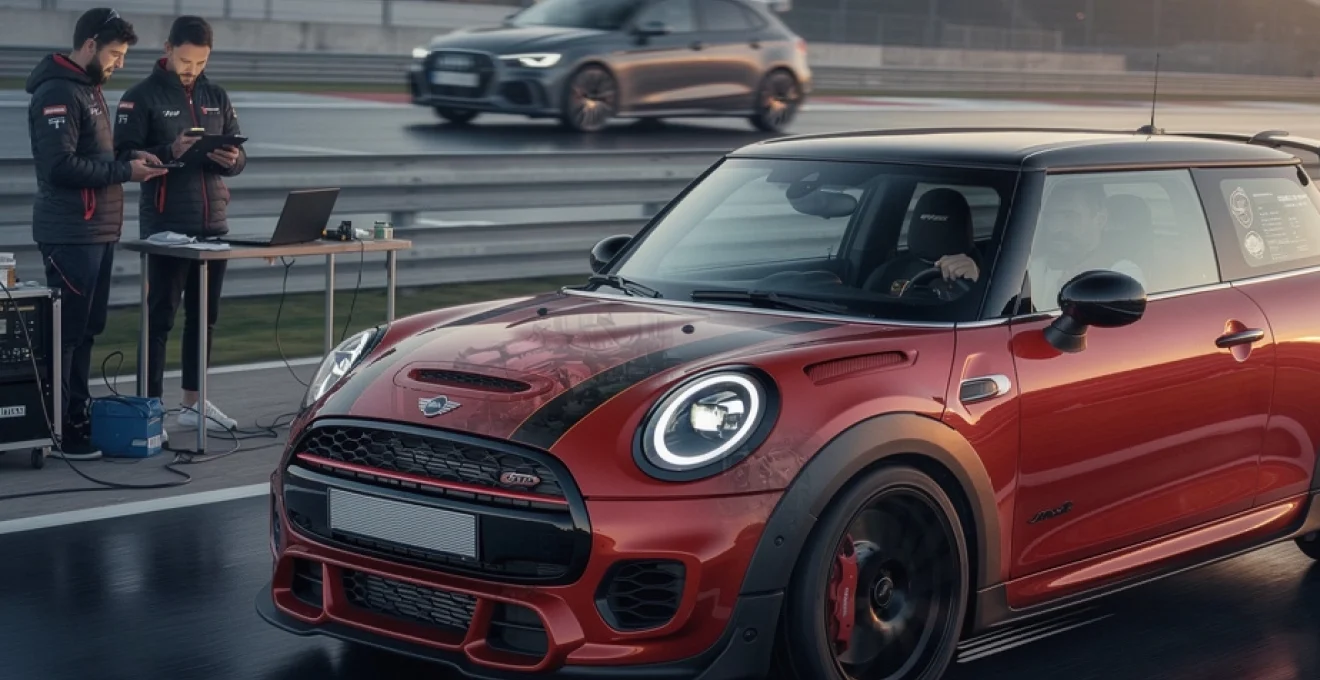
The 2025 Mini Cooper JCW represents a fascinating paradox in today’s automotive landscape. As one of the last petrol-powered supermini hot hatches available, this latest iteration arrives at a crossroads where traditional performance meets modern expectations. With the automotive industry rapidly pivoting towards electrification, the JCW stands as both a celebration of combustion engine heritage and potentially its swansong. The question facing enthusiasts isn’t merely whether this new model delivers excitement, but whether it can justify its existence in an increasingly electrified world.
The significance of this particular JCW cannot be overstated. In a market where competitors like the Ford Fiesta ST and Hyundai i20 N have vanished, Mini’s flagship hot hatch faces the challenge of satisfying both traditionalists who mourn the loss of the manual gearbox and modernists who demand cutting-edge technology. The 2025 model promises enhanced performance, refined dynamics, and a thoroughly updated interior experience, yet it must prove itself worthy against not only electric rivals but also the ghosts of supermini legends past.
2025 mini cooper JCW engine performance specifications and powertrain enhancements
BMW TwinPower turbo 2.0-litre Four-Cylinder engine upgrades
The heart of the 2025 Mini Cooper JCW remains the familiar yet refined BMW B48 2.0-litre turbocharged four-cylinder engine. However, significant improvements distinguish this powerplant from its predecessor. Peak power remains steady at 228 horsepower, but the torque figure has received a substantial boost from 236 lb-ft to an impressive 280 lb-ft, representing a 19% increase that transforms the driving character completely.
This enhanced torque delivery fundamentally alters how you experience the JCW’s performance. The additional pulling power becomes available from just 1,500 rpm, creating what many describe as diesel-like accessibility in the lower rev range. The engine’s character has evolved from a high-revving screamer to a mid-range powerhouse, reflecting broader industry trends towards emissions compliance whilst maintaining driver engagement. This transformation means you’ll find yourself relying more on the substantial torque curve rather than chasing peak power at higher revolutions.
Enhanced all4 All-Wheel drive system integration
Contrary to some expectations, the 2025 Mini Cooper JCW maintains its front-wheel-drive configuration rather than adopting the ALL4 all-wheel-drive system found in larger Mini models. This decision proves intentional, preserving the traditional hot hatch DNA that emphasises agility over outright traction. The front-wheel-drive setup keeps weight down to a relatively modest 1,330kg, crucial for maintaining the nimble character that defines proper hot hatchbacks.
The engineering team’s commitment to front-wheel drive demonstrates Mini’s understanding that adding complexity through all-wheel drive would fundamentally alter the JCW’s character. Instead, sophisticated traction control systems and an electronic differential lock work to maximise the available grip whilst preserving the engaging torque steer and lift-off oversteer characteristics that make driving the JCW such an involving experience. This approach ensures you’ll still feel connected to every input, every corner, and every acceleration phase.
Sport automatic transmission with paddle shift refinements
Perhaps the most controversial change for 2025 involves the complete elimination of the manual transmission option. The seven-speed dual-clutch automatic (DCT) now serves as the sole gearbox choice, marking the end of an era for purists who believe hot hatches should always offer three pedals. However, the DCT implementation proves surprisingly competent, with quick-shifting characteristics that complement the engine’s torque delivery profile effectively.
The paddle shifters provide adequate manual control, though they lack the tactile satisfaction of a traditional gearshift. The shifts themselves feel somewhat clinical, missing the mechanical connection that many enthusiasts crave. Yet the transmission’s efficiency in managing the turbocharged engine’s power delivery cannot be disputed. The DCT maintains optimal boost pressure during gear changes, ensuring continuous acceleration without the power interruption that manual transmissions inevitably introduce. This technological compromise reflects the reality of modern turbocharged engines, where seamless power delivery often
helps the JCW feel more like a well-calibrated performance tool than a nostalgic toy. In real-world conditions, particularly when threading through traffic or powering out of tight junctions, the gearbox’s ability to drop multiple gears instantly and keep the engine in its fat torque band makes the 2025 Mini Cooper JCW feel quicker and more responsive than its raw figures might suggest. For daily driving, leaving it in automatic mode delivers intuitive, near-telepathic shifts, while engaging the paddles on a favourite B-road brings an extra layer of interaction that many owners will appreciate.
JCW tuning performance exhaust system modifications
The 2025 Mini Cooper JCW also receives a revised JCW tuning performance exhaust system, though not quite in the way traditionalists might hope. Externally, the single centrally mounted tailpipe gives the car a purposeful, motorsport-inspired look, but noise regulations mean the real soundtrack is more muted than in earlier generations. At idle and low revs, the system is relatively civilised, with just enough bass to remind you you’re in the hot version rather than a standard Cooper.
Where things get more divisive is inside the cabin. Mini now leans heavily on synthesised sound augmentation, piping artificial burbles and enhanced engine notes through the speakers in Go-Kart mode. Some drivers will enjoy the playful, video-game-like experience, while others may find it a little contrived compared to the mechanical honesty of previous JCWs. The good news is that much of this digital drama can be toned down or disabled in the settings, allowing you to tailor how much auditory theatre you want on your daily commute.
From a performance standpoint, the exhaust is tuned to work hand in hand with the updated torque curve and seven-speed DCT. Back pressure has been optimised to support that strong low-down shove, helping the JCW hit 0–62mph in around 6.1 seconds and pull hard through typical overtaking speeds. You may not get the crackling overrun and raucous pops of past models, but you do gain a quietly efficient system that complements the car’s broader mission: usable, real-world pace rather than track-day theatrics.
Advanced chassis dynamics and JCW-specific suspension technology
Adaptive dampers with DCC dynamic damper control
Beneath the compact bodywork, the 2025 Mini Cooper JCW hides a seriously focused chassis setup. While earlier JCW models offered adaptive dampers as an option in some markets, the latest car doubles down on a firmer, more uncompromising tune that aims to deliver that trademark “go-kart” feel. Depending on specification, you’ll either get a fixed-rate JCW sport suspension or an adaptive system that effectively mimics Dynamic Damper Control (DCC)-style behaviour via drive modes.
In its most aggressive configuration, the damping is taut and highly controlled, keeping body movements tightly in check over quick compressions and direction changes. This pays dividends on smooth, flowing tarmac where the JCW feels keyed into the surface, darting from apex to apex with a sense of urgency that few rivals can match. The flip side is that on broken urban roads or concrete motorways with frequent expansion joints, the firmness can become tiring, occasionally jostling you around more than you might expect from a sub-compact hatchback.
Think of it as the difference between a firm running shoe and a plush trainer: one makes you faster and more connected, the other more relaxed. The JCW clearly sits at the “performance sneaker” end of that spectrum. If you live in an area with relatively well-maintained roads and you value sharp responses over outright comfort, the 2025 suspension tuning will make a lot of sense. For those facing cratered city streets every day, it’s worth factoring in an extended test drive to see whether the ride quality fits your tolerance level.
JCW sport suspension geometry and anti-roll bar configuration
The 2025 Mini Cooper JCW doesn’t just rely on stiff springs to feel sporty; its suspension geometry and anti-roll bar configuration have been fettled specifically for this model. Compared with the regular Cooper S, the JCW benefits from bespoke damper valving, firmer spring rates and stiffer anti-roll bars that work together to reduce body roll and sharpen turn-in. The result is a car that feels immediately eager to change direction, almost as if it’s pivoting around your hips.
On a tight, twisty road, you’ll notice how quickly the front end reacts to steering inputs, with very little slack around the straight-ahead position. Mini has also tuned the rear axle to remain stable yet willing to rotate under trail braking, giving you that classic hot hatch sensation of helping the car turn with your right foot as much as with the steering wheel. It’s playful without being snappy, rewarding smooth inputs and good timing rather than brute force.
This chassis balance is one of the key reasons the 2025 Mini Cooper JCW still feels like a “proper” driver’s car, even in an era of heavy, all-wheel-drive performance hatchbacks. While some may argue that the suspension takes the “go-kart” brief a bit too literally on rougher surfaces, there’s no denying that the engineering focus has been on creating a keen, agile machine rather than a soft, pseudo-premium commuter. If you enjoy learning the nuances of a car and exploiting them on your favourite roads, the JCW’s geometry-led handling package remains a major selling point.
Michelin pilot sport tyre integration and wheel specifications
Tyres are often the unsung heroes of any performance car, and the 2025 Mini Cooper JCW is no exception. Depending on market and package, the JCW can be equipped with high-performance rubber such as Continental SportContact 7 or Michelin Pilot Sport tyres, mounted on distinctive JCW alloy wheels ranging from 17 to 19 inches in diameter. These tyres play a crucial role in translating the chassis’ sharp responses and strong torque output into usable grip.
On dry tarmac, the combination of sticky tyres and a stiff chassis gives the JCW impressive cornering speeds for a front-wheel-drive hatchback. You can lean on the outer front tyre through longer bends, feeling the sidewall load up and communicate the available grip. In wet or cold conditions, the car’s surge of mid-range torque means you’ll still need to modulate the throttle carefully, but the tyres offer predictable breakaway behaviour that’s easy to read and correct.
Wheel choice is more than just a styling decision here. Larger wheels fill the arches nicely and sharpen steering response, but they also exacerbate that firm ride, particularly in urban environments. If you’re planning to use your Mini Cooper JCW as a daily driver in mixed conditions, opting for a slightly smaller wheel with a taller tyre sidewall can be a smart way to claw back a bit of compliance without sacrificing too much precision. As always, tyre maintenance—correct pressures and regular rotation—will be key to getting the best from this compact performance package.
Electronic differential lock and torque vectoring systems
With 280 lb-ft of torque going exclusively to the front wheels, the 2025 Mini Cooper JCW leans heavily on electronic aids to maintain traction and composure. An electronic differential lock, working through the front brakes, simulates the behaviour of a mechanical limited-slip differential by gently braking a spinning inner wheel and sending more torque to the wheel with grip. It’s a clever, cost-effective solution that helps the JCW put its power down out of tight corners.
Layered on top of this is a suite of torque vectoring and stability control algorithms that subtly adjust power delivery and brake pressure across the axle. In normal driving modes, these systems work unobtrusively in the background, keeping wheelspin and torque steer manageable even on damp surfaces. Switch into more aggressive settings, and the electronics loosen their reins, allowing a degree of wriggle and wheel-fight through the steering that some enthusiasts will interpret as welcome character.
Is it as pure as a mechanical limited-slip differential? Not quite, but for most drivers, the blend of security and adjustability strikes a sensible balance. You still get that lively, slightly mischievous front-end behaviour that makes the Mini Cooper JCW feel distinct from more clinical rivals, yet you’re not constantly battling for control. For spirited road use, the electronic differential lock and torque vectoring systems are more than capable of handling the engine’s output, while keeping the car approachable for drivers who may be new to hot hatches.
Aerodynamic body kit enhancements and JCW design language
Visually, the 2025 Mini Cooper JCW walks a fine line between retro charm and modern aggression. The latest JCW-specific aero kit includes a more assertive front bumper with larger air intakes, vertical red accents, and a visible charge cooler that hints at the performance potential beneath the bonnet. The signature clamshell hood remains on petrol models, distinguishing them from the brand’s electric offerings and reinforcing the mechanical authenticity of the combustion-powered JCW.
Along the sides, subtle side skirts and model-specific wheels give the car a lower, more planted stance without resorting to exaggerated flares or fake vents. At the rear, the single central exhaust outlet becomes a focal point, referencing classic motorsport design and echoing cues from bigger BMW M cars. A carefully shaped roof spoiler and refined diffuser elements contribute modestly to aerodynamic stability at speed, but their primary role is visual storytelling: this is the most serious Mini Cooper you can buy short of a future GP variant.
Critically, the 2025 design language still feels recognisably “Mini” despite the sharper lines and cleaner surfaces. The rounded headlights, short overhangs, and upright glasshouse are all present and correct, preserving the silhouette that’s become iconic since the early 2000s reboot. What has changed is the level of visual clutter: chrome has been largely banished, and the bodywork appears smoother and more cohesive, in keeping with contemporary minimalist design trends seen across the wider automotive industry.
Of course, personalisation remains a cornerstone of the Mini ownership experience. You can specify contrasting roof colours, stripes, and various JCW styling packs to make your car stand out—or keep things understated with more muted tones and minimal exterior graphics. Whether you prefer a stealthy urban hot hatch or a loud, attention-grabbing weekend toy, the 2025 Mini Cooper JCW’s aero and design options give you plenty of freedom to express your tastes without compromising the underlying performance package.
Interior technology integration and cockpit ergonomics
Step inside the 2025 Mini Cooper JCW and you’re greeted by an interior that’s both familiar and radically new. The iconic circular centre display remains, but it has evolved into a fully-fledged OLED infotainment hub that dominates the dashboard. Surrounding it, fabric-trimmed panels and textured materials replace the hard plastics and piano black surfaces many rivals still rely on, giving the cabin a more lounge-like, contemporary feel while maintaining that playful Mini character.
The driving position itself is broadly excellent. You sit low enough to feel connected to the car, yet high enough to enjoy good forward visibility over the short bonnet. The sport seats in the JCW provide generous lateral support and integrated headrests, holding you securely in place during spirited cornering without becoming oppressive on longer journeys. Some drivers may find the steering wheel rim thicker than ideal, but the overall ergonomics make it easy to settle into a comfortable, confidence-inspiring posture.
Where things become more polarising is in the way core functions are integrated into the digital ecosystem. Climate controls, drive modes and even some basic vehicle settings are now accessed via the central touchscreen, which can feel like a step backwards in usability compared to the tactile knobs and switches of previous generations. Mini does offset this to an extent with a charming row of toggle switches beneath the display for key functions such as ignition, gear selection and drive mode selection, but there’s still a learning curve as you acclimatise to the layout.
Practicality remains very much in line with what you’d expect from a three-door hot hatch. There’s ample space for two adults up front, while the rear seats are best reserved for shorter trips or smaller passengers. Boot capacity is modest but usable, especially if you’re happy to fold the rear seats when you need to carry bulkier items. If your lifestyle regularly demands four adult passengers and substantial luggage, the Mini Cooper JCW may not be the obvious choice—but for couples, solo drivers or city dwellers, the compact dimensions and cleverly packaged cabin will be more of an asset than a limitation.
Digital instrument cluster and MINI connected infotainment evolution
The 2025 Mini Cooper JCW takes a bold step in rethinking how you interact with vehicle information. Instead of a traditional binnacle-mounted instrument cluster, key data such as speed and navigation instructions are projected via a head-up display onto a dedicated flip-up panel in front of the driver. This keeps your eyes closer to the road, but it does mean you’ll rely heavily on the central OLED screen for more detailed information such as revs, trip data and drive mode settings.
Mini’s latest infotainment software, part of the broader MINI Connected ecosystem, is as colourful and characterful as the brand itself. Different “Experiences” or themes transform the look and feel of the interface, from the playful Go-Kart mode with performance gauges and animated graphics to the sepia-toned Timeless theme that evokes classic Mini instrumentation. It’s a clever analogy for the broader philosophy of the car: part heritage, part high-tech, with a healthy dose of whimsy layered over genuine functionality.
However, this digital exuberance can occasionally get in its own way. Some owners may find the animations, sound effects and multi-layered menus a little overdone, especially when they’re simply trying to adjust a setting on the move. For example, accessing a minimalist speedometer display or configuring specific driver assistance settings may require several taps and swipes, whereas a more restrained interface could surface these options more directly. It’s a reminder that while software can add personality, it also needs to respect the driver’s need for quick, distraction-free access.
On the connectivity front, the 2025 Mini Cooper JCW is fully in step with modern expectations. Wireless Apple CarPlay and Android Auto, over-the-air software updates, connected navigation with live traffic data, and remote services via the MINI app all feature in the arsenal. You can pre-condition the cabin, check vehicle status, or even locate your parked car from your smartphone—useful touches that make day-to-day life with the JCW more convenient. If you value having a genuinely modern digital experience in a compact petrol hot hatch, Mini’s latest system delivers plenty of depth, even if it sometimes feels like it’s trying a bit too hard to entertain.
Competitive market positioning against audi S3 sportback and Mercedes-AMG A35
Positioning the 2025 Mini Cooper JCW in today’s performance car market is more complicated than it first appears. On paper, its power output of around 228 horsepower and front-wheel-drive layout put it closer to machines like the Volkswagen Polo GTI or even a well-specified Golf GTI than to all-wheel-drive heavyweights like the Audi S3 Sportback and Mercedes-AMG A35. Yet, in terms of pricing, premium ambience and brand cachet, the JCW increasingly rubs shoulders with those more powerful German rivals.
Compared with the Audi S3 and AMG A35, the Mini Cooper JCW is down on power and traction but up on character and lightness. Where the S3 and A35 use sophisticated all-wheel-drive systems and 300+ horsepower engines to deliver effortless, all-weather pace, the JCW leans into its compact dimensions and lively chassis to create a more playful, analogue experience. It won’t match their straight-line speed or long-distance refinement, but it also weighs less, feels more intimate at typical road speeds, and often proves more engaging on the kind of tight, technical routes where raw horsepower matters less than agility.
Another key differentiator is how each car presents itself to the driver. The Audi and Mercedes-AMG favour a more serious, almost clinical approach to performance, backed up by high-end materials and a wealth of digital displays. The Mini, by contrast, wraps its technology in a layer of humour and heritage, from the circular screen and playful graphics to the toggle switches and fabric-lined surfaces. If you’re looking for a small performance hatch that feels like a scaled-down luxury sedan, the S3 or A35 may suit you better; if you want something that makes you smile every time you climb in, the JCW has a stronger case.
From a value perspective, the Mini Cooper JCW sits in an interesting middle ground. In many markets, a well-optioned JCW can cost as much as, or even more than, entry-level versions of the Audi S3 and Mercedes-AMG A35, especially once you start adding premium paint, upgraded audio and driver assistance packs. That means you’ll need to be honest about what you really want from your next hot hatch: ultimate performance per pound, or a more boutique, design-led experience that prioritises character and compactness.
Ultimately, the 2025 Mini Cooper JCW doesn’t try to beat the Audi S3 Sportback or Mercedes-AMG A35 on their own turf. Instead, it offers a distinct proposition: a smaller, lighter, front-drive hot hatch with premium touches, cutting-edge infotainment and a driving experience tuned for fun rather than outright dominance. If you still value a petrol-powered, three-door performance car that feels special at everyday speeds, the Mini Cooper JCW stands as one of the last—and most distinctive—options left on the market.