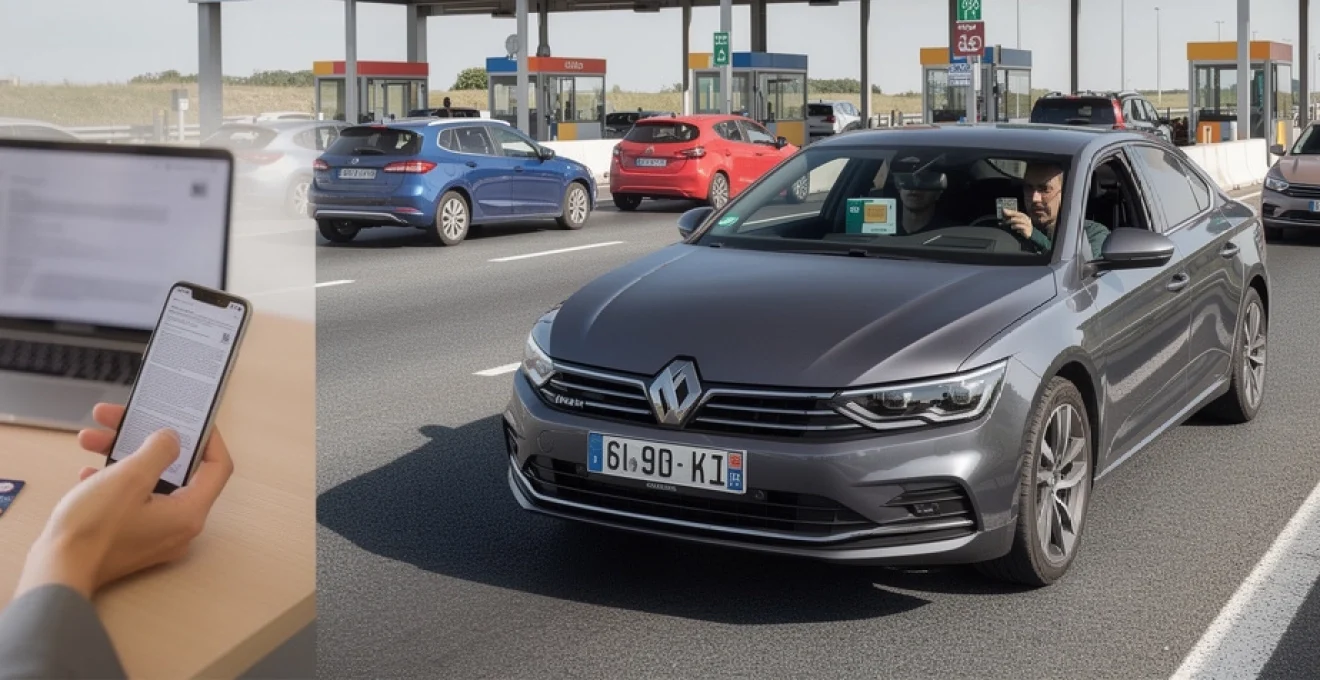
Driving through France becomes significantly more convenient with an electronic toll tag, transforming what can be a frustrating experience of fumbling for coins and waiting in long queues into a seamless journey. These small devices, known as télépéage tags, offer automatic payment solutions for motorway tolls across France and neighbouring European countries. With over 85 million foreign visitors annually choosing France as their destination, the demand for efficient toll payment methods continues to grow exponentially.
French toll roads span over 9,000 kilometres of motorway network, generating billions in revenue each year to maintain and expand the infrastructure. The electronic toll collection system processes millions of transactions daily, with dedicated lanes ensuring faster traffic flow and reduced emissions from vehicles that would otherwise idle at traditional toll booths. Understanding how to obtain and properly utilise these tags can save considerable time and stress during your French adventures.
Understanding french electronic toll collection systems and tag types
The French electronic toll collection infrastructure relies on sophisticated technology that enables seamless payment processing across multiple motorway operators. Different regions of France are managed by various companies, including Sanef, APRR, ASF, and Vinci Autoroutes, each operating their own toll collection systems whilst maintaining interoperability standards. This complex network requires careful coordination to ensure that a single tag functions effectively across all participating motorways.
Télépéage technology and RFID transponder functionality
French toll tags utilise Radio Frequency Identification (RFID) technology, operating on the 5.8 GHz frequency band specifically designated for tolling applications. The transponder embedded within each tag contains a unique identification number linked to the subscriber’s account and vehicle registration details. When you approach a toll plaza, roadside antennas detect the tag’s signal and automatically process the payment without requiring the vehicle to stop.
The communication between the tag and toll infrastructure occurs within milliseconds, allowing vehicles to pass through dedicated lanes at speeds up to 30 kilometres per hour. Modern tags incorporate advanced encryption protocols to protect user data and prevent fraudulent activities. The system’s reliability rate exceeds 99.5%, with backup mechanisms ensuring that occasional technical failures don’t disrupt traffic flow significantly.
Liber-t, Bip&Go, and APRR tag provider comparison
Several major providers offer French toll tags, each with distinct features and pricing structures. Liber-t tags, operated by Sanef, represent the original télépéage system and remain widely accepted across French motorways. These tags typically cost around €3 per month for active usage, with no annual fees for basic subscriptions. The service includes automatic invoice generation and detailed journey tracking through online portals.
Bip&Go has emerged as a popular alternative, offering competitive pricing and enhanced customer service. Their subscription model includes options for frequent travellers and occasional users, with monthly fees ranging from €2 to €8 depending on the chosen plan. Bip&Go tags provide compatibility with parking facilities across Europe, extending functionality beyond motorway tolls. APRR tags serve specific regions but offer excellent integration with their motorway network and often include additional services such as fuel payment capabilities.
Class 1 vehicle classification requirements for standard cars
Vehicle classification determines toll rates and lane accessibility for electronic toll collection. Class 1 vehicles include passenger cars, motorcycles, and light commercial vehicles with a maximum height of 2 metres and gross vehicle weight not exceeding 3.5 tonnes. This classification covers the vast majority of private vehicles used for leisure and business travel throughout France.
Height restrictions apply to certain dedicated télépéage lanes, particularly those marked with overhead barriers at 2 metres. These restrictions help manage traffic flow and prevent larger vehicles from inadvertently blocking lanes designed for standard passenger cars. Understanding your vehicle’s dimensions ensures you select appropriate lanes and avoid potential delays or fines associated with incorrect lane usage.
Compatibility with european interoperability consortium standards
French toll tags comply with European Telecommunications Standards Institute (ETSI) specifications, ensuring cross-border functionality with similar systems in Spain, Portugal, and Italy. The European Electronic Toll Service (EETS) framework facilitates this interoperability, allowing a single tag to function across multiple countries’ tolling networks. This standardisation represents a significant advancement in European transport integration.
This compatibility is particularly useful if you are planning a multi-country road trip and want to avoid juggling different payment methods at each border. Many modern French toll tags are marketed as “Europe” or “multi-country” devices and can be activated for use in Spain, Portugal and Italy for an additional fee. When comparing offers, check whether European interoperability is included by default, or whether you need to opt into a specific cross-border package. For most standard holidaymakers driving a car, a French toll tag that supports at least France and Spain is often the most cost-effective and convenient choice.
Eligibility criteria and documentation requirements for french toll tags
Before you can obtain a French toll road tag for your car, you will need to meet certain eligibility criteria set by the toll operators and their financial partners. Fortunately, the requirements for private individuals are relatively straightforward, especially compared to commercial fleet accounts. You will typically need to provide basic identity documents, proof of vehicle registration details, and valid payment information so that motorway tolls can be debited automatically.
Most providers simplify this process with online forms and automated checks, but you should still gather your documents in advance to avoid delays. If you are applying as an EU resident, the process is generally uniform across providers, while non-EU residents may encounter small variations in what is requested. Understanding these documentation requirements in advance makes it easier to choose the right provider and complete your application in a single sitting.
Vehicle registration certificate (carte grise) verification process
For vehicles registered in France, the vehicle registration certificate, known as the Carte Grise, is the primary document used to verify eligibility for a toll tag. The information on this document allows the operator to confirm the vehicle category (such as Class 1 for standard cars), maximum authorised mass and registration number. When you complete your toll tag application, you will usually be asked to enter the number plate, vehicle make and model exactly as shown on the certificate.
If your car is registered outside France, you will not have a French Carte Grise, but you will still need to supply equivalent registration details. Many toll tag providers accept foreign registration documents and rely on self-declared data, cross-checked against your number plate when you pass through toll lanes. Accuracy is important: if your vehicle’s height or weight is mis-declared, it might be misclassified at the toll booth, leading to incorrect charges or occasional disputes that must be resolved later via customer service.
Valid driving licence and identity document authentication
In addition to vehicle information, you will usually need to provide proof of identity when applying for a French toll tag. For private individuals, this is commonly a valid driving licence or national identity card, and in some cases a passport for non-EU residents. The identity check ensures that the contract for the télépéage account is associated with a clearly identifiable person responsible for the toll payments.
Most online portals use a simple upload system that accepts scanned copies or clear photos of your documents. Some providers conduct automated verification, while others may perform manual checks if information appears inconsistent. Although it might feel like extra administration for something as small as a toll tag, this identity verification step is essential to comply with banking and anti-fraud regulations linked to automatic payment services.
SEPA direct debit mandate and payment method setup
A critical step in obtaining a French toll road tag for your car is setting up a valid payment method, usually via a SEPA Direct Debit mandate. SEPA (Single Euro Payments Area) enables quick and standardised euro-denominated payments from bank accounts across the EU, the UK and several associated countries. When you authorise a SEPA mandate during the application process, you are giving the toll operator permission to collect toll fees and subscription charges directly from your bank account.
In practice, you will need your International Bank Account Number (IBAN) and, in some cases, your Bank Identifier Code (BIC). Some international providers, such as those targeting UK travellers, also accept payments by card or direct debit in pounds sterling, but they still rely on SEPA mechanisms behind the scenes to settle with French motorway companies. Make sure the bank account you use is active and has sufficient funds, as failed direct debits may result in penalties or temporary suspension of your toll tag.
Residency requirements for EU and non-EU citizens
One common question is whether you must be a French resident to get a toll tag. The answer is generally no: many providers welcome EU and non-EU customers as long as they can provide a valid SEPA-compatible bank account and the necessary identity documents. For EU residents, the process is usually as simple as entering your home address and banking details, with no additional residency paperwork required.
For non-EU residents, such as visitors from the UK, North America or Australia, the key requirement is usually access to an account that can participate in SEPA payments, or alternatively a payment card accepted by the provider. Some UK-focused toll tag services even specialise in handling British accounts and provide customer service in English. However, residency rules and payment options can vary between providers, so it is wise to review the terms and conditions carefully, particularly if you plan to keep the toll tag active for several years and use it for multiple trips.
Step-by-step application process through official channels
Once you have confirmed that you meet the eligibility criteria, the next stage is to apply for your French toll road tag through an official channel. You can choose between direct applications with motorway companies, such as Sanef or Vinci Autoroutes, or go through intermediary services like Bip&Go or Ulys that aggregate multiple networks. The basic steps are similar whichever route you choose: complete an online or in-person form, accept the contract terms, set up payment, and wait for your tag to arrive.
How do you decide which channel is best for you? That depends on your travel habits, language preferences and whether you need interoperability with other European networks. In the following sections, we will walk through the main options: online registration with Sanef, on-the-spot applications at motorway service areas, and subscriptions via third-party providers. Understanding these choices helps you select the most efficient way to secure a toll tag before your next journey.
Online registration via sanef tolling portal
Sanef, one of the major motorway operators in northern France, offers a comprehensive online portal where you can apply for a Liber-t toll tag. To begin, you visit the official website and select the subscription that best matches your usage pattern, such as an occasional traveller plan or a frequent commuter package. The site then guides you through a multi-step form requesting your personal information, vehicle details and bank account data for the SEPA Direct Debit mandate.
During the registration process, you will be asked to accept the general conditions of use, which outline how toll fees are calculated, billing cycles and your responsibilities as a tag holder. After submitting the form and completing any required identity checks, you will receive confirmation by email along with an estimated delivery date for your tag. Most customers receive their device within a few working days, allowing plenty of time to install it before they set off on their journey.
Physical application at autoroute service areas
If you are already in France or prefer a face-to-face interaction, many motorway service areas and operator boutiques allow you to apply for a toll tag on the spot. These physical locations are often signposted with the télépéage or Liber-t logo and may be found near major toll plazas or service stations. Staff can explain the different subscription options, help you complete the registration form and answer questions about lane usage and international compatibility.
Applying at a service area can be particularly useful if you need a toll tag urgently, for example if you have already started a long motorway journey and wish to avoid manual payments for the remainder. In many cases, the tag can be activated immediately, allowing you to start using the télépéage lanes the same day. However, you will still need to provide valid identity documents and banking information, so be sure to bring your passport or ID card and your IBAN details with you.
Third-party providers: Bip&Go and ulys by vinci autoroutes
Third-party providers such as Bip&Go and Ulys by Vinci Autoroutes offer an attractive alternative to dealing directly with individual motorway companies. These services often feature user-friendly websites in multiple languages, mobile apps and flexible plans tailored to tourists, occasional travellers and cross-border drivers. Bip&Go, for instance, provides subscriptions that work in France, Spain, Portugal and Italy, making it ideal for extended European road trips.
Ulys, the consumer brand of Vinci Autoroutes, combines toll tag services with additional benefits such as parking access and discounts at partner service stations. By centralising multiple motorway networks under a single account, these providers simplify billing and make it easier to track expenses. When choosing a third-party provider, compare the subscription fees, activation charges and any country-specific surcharges to ensure that the overall package remains cost-effective for your expected mileage.
Account activation and initial tag configuration
Regardless of which provider you choose, your toll tag will need to be activated and configured before it can be used on French motorways. In many cases, the tag is pre-activated when it is dispatched, meaning you only need to mount it correctly on your windscreen for it to function. Some operators, however, require you to confirm receipt via your online account or app, at which point the tag is associated with your contract and ready for use.
Initial configuration may also include specifying the vehicle with which the tag will be used, particularly if your subscription allows you to switch between multiple cars. You might be asked to confirm the number plate, vehicle category and any cross-border functionality you have added. Think of this step as pairing a new contactless card with your bank account: once everything is linked correctly, toll transactions will flow automatically from the tag to your monthly invoice.
Subscription plan selection and monthly fee structure
Choosing the right subscription plan is crucial to getting the best value from your French toll road tag. Most providers offer at least two types of plan: a low-cost option aimed at occasional users where you pay a small monthly fee only in months when you use the tag, and a flat-rate option for frequent users with a higher monthly fee but potentially lower service charges. The tolls themselves are billed separately based on the journeys you make, so the subscription fee is essentially an access charge for the télépéage service.
When evaluating monthly fee structures, consider how many trips you are likely to make each year, and in which countries. Some plans include discounted toll rates on specific routes or offer loyalty benefits for regular travel, while others focus on flexibility with no long-term commitment. Reading the small print is important: check whether there are activation fees, tag deposit requirements or charges for inactivity if the device remains unused for extended periods. With a little planning, you can select a French toll tag plan that fits your travel style without paying for features you will never use.
Physical installation and vehicle integration procedures
Once your French toll road tag has arrived and your account is active, the next step is to install it correctly in your car. Proper installation is more than a formality: it ensures that the RFID transponder can be read reliably at toll plazas, preventing missed detections and unnecessary delays. Fortunately, the process is straightforward and requires no specialist tools or technical skills, much like attaching a small parking permit to your windscreen.
Most providers supply a plastic mounting bracket with adhesive strips, along with clear diagrams showing exactly where to place it. In standard vehicles, the recommended position is behind the interior rear-view mirror, close to the dotted or shaded area at the top of the windscreen. This central placement gives toll lane antennas the best chance of detecting the tag as you approach the barrier, even if traffic is heavy or queues are moving quickly.
If your car has an athermic or heated windscreen, you may notice a dotted or slightly darker zone specifically designed to allow radio signals through. This is the ideal location for the toll tag, as placing it outside this zone can weaken the signal. In some motorhomes or vehicles with overhanging sleeping compartments, the standard position behind the mirror may not provide a clear line of sight to the overhead antenna. In such cases, providers often recommend placing the tag lower on the windscreen or, as a last resort, holding it briefly out of the side window when passing the toll reader.
After attaching the bracket and clipping the device into place, it is wise to double-check that the tag is secure and not obstructed by sun visors, dashcams or other accessories. You should also familiarise yourself with any indicator lights or beeps the device may produce when it is read successfully. The first time you pass through a télépéage lane, drive slowly and observe the barrier and signals to confirm that everything is working correctly; once you are confident, using the tag will become as natural as driving through a standard motorway gantry.
Operational usage across french motorway networks
With your toll tag installed and activated, you are ready to start using it across the French motorway network. Day-to-day operation is simple: you approach the toll plaza, select the appropriate lane and drive forward at a moderate speed while the system reads your tag. The barrier will lift automatically once the transaction is recorded, and the toll amount will be added to your account for later billing. From the driver’s perspective, it feels very much like using an automated gate in a car park.
Choosing the correct lane is important, especially if you are new to French toll roads. Look out for lanes marked with the orange t symbol, which indicate télépéage access. Some of these lanes are reserved exclusively for tag users and may include a 2 metre height limit, making them suitable only for Class 1 cars and low vehicles. Other lanes combine télépéage with manual payment options and are indicated by the same t symbol alongside icons for cards or cash; these are useful if you are driving a taller vehicle, towing a caravan or travelling in a motorhome.
As you approach the toll, reduce your speed to the limit indicated on the signage, which is usually around 30 km/h in automatic lanes. Keep a safe distance from the vehicle ahead to allow the system to identify each tag individually; if you tailgate too closely, the barrier may not reset in time, leading to confusion or even a minor collision. When the antenna detects your tag, you may hear a beep and see the traffic light change to green, signalling that the barrier is about to rise. Drive through smoothly without stopping unless instructed otherwise by on-screen messages or toll staff.
Monthly invoices summarising your usage are typically available through your provider’s online portal or app. These statements break down journeys by date, motorway section and toll amount, giving you a clear record that can be useful for budgeting or expense claims. If you use a multi-country tag, foreign journeys will appear on the same invoice, often with separate lines for Spain, Portugal or Italy. This consolidated approach is one of the main advantages of using a French toll road tag for your car instead of paying individually at each barrier.
Troubleshooting common issues and customer support resources
Even with a reliable system like télépéage, occasional issues can arise, particularly when you are using a French toll road tag for the first time. The most common problems involve the tag not being detected, unexpected toll charges or confusion about which lanes to use. Knowing how to troubleshoot these situations quickly can save you time and stress, especially if you are travelling with family or facing a tight schedule.
If the barrier does not lift when you enter a télépéage lane, remain calm and avoid reversing. Many toll plazas are equipped with intercoms or call buttons that connect you directly to an operator, who can check your account status and manually open the barrier if necessary. They may ask for your vehicle registration number, the tag ID printed on the device or your name to verify your subscription. In some cases, the issue is as simple as the tag being improperly positioned or temporarily obstructed, which you can correct once you are safely parked.
Billing discrepancies, such as charges for routes you do not recognise or vehicle class errors, can usually be resolved by contacting customer support within a specified time frame. Most providers offer online dispute forms, email support and dedicated phone lines, often with English-speaking agents for international customers. It is helpful to keep a log of your travel dates and routes, especially on complex itineraries, so you can compare them with the entries on your invoice and highlight any anomalies.
Technical problems with the tag itself, such as damage, battery failure or loss, should be reported immediately so the provider can deactivate the device and issue a replacement. Continuing to use a malfunctioning tag increases the likelihood of missed readings or incorrect charges. Many subscription contracts include provisions for replacing faulty tags at little or no cost, though you may be liable for a fee if the device was lost or damaged through misuse. In the meantime, you can always revert to manual payment using card or cash until the new tag arrives.
Finally, most major providers maintain extensive FAQ sections, user guides and even video tutorials on their websites, covering everything from installation tips to explanations of new free-flow toll systems that operate without traditional barriers. These resources are invaluable if you are preparing for your first long drive in France and want to understand how the toll tag will behave in different situations. By combining this knowledge with responsive customer support, you can travel with confidence, knowing that help is available whenever you need it.