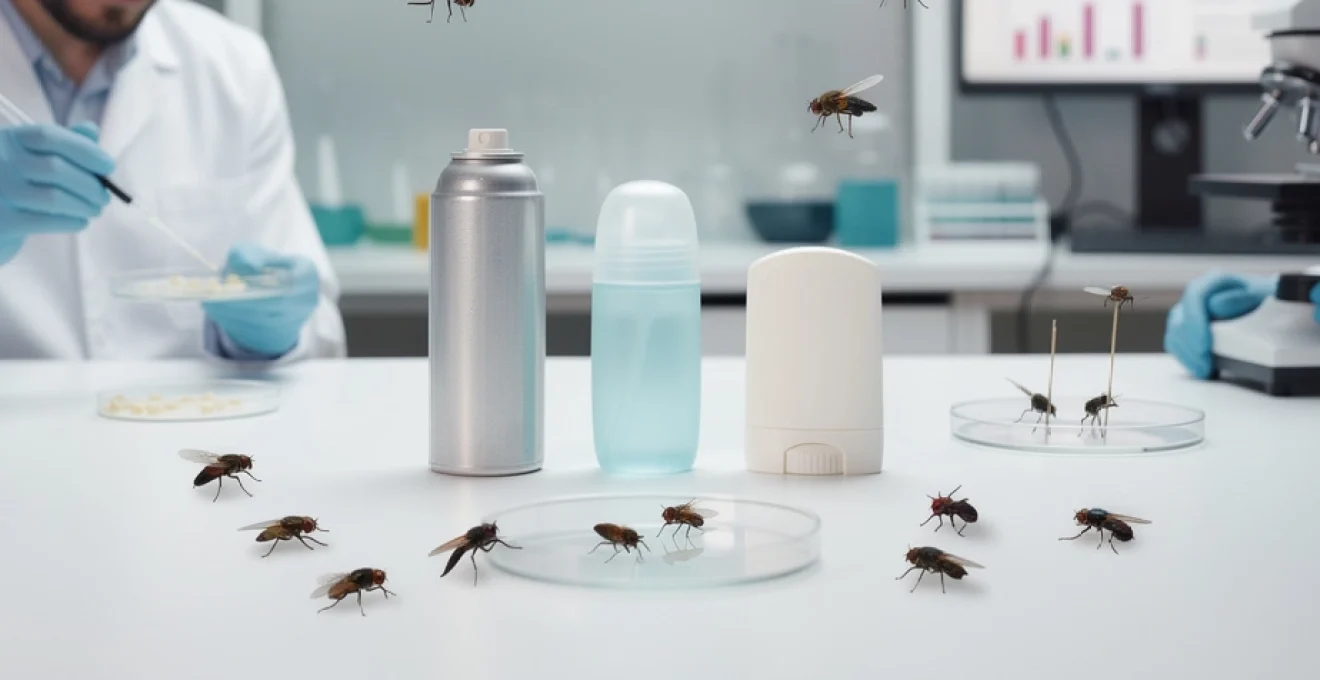
The internet buzzes with countless household remedies for pest control, and among these unconventional solutions, using deodorant to kill flies has gained surprising traction. From frustrated homeowners spraying aerosol deodorants at persistent house flies to social media posts documenting these impromptu pest control attempts, the practice has sparked considerable debate. But does this seemingly absurd method actually work, or is it merely another internet myth that refuses to die?
Understanding the science behind this phenomenon requires examining both the chemical composition of modern deodorants and the biological vulnerabilities of common household flies. While professional pest control experts might raise eyebrows at such methods, the reality is that many household products contain compounds that can indeed affect insects in unexpected ways. The question isn’t simply whether deodorant can kill flies, but rather how effective it is compared to purpose-built insecticides and whether the mechanism of action justifies its use.
Chemical composition analysis of commercial deodorants and insecticidal properties
Modern deodorants contain a complex mixture of active and inactive ingredients, many of which possess properties that can affect insect physiology. The primary active ingredients in most antiperspirant deodorants include aluminium-based compounds, while regular deodorants rely heavily on antimicrobial agents and alcohol-based carriers. Understanding these components reveals why deodorants might have unintended insecticidal effects.
Aluminium chloride and aluminium chlorohydrate toxicity to diptera species
Aluminium chloride and aluminium chlorohydrate serve as the backbone of most antiperspirant formulations, typically comprising 15-25% of the product’s total volume. These compounds work by forming gel-like plugs in sweat ducts, but their effects on insects operate through entirely different mechanisms. When exposed to these aluminium salts, flies experience disruption of their nervous system function due to the compounds’ ability to interfere with neurotransmitter pathways.
Research into aluminium toxicity in Diptera species has revealed that these compounds can cause paralysis and eventual death when present in sufficient concentrations. The median lethal dose varies significantly depending on the species, with house flies showing particular sensitivity to aluminium chlorohydrate exposure. However, achieving lethal concentrations through typical deodorant application proves challenging due to rapid dispersal in open air environments.
Propylene glycol and ethanol concentrations in aerosol formulations
Aerosol deodorants contain substantial amounts of propylene glycol and ethanol, often representing 40-60% of the total formulation. These solvents serve multiple purposes: they act as carriers for active ingredients, provide antimicrobial properties, and create the pressurised delivery system that characterises spray deodorants. For insects, particularly small flies, these compounds represent significant physiological threats.
Ethanol concentrations in deodorants typically range from 70-85%, levels that approach those found in commercial disinfectants. When flies come into direct contact with these alcohol-rich formulations, they experience rapid dehydration and cellular damage. The volatile nature of ethanol also means that flies can be affected through vapour exposure, though this requires enclosed spaces and concentrated application to achieve meaningful results.
Triclosan and antimicrobial agent effects on musca domestica physiology
Many deodorants incorporate triclosan and other antimicrobial agents to prevent bacterial growth and odour formation. While these compounds target bacterial cell walls and enzymatic processes, they also demonstrate surprising effectiveness against insect physiology. Triclosan, in particular, has been shown to disrupt cellular respiration in various arthropod species, including common house flies.
The mechanism involves interference with mitochondrial function, leading to reduced energy production and eventual cellular death. Studies have demonstrated that triclosan concentrations as low as 0.1% can cause mortality in Musca domestica when exposure occurs over extended periods. However, the brief contact time typical of deodorant spray application limits the effectiveness of this mechanism in practical applications.
Fragrance compounds and essential oil derivatives as natural repellents
Contemporary deodorant form
Contemporary deodorant formulations often include fragrance blends derived from essential oils such as citronella, eucalyptus, lavender, and geraniol-rich compounds. Many of these substances are already well known in entomology as natural insect repellents, particularly against mosquitoes and other biting insects. Rather than killing flies outright, these volatile organic compounds interfere with their olfactory receptors, making treated areas less attractive or confusing their ability to locate food sources. In practice, this means that when you spray deodorant at a fly, part of what you observe might be a temporary disorientation or avoidance response rather than a true toxic effect. While fragrance components contribute marginally to fly deterrence, they are not present at concentrations or in formulations optimised for reliable pest control.
Scientific evidence from entomological research studies
To understand whether deodorant kills flies in a predictable way, we need to step beyond anecdotal reports and look at controlled entomological research. Most peer-reviewed studies do not evaluate branded deodorants directly, but they do examine the same core ingredients under laboratory conditions. By analysing what happens when flies are exposed to alcohols, propellants, aluminium salts, and essential oils, we can infer how likely a typical deodorant spray is to kill or merely stun a fly. This evidence-based perspective helps separate occasional accidents from consistent, repeatable insecticidal action.
Laboratory experiments with drosophila melanogaster exposure protocols
Drosophila melanogaster, the common fruit fly, is one of the most widely studied organisms in biology, and its response to various chemicals is well characterised. In many toxicology protocols, researchers expose fruit flies to vapours or droplets of substances like ethanol, isopropanol, and solvent carriers that closely resemble those found in aerosol deodorants. These studies consistently show that high concentrations of alcohol in enclosed chambers can cause rapid immobilisation, followed by mortality, especially when exposure lasts several minutes rather than seconds.
However, there is an important caveat if you are wondering whether deodorant kills flies in your living room. Laboratory protocols typically use sealed containers, precisely measured doses, and standardised temperatures and humidity levels. In other words, the flies cannot escape the vapour cloud, and the chemical concentration remains high enough for a long enough period to be lethal. In an open room, an annoyed human rarely reproduces these conditions: the spray disperses, the concentration drops quickly, and flies can often escape, which explains those “it wouldn’t die” stories you see on social media.
Another factor observed in fruit fly experiments is sublethal effects. At doses below the lethal threshold, flies may become sluggish, lose coordination, or temporarily stop flying, only to recover after several minutes once fresh air returns. When you see a fly slow down after a burst of deodorant, it may simply be experiencing transient neurotoxic or dehydrating stress rather than irreversible damage. That is one reason anecdotal reports are so inconsistent: small differences in distance, duration of spraying, and room ventilation can completely change the outcome.
Field studies on common house fly mortality rates
For Musca domestica, the common house fly, most field research focuses on professional insecticides and baits, not cosmetic products. Still, some observational and comparative studies consider how non-insecticidal aerosols, cleaning sprays, or volatile chemicals incidentally affect house fly populations. These reports generally indicate that household products such as air fresheners, cleaning aerosols, and yes, deodorants, can cause sporadic mortality when sprayed directly at close range, especially in confined areas such as bathrooms or cars.
But do these incidental kills translate into effective fly control? Field data suggest the answer is largely no. When researchers monitor house fly numbers around waste facilities, agricultural buildings, or domestic settings, consistent reductions occur only when purpose-designed fly control strategies are used: bait stations, residual sprays, UV light traps, or mechanical exclusion. Deodorant sprays, even when used aggressively, do not reduce breeding, do not target larvae, and do not maintain lethal residues on surfaces. As a result, any flies killed by deodorant are quickly replaced by others entering from outside or emerging from breeding sites.
The variability of human application also plays a big role. In a field context, one person might spray a fly from 10 centimetres away for five seconds in a small kitchen, while another uses a quick one-second burst across a large living room. Unsurprisingly, observed mortality rates differ dramatically. This inconsistency reinforces the idea that while deodorant can kill individual flies on occasion, it is not a reliable or scalable solution to fly infestations.
Comparative analysis with professional insecticides like permethrin and cypermethrin
To put the “does deodorant kill flies” question into perspective, it helps to compare deodorant formulations with true insecticides such as permethrin and cypermethrin. These synthetic pyrethroids are engineered to target the sodium channels in insect nerve cells, causing paralysis and death at very low doses. They are also formulated with additives that help them adhere to surfaces, resist breakdown, and maintain efficacy over time, so flies are affected even hours or days after application.
In contrast, deodorant ingredients are chosen for human safety on skin and in the air at normal use levels, not for precision neurotoxicity in insects. While ethanol, propellants, and aluminium compounds can be harmful to flies at sufficiently high concentrations, they lack the targeted, high-affinity binding mechanisms that make professional insecticides so potent. This is why a tiny amount of permethrin can kill a fly very quickly, whereas a cloud of deodorant may merely slow it down or miss it altogether.
Another key difference is regulatory oversight. Insecticides like permethrin and cypermethrin are tested and labelled with specific instructions for dose, coverage, and expected mortality rates under defined conditions. Deodorant manufacturers perform toxicology testing too, but the endpoints focus on irritation, inhalation safety, and long-term human exposure, not insect kill ratios. From an evidence-based standpoint, this makes deodorant more like an accidental irritant than a proven pest control agent, no matter how many flies you personally might have dispatched with a can of body spray.
Dosage-response relationships in controlled environment testing
In toxicology, a crucial concept is the dose-response relationship—how increasing doses of a chemical affect the proportion of test organisms that die or show symptoms. When scientists model whether deodorant kills flies under controlled conditions, they typically find that the lethal concentration (often expressed as LC50 or LD50) is significantly higher than the levels created by brief, casual spraying in a ventilated room. This means that while the theoretical capacity for deodorant to be lethal exists, the practical dosage is usually well below lethal thresholds.
To put it in everyday terms, think of it like sun exposure: laboratory tests can show at exactly what UV dose skin burns, but your real-world risk depends on how long you stay in the sun, at what time of day, and at what latitude. Similarly, flies die reliably from deodorant ingredients in sealed chambers where they cannot escape and where vapour builds up to experimentally chosen concentrations. But in your home, the dosage often falls in a grey area—strong enough to irritate or stun, not always strong enough to kill.
Some experiments that model aerosol exposure calculate that to reach lethal ethanol concentrations for common flies in a 20 m³ room, you would need continuous spraying far beyond normal, safe use for humans. Ventilation further reduces airborne concentrations, stretching the required exposure time even more. This dose-response reality underscores why, from both an efficacy and safety perspective, using deodorant as a fly killer is inefficient and potentially counterproductive.
Mechanism of action: deodorant components versus insect respiratory systems
To understand why deodorant sometimes appears to kill flies, it helps to look closely at how flies breathe and how aerosols interact with that system. Unlike humans, flies do not use lungs; instead, they rely on a network of tiny tubes called tracheae that deliver oxygen directly to tissues. Air enters through small openings along the sides of the body known as spiracles. When an aerosol cloud of deodorant hits a fly at close range, droplets can coat the cuticle and partially block these openings, impairing normal gas exchange.
Many deodorant sprays also contain volatile solvents such as ethanol and hydrocarbon propellants, which rapidly evaporate and can displace oxygen in the microenvironment immediately surrounding the insect. Imagine briefly trying to breathe through a cloud of strong solvent fumes: you might cough, choke, or feel dizzy before the air clears. For a small fly, the impact is magnified, and short-term asphyxiation or respiratory distress can occur, leading to the loss of flight control, disorientation, or collapse onto a surface.
In addition to mechanical and respiratory disruption, some components may trigger neurological effects. High-dose solvent exposure can alter membrane permeability in nerve cells, disturbing ion balances essential for normal signalling. While this is not as targeted as the mode of action of cypermethrin or permethrin, the combination of respiratory blockage, dehydration from alcohol, and nervous system stress can be enough to kill a delicate insect if exposure is intense and prolonged. This explains why an enclosed bathroom sprayed heavily with deodorant may “drop” a trapped fly within minutes, whereas a brief spray across a large room might have little impact.
It is also worth noting that aerosol pressure itself can physically knock small insects out of the air at very close range, much like a miniature gust of wind. This can create the impression of toxic action, when in fact the fly has simply been hit and momentarily stunned. When people try to figure out whether deodorant kills flies or merely knocks them down, these overlapping physical, respiratory, and chemical mechanisms can be hard to disentangle without controlled experimentation.
Efficacy comparison between stick, roll-on, and aerosol deodorant types
Not all deodorants behave the same way when it comes to affecting flies. Stick and roll-on products are primarily designed for direct skin application, with minimal evaporation and no pressurised delivery. Aerosol deodorants, by contrast, create a fine mist of volatile compounds that can fill the air and come into direct contact with flying insects. This basic difference in application method already suggests that if any deodorant type is capable of killing flies, it will be the aerosol form.
Stick deodorants rely on waxy or gel-like matrices containing aluminium salts, fatty alcohols, and fragrance. For a fly to be affected, it would have to physically land on or walk through the product, which is not a typical interaction. Even then, the exposure would mostly involve contact with semi-solid residues rather than inhalation of volatile toxins. At worst, such contact might cause minor irritation or adherence to the tarsi (feet), briefly impairing movement. From a practical perspective, stick deodorants are essentially irrelevant to the question of whether deodorant kills flies.
Roll-on formulations sit somewhere in between. They are liquid, sometimes alcohol-based, and can leave wet residues on surfaces if misapplied. If a fly lands on a freshly treated area, it may pick up a dose of solvent or aluminium salts on its legs and body. Yet again, the exposure is small and localised, and there is little evidence that this contact frequently results in mortality. Most users also apply roll-ons directly to the skin rather than spraying them into the air, which further limits any incidental fly control effect.
Aerosol deodorants, however, are another story. Their ability to produce a dense mist of fine droplets is exactly what allows them to interact with insect respiratory systems and cuticles. When you ask, “does deodorant kill flies,” you are almost certainly thinking of aerosol cans, because only these create short-lived clouds that flies must pass through. Even so, the efficacy remains inconsistent: distance to the target, duration of spraying, room size, and ventilation all determine whether a fly is killed, slowed, or seemingly unaffected.
In summary, if we loosely rank deodorant types by their incidental insecticidal potential, aerosol sprays come first, followed by roll-ons with limited relevance, and sticks effectively last. Yet none of these were designed or tested as insecticides. So while aerosol deodorant can sometimes function like a crude fly spray, it is neither efficient nor predictable enough to be recommended as a pest control method.
Safety considerations and environmental impact assessment
From a human health perspective, using deodorant as a makeshift fly killer raises several concerns. Aerosol deodorants are formulated to be safe at normal usage levels—short bursts directed at the body in a well-ventilated area. When people start spraying large volumes into the air, onto windows, or around food preparation areas to hit flies, exposure levels change dramatically. You breathe in more propellant and solvent vapours, there is a higher risk of eye and respiratory irritation, and flammable aerosols may build up in confined spaces.
If you or someone in your household has asthma, allergies, or chemical sensitivities, heavy deodorant spraying can be far more problematic than an occasional buzzing fly. Children and pets are particularly vulnerable, as they spend more time close to floors and surfaces where droplets settle. You might remove one insect nuisance only to create a different kind of discomfort or health risk for the people and animals sharing the space with you. From a safety standpoint, this trade-off rarely makes sense when far safer and more effective fly control methods exist.
Environmental impact is another factor to consider. Deodorant aerosols often use hydrocarbon or compressed gas propellants, and frequent overuse contributes to volatile organic compound (VOC) emissions indoors and outdoors. While a single spray has a negligible environmental footprint, habitual use of deodorant as a fly killer can become surprisingly wasteful. Each can discarded early because half of it was used on insects instead of personal hygiene adds to packaging waste and production demand.
There is also the question of chemical residues. Repeatedly spraying deodorant on windows, countertops, or near food can leave films of aluminium salts, fragrances, and other additives where they were never intended to accumulate. Over time, this may attract dust, affect surface finishes, or require stronger cleaning agents to remove, which further increases the chemical load in your home. When you step back and look at the full picture, deodorant is simply not a responsible or sustainable choice for fly control, even if it does occasionally kill a fly.
Alternative household items with proven insecticidal properties
If your goal is to get rid of flies without resorting to professional insecticides, there are better household options than deodorant. Some products and methods have a much clearer track record of effectiveness against flies, thanks to either physical mechanisms or better-studied chemical actions. By choosing tools that are either specifically designed for pests or that operate through straightforward mechanical means, you can improve results while reducing unnecessary chemical exposure for yourself and your environment.
One of the simplest alternatives is the classic fly swatter. It may seem low-tech, but a correctly used swatter provides immediate, reliable, and targeted control of individual flies without adding chemicals to the air or surfaces. Similarly, electric fly zappers and UV light traps attract and kill flies using their natural attraction to light, particularly blue wavelengths. As noted in entomological research, flies are significantly more attracted to blue light than to yellow, which is why many commercial traps use blue-spectrum LEDs to lure them in.
If you prefer a more passive approach, sticky fly papers and baited traps can help. These devices use food-based attractants or pheromone mimics to lure flies, then immobilise them on adhesive surfaces. While not always aesthetically pleasing, they directly address the “source and sink” dynamics of fly populations: attracting flies away from you and into a dead-end trap. For outdoor areas, properly maintained rubbish bins, prompt removal of pet waste, and secure food storage do more to prevent infestations than any repellent, natural or synthetic.
Some household cleaning products and multi-purpose sprays that contain surfactants can also have a limited insecticidal effect. When sprayed directly onto a fly, these solutions can break down the protective waxy layer on the insect’s exoskeleton, causing it to lose moisture and eventually die. Dish soap diluted in water, for instance, is a classic home remedy against soft-bodied insects and can sometimes work on flies when applied precisely. However, this is still a spot-treatment method, best suited for occasional invaders rather than ongoing infestations.
Ultimately, if you are wondering whether deodorant kills flies as a viable strategy, it may be more productive to reframe the question. Instead of asking which cosmetic products can double as weapons against flies, ask how you can reduce attractants, block entry points, and use targeted tools designed for insect control. This approach not only gives you more consistent results, but also keeps your indoor air cleaner, your surfaces less contaminated, and your deodorant exactly where it belongs: under your arms, not in a cloud around a confused fly.