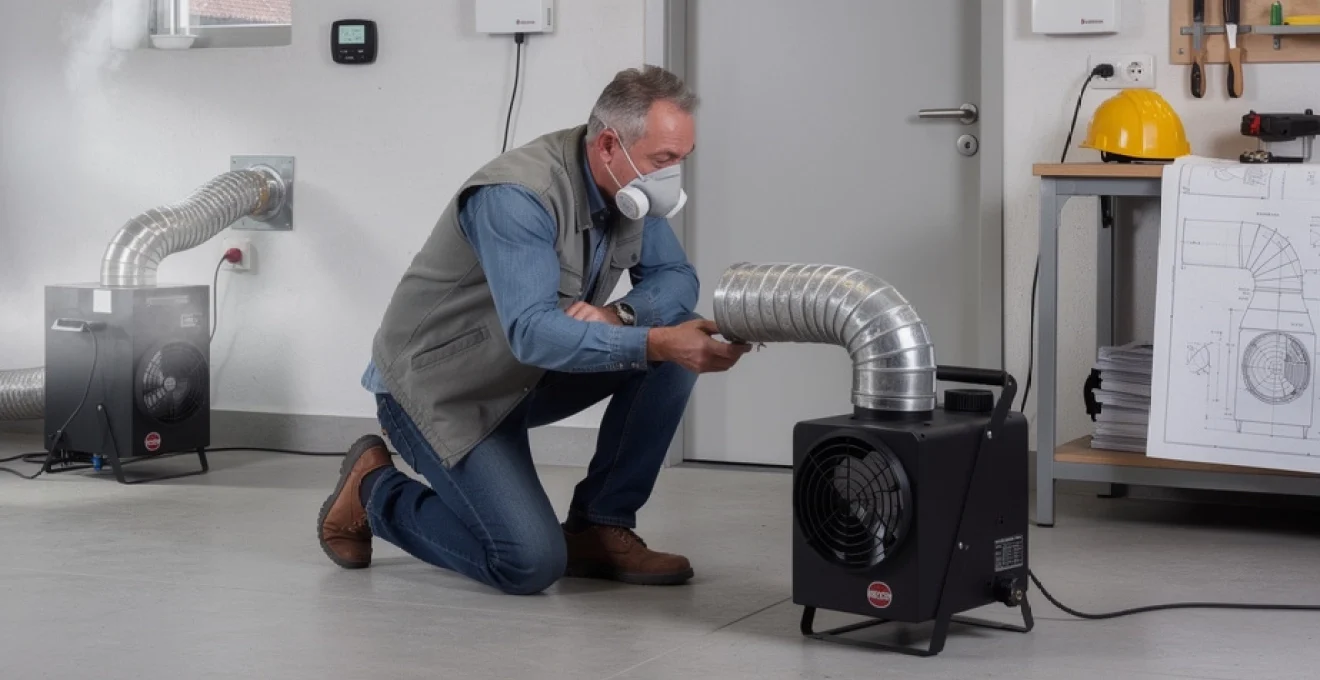
The question of using diesel space heaters indoors sits at the intersection of practicality, cost-effectiveness, and serious health considerations. As energy prices continue to rise and more people seek affordable heating solutions for garages, workshops, and converted spaces, the temptation to deploy portable diesel heaters in enclosed environments has grown considerably. However, the reality of diesel combustion and its byproducts demands a thorough understanding before you make any decisions about indoor heating. The chemistry of burning diesel fuel produces a complex cocktail of gases and particulates that can pose significant risks to human health, even when ventilation appears adequate. This isn’t simply about feeling warm—it’s about understanding the fundamental incompatibility between certain heating technologies and the spaces where we live and work.
Understanding diesel space heater combustion systems and indoor air quality risks
When diesel fuel combusts, it undergoes a complex chemical reaction that, while producing substantial heat energy, also generates numerous harmful byproducts. The efficiency of this combustion process directly impacts the concentration of dangerous emissions released into the surrounding environment. In perfect combustion scenarios with optimal air-fuel ratios, diesel engines can achieve relatively clean burning, but portable space heaters rarely operate under these ideal conditions. Temperature variations, fuel quality inconsistencies, and equipment wear all contribute to incomplete combustion, which dramatically increases the production of toxic gases and particulate matter.
Carbon monoxide production in diesel combustion processes
Carbon monoxide (CO) represents the most immediately dangerous byproduct of diesel combustion in enclosed spaces. This colourless, odourless gas binds to haemoglobin in your blood approximately 240 times more readily than oxygen, effectively suffocating you at the cellular level. Even small concentrations—as low as 70 parts per million (ppm)—can cause headaches, dizziness, and nausea within 1-3 hours of exposure. At 400 ppm, frontal headaches occur within 1-2 hours, and at 800 ppm, unconsciousness and death can occur within 45 minutes to 2 hours. Diesel heaters, particularly those without proper venting, can easily produce CO concentrations exceeding these dangerous thresholds in poorly ventilated spaces.
The misconception that routing just the exhaust pipe outside eliminates CO risk has proven fatal in numerous documented cases. If the exhaust system develops even a small leak, becomes disconnected, or experiences back-pressure issues, carbon monoxide floods directly into your breathing space. Moreover, the negative pressure created by ventilation fans or wind conditions can actually draw exhaust gases back into the building through gaps and openings. This isn’t a theoretical concern—it’s a documented phenomenon that has resulted in deaths across multiple jurisdictions, leading to increasingly stringent regulations around unvented combustion appliances.
Nitrogen dioxide and sulphur dioxide emission profiles
Beyond carbon monoxide, diesel combustion produces significant quantities of nitrogen dioxide (NO₂) and sulphur dioxide (SO₂), both of which pose serious respiratory hazards. Nitrogen dioxide forms when nitrogen and oxygen in the air react under the high temperatures of combustion. At concentrations above 0.5 ppm, NO₂ irritates the respiratory system, and prolonged exposure at even lower levels (0.2-0.3 ppm) can aggravate asthma and reduce lung function. Children and individuals with existing respiratory conditions face particularly severe risks from nitrogen dioxide exposure, as their airways are more susceptible to inflammation.
Sulphur dioxide concentrations depend heavily on the sulphur content of your diesel fuel. While ultra-low sulphur diesel (ULSD) has reduced this problem considerably in automotive applications, the heating-grade kerosene or red diesel often used in portable heaters can contain higher sulphur levels. SO₂ exposure causes bronchospasm, chest tightness, and can trigger asthmatic attacks in sensitive individuals. The HSE workplace exposure limit for SO₂ stands at 0.5 ppm over an 8-hour reference period, a threshold that unvented diesel heaters can easily exceed in typical garage or workshop environments.
Particulate matter PM2.5 and PM10 concentration levels
Diesel
Diesel combustion also generates fine particulate matter, notably PM2.5 (particles smaller than 2.5 microns) and PM10 (smaller than 10 microns). These particles are small enough to penetrate deep into the lungs, and PM2.5 can even cross into the bloodstream. In a confined area with a diesel space heater running, particulate concentrations can rise quickly, especially if the heater is poorly maintained or burning lower-quality fuel. Studies on diesel exhaust in occupational settings routinely measure PM2.5 levels well above recommended indoor air quality guidelines when combustion sources are unvented. For context, the World Health Organization recommends an annual mean PM2.5 concentration below 5 µg/m³, yet unvented diesel appliances can push short-term levels into the hundreds of micrograms per cubic metre.
What does this mean for you in practical terms? Prolonged or repeated exposure to elevated PM2.5 and PM10 has been linked to increased risks of heart disease, stroke, and chronic obstructive pulmonary disease (COPD). In the short term, sensitive individuals may experience coughing, throat irritation, eye discomfort, or worsening asthma symptoms. Unlike odours or visible smoke, you cannot rely on your senses to accurately gauge particulate levels—air can look “clear” while still containing unhealthy loads of microscopic particles. This invisible pollution is one of the key reasons most safety bodies classify unvented diesel heaters as unsuitable for enclosed, occupied spaces.
Oxygen depletion rates in enclosed spaces
Every combustion appliance, including a diesel space heater, consumes oxygen as it burns fuel. In a tightly sealed garage, workshop, or converted room, this oxygen depletion can become a serious problem surprisingly quickly. As oxygen levels drop below the normal atmospheric concentration of around 20.9%, you may experience subtle symptoms at first—fatigue, mild headache, or difficulty concentrating. If a powerful heater is operating continuously in a small, poorly ventilated room, oxygen levels can fall into a range where judgement is impaired, coordination decreases, and, at very low levels, loss of consciousness can occur.
The speed of oxygen depletion depends on heater capacity (kW output), room volume, and air exchange rate. A 10–20 kW diesel space heater in a 50–60 m³ insulated outbuilding with minimal ventilation can significantly reduce oxygen levels within a few hours of continuous operation. Combined with carbon monoxide and nitrogen dioxide production, this creates a “stacking” effect of multiple hazardous conditions. This is why guidance from fire services and health and safety regulators repeatedly emphasises that any unflued diesel heater should be treated as an outdoor or “open-structure” heat source only, not as a safe indoor heating solution.
Vented versus unvented diesel heater configurations for indoor applications
Once you understand the emissions profile of diesel combustion, the distinction between vented and unvented heater designs becomes crucial. In simple terms, an unvented diesel space heater discharges its combustion products directly into the space it is heating, while a vented (or “indirect”) system keeps the flame and combustion gases fully isolated from the indoor air. From a safety perspective, that difference is as fundamental as the gap between running a barbecue in your living room and having a sealed gas boiler with a flue. If you are considering diesel heating for a workshop, garage, or garden room, this design choice will determine whether your setup is compatible with long-term, safe indoor use.
Direct vent systems with sealed combustion chambers
Direct vent diesel heaters use a sealed combustion chamber, drawing in combustion air from outside and exhausting all flue gases back outdoors through a dedicated pipe or coaxial flue. Only the heated air—passed over a heat exchanger—is circulated into your room. This “room-sealed” design is similar to modern condensing gas boilers and is the only diesel heater configuration broadly recognised as suitable for continuous indoor operation in occupied spaces. You will typically find this approach in marine heaters, RV and campervan heaters, and some purpose-designed residential or light commercial units.
From a safety standpoint, the key advantage is that the indoor air and combustion circuit never physically mix. Even if there is a fault in the burner, cracked heat exchanger, or minor exhaust leak, the risk of large quantities of carbon monoxide entering the room is dramatically reduced compared to open-flame or unvented heaters. However, installation quality still matters. Poorly sealed flue penetrations, incorrect routing, or inadequate clearances from combustible materials can undermine the benefits of sealed combustion. If you are not confident with combustion appliance installation, it is wise to involve a qualified heating engineer or marine/RV heating specialist.
Chimney and flue exhaust requirements for indoor installation
When a diesel heater is installed indoors with a dedicated flue or chimney, that exhaust system effectively becomes your primary safety barrier. Regulations and manufacturer instructions usually require that the flue terminates outside at a safe height, away from windows, doors, and air intakes, with appropriate clearances from roofs and other structures. The flue must be constructed from materials capable of withstanding high temperatures and corrosion from acidic condensates formed when exhaust gases cool. In practice, this means double-walled stainless-steel flues or proprietary exhaust systems rated for diesel combustion temperatures.
Another factor often overlooked is draft stability. Short, poorly insulated, or horizontally run exhaust pipes can suffer from condensation, soot buildup, and back-drafting under certain wind conditions. Think of a flue like the “lungs” of your heater—if it cannot breathe freely, combustion quality worsens, soot production increases, and the chance of fumes entering the indoor space rises. For fixed installations in workshops or garages, following both the manufacturer’s flue design and relevant building standards for chimneys and vents is non-negotiable for safe operation.
Ventless diesel heater models and legal restrictions
Ventless or “direct-fired” diesel space heaters, such as many portable cannon or torpedo heaters, are designed primarily for outdoor use or for very large, well-ventilated industrial spaces with open doors and high air change rates. They deliver impressive heat output at relatively low cost, but they achieve this by discharging all combustion products straight into the surrounding air. National and local regulations in many countries either prohibit or strongly discourage the use of these unvented heaters in enclosed spaces where people work or sleep. In the UK, for example, safety guidance from fire and health authorities is clear that direct-fired oil heaters should not be used in confined, occupied rooms.
Despite this, some marketing materials and online videos show ventless diesel heaters operating in garages or sheds with only a partially open door or window. This creates a misleading impression that “a bit of ventilation” is enough to make them safe. In reality, the legal and liability implications can be severe if someone suffers carbon monoxide poisoning or respiratory harm. Insurance policies may also exclude cover where an unapproved heater type is used indoors. If a product’s manual states that it is for outdoor or well-ventilated industrial use only, treating it as an indoor heating appliance is both unsafe and, in many contexts, non-compliant.
Webasto air top 2000 STC and espar airtronic venting specifications
Two of the most widely used diesel air heaters for vehicles, boats, and off-grid cabins are the Webasto Air Top 2000 STC and the Espar (Eberspächer) Airtronic series. Both are designed around a sealed combustion chamber with separate intake and exhaust lines, making them far more suitable for controlled indoor environments than open-flame space heaters. These units typically provide between 2 kW and 5 kW of output, which is enough to heat small workshops, campervans, garden rooms, or insulated garages when properly installed. But their safety depends heavily on following the venting specifications published by the manufacturers.
For example, installation manuals for these heaters specify maximum exhaust pipe lengths, minimum bend radii, and required downward slopes to prevent condensate pooling. They also call for high-temperature exhaust hose, secure clamping, and termination points positioned away from doors, windows, and ventilation intakes. Combustion air inlets must draw from a clean, outdoor location, not from dusty or fume-laden indoor areas. If you are considering adapting an automotive or marine diesel heater for a static indoor space, you should treat the manufacturer’s installation guidance as mandatory rather than optional. Cutting corners on venting may save a few hours of work but can negate the very safety benefits that make these heaters attractive in the first place.
Building regulation compliance and safety standards for indoor diesel heating
Even if a diesel space heater appears technically capable of safe indoor use, you still need to consider whether it complies with relevant building regulations and product safety standards. These rules are not just bureaucratic red tape—they are based on decades of incident data, laboratory testing, and field experience. In the UK and across Europe, standards like BS EN 1596 and CE marking schemes help you distinguish between heaters that have undergone basic safety evaluation and devices sold with minimal oversight. If you are planning a permanent or semi-permanent installation in a home, workshop, or workplace, checking compliance is an essential part of responsible design.
BS EN 1596 and CE marking requirements for portable heaters
BS EN 1596 is a European standard that covers portable oil-fired air heaters, including many diesel-fired models used on construction sites and in agricultural settings. Products tested under this standard are evaluated for aspects such as combustion efficiency, stability, resistance to flame rollout, and the integrity of fuel and air systems. A heater that complies with BS EN 1596 and carries a legitimate CE marking has, at minimum, been subjected to a defined series of safety checks and performance tests. That does not automatically make it suitable for enclosed residential use, but it does provide a baseline assurance versus uncertified devices.
CE marking (and, in the UK post-Brexit, UKCA marking) indicates that the manufacturer declares conformity with all applicable EU or UK directives, including those related to gas and fuel-burning appliances, electrical safety, and electromagnetic compatibility. When evaluating diesel space heaters, especially low-cost imports, be wary of vague or counterfeit markings. Poorly translated manuals, missing technical data, and a lack of traceable manufacturer contact details are all red flags. For indoor or quasi-indoor environments like garages and workshops, it is wise to choose heaters from established brands with clear documentation of compliance to BS EN 1596 or equivalent standards.
UK building regulations part J combustion appliance provisions
In the UK, Building Regulations Part J covers combustion appliances and fuel storage systems, setting out requirements for safe installation, ventilation, and flue arrangements. While Part J is often associated with wood stoves and gas boilers, its principles also apply to fixed diesel heaters installed in buildings. The regulations address topics such as the minimum free area for ventilation openings, flue design and termination, protection of combustible materials near hot surfaces, and the provision of carbon monoxide alarms in certain situations. If you convert a detached garage or outbuilding into a heated workspace with a fixed diesel heater, local building control may expect you to meet these provisions.
From a practical standpoint, Part J emphasises that every combustion appliance must have an adequate supply of air for combustion and for the safe removal of flue gases. This means that even with a sealed combustion diesel heater, the building itself may require background ventilation to prevent negative pressure and back-drafting. If you are uncertain whether your project falls within the scope of the regulations—especially with more permanent conversions like garden offices or studios—it is sensible to consult building control or a qualified installer early in the planning stage. Retrofitting compliance after installation is often more disruptive and expensive than designing it in from the outset.
HSE workplace exposure limits for diesel exhaust emissions
For workshops, warehouses, and commercial garages, the UK Health and Safety Executive (HSE) sets workplace exposure limits (WELs) for various components of diesel exhaust, including nitrogen dioxide, sulphur dioxide, and particulate matter. Although diesel space heaters may not be explicitly named in some guidance documents, their emissions fall into the broader category of diesel engine exhaust and combustion byproducts. HSE expects employers to manage these exposures under the Control of Substances Hazardous to Health (COSHH) regulations, which require risk assessments, engineering controls, and, where necessary, monitoring of air quality.
If you operate a workplace where a diesel heater is used to maintain temperature, you must ensure that cumulative exposure over a shift does not exceed WELs. This is particularly important in semi-enclosed warehouses or workshops where vehicles, forklifts, and other combustion sources also operate. In many cases, the easiest way to achieve compliance is to switch from direct-fired diesel heaters to indirect-fired units located outside, with only clean warm air ducted indoors. Alternatively, you may find that electric, gas, or infrared heating solutions produce far fewer regulatory headaches in the long run.
Mechanical ventilation and fresh air exchange calculations
Mechanical ventilation is often presented as a solution to the indoor air quality issues caused by diesel space heaters, but it is not a magic bullet. To be effective, ventilation must be properly sized for the heater output, room volume, and emission rates. In simple terms, you need to replace contaminated air faster than the heater can pollute it, while also maintaining comfortable temperatures and reasonable energy efficiency. This balance can be quantified using air changes per hour (ACH)—a measure of how many times the full volume of air in a room is replaced in one hour.
For a rough rule of thumb, large industrial spaces using direct-fired heaters might target 6–10 ACH or more, achieved through a combination of mechanical extract fans and large openings such as roller shutter doors. Smaller garages or converted rooms rarely approach this level of air exchange without becoming uncomfortably draughty or cold. If you plan to calculate ventilation for a specific diesel heater, you would consider the heater’s fuel consumption rate, likely CO and NO₂ generation, and the desired maximum indoor concentration of each contaminant. Given the complexity and the potential consequences of miscalculation, involving a ventilation engineer or using manufacturer-provided sizing tools is strongly recommended whenever combustion appliances are used indoors.
Carbon monoxide detection systems and automatic shut-off mechanisms
Even with the best planning, no combustion system is infallible, which is why carbon monoxide detection should be treated as a non-negotiable safety layer wherever diesel heaters operate near people. A modern CO alarm designed to BS EN 50291 (for domestic use) or equivalent standards provides continuous monitoring and audible alerts at concentrations well below life-threatening levels. For workshops or mixed-use spaces, placing detectors both at head height in occupied zones and near potential leakage paths (such as doorways between heater rooms and work areas) can help you catch problems early. Because CO diffuses relatively evenly, exact placement is less critical than ensuring alarms are present, powered, and tested regularly.
Some advanced diesel heaters and building management systems integrate carbon monoxide sensors with automatic shut-off mechanisms. If CO levels exceed a preset threshold, the heater is shut down, and in some cases, ventilation fans are activated to purge the space. Think of this as the equivalent of an airbag in a car: you hope never to need it, but if something goes wrong—a blocked flue, a failed seal, or an operating error—automatic shutdown can prevent a near miss from becoming a tragedy. When evaluating heater options for indoor or semi-indoor use, prioritising models that support external safety interlocks or built-in fault shutdowns is a wise investment.
Alternative indoor-safe diesel heating technologies and retrofitting options
If you like the idea of diesel as an energy-dense, relatively affordable fuel, but you also care about indoor air quality and compliance, you are not limited to crude space heaters. A new generation of indoor-safe diesel heating technologies separates the combustion process from the air you breathe, often using heat exchangers, hydronic circuits, or external combustion modules. In many cases, these systems can be retrofitted into existing garages, workshops, cabins, and garden rooms without major structural alterations. The key is to think of diesel not as a “room heater” but as a heat source that can be safely isolated from occupied spaces.
Hydronic diesel heaters with heat exchanger isolation
Hydronic diesel heaters use a small burner to heat a closed loop of coolant—similar to an automotive engine’s cooling system. That hot coolant is then circulated through radiators, fan-coil units, or underfloor heating loops inside the building. Because the combustion circuit remains sealed and vented outdoors, the only thing entering your room is warm water or glycol, not fumes. This architecture makes hydronic diesel systems particularly attractive for larger garages, workshops, or outbuildings where you want even, comfortable heat rather than intense spot heating.
From a retrofit perspective, hydronic diesel heaters can be installed in an external enclosure or plant room, with insulated pipework bringing heat indoors. You might, for example, mount the diesel boiler outside a workshop and connect it to a small radiator network inside, just as you would with an oil-fired domestic boiler. The main considerations are frost protection for external pipework, adequate fuel storage (such as a bunded tank), and compliance with flue and ventilation requirements. If you are currently relying on expensive electric heaters, a hydronic diesel system with proper isolation can significantly reduce running costs while maintaining indoor air safety.
Planar 2D diesel air heaters with external combustion chambers
Planar 2D and similar compact diesel air heaters operate on a principle comparable to Webasto and Espar units: a sealed combustion chamber, external intake and exhaust, and a heat exchanger that delivers clean warm air into the room. These heaters are popular in campervans, off-grid cabins, and workshops because they offer a good balance of efficiency, controllability, and safety when installed correctly. A typical 2 kW–4 kW unit is capable of heating a single garage or medium-sized garden office, especially if the building is reasonably well insulated.
For indoor applications, one of the safest approaches is to mount the heater in a ventilated compartment, on the outside of the building, or in an attached but separated space, and then duct only the warm air into the occupied room. This way, any potential failure in the combustion side remains physically isolated from people. Many users choose to run these heaters on high-quality kerosene or ultra-low sulphur diesel to minimise soot formation and maintenance. If you are moving up from basic electric fan heaters, a well-installed Planar-type system can feel like a night-and-day improvement in comfort—without introducing the direct exposure to diesel exhaust that makes unvented heaters so problematic.
Indirect fired diesel heaters for workshop and garage applications
Indirect fired diesel heaters are essentially mobile boilers with built-in heat exchangers and blowers. The burner and flame are enclosed within a combustion chamber, and only clean, heated air is discharged through a duct into the target area. Combustion gases are routed outdoors via a flue, similar to a fixed boiler system. These units are widely used on construction sites, in event marquees, and in large workshops where temporary but powerful heating is required. For a warehouse, vehicle bay, or industrial unit, an indirect diesel heater positioned outside with flexible ducting into the space often represents the safest and most compliant compromise between performance and air quality.
From a retrofit standpoint, you can think of an indirect heater as a “plug-in” external heat source: park the unit outdoors, route the flue vertically or away from doors and windows, and bring only hot air inside through a robust duct. Because the combustion products never mix with indoor air, the risks of carbon monoxide poisoning and particulate exposure are greatly reduced compared with direct-fired cannons. However, you will still need to consider noise, fuel logistics, and regular servicing of the burner and heat exchanger. For many businesses frustrated with ineffective electric heaters but wary of indoor diesel fumes, upgrading to an indirect diesel system is a practical middle ground that preserves both productivity and safety.