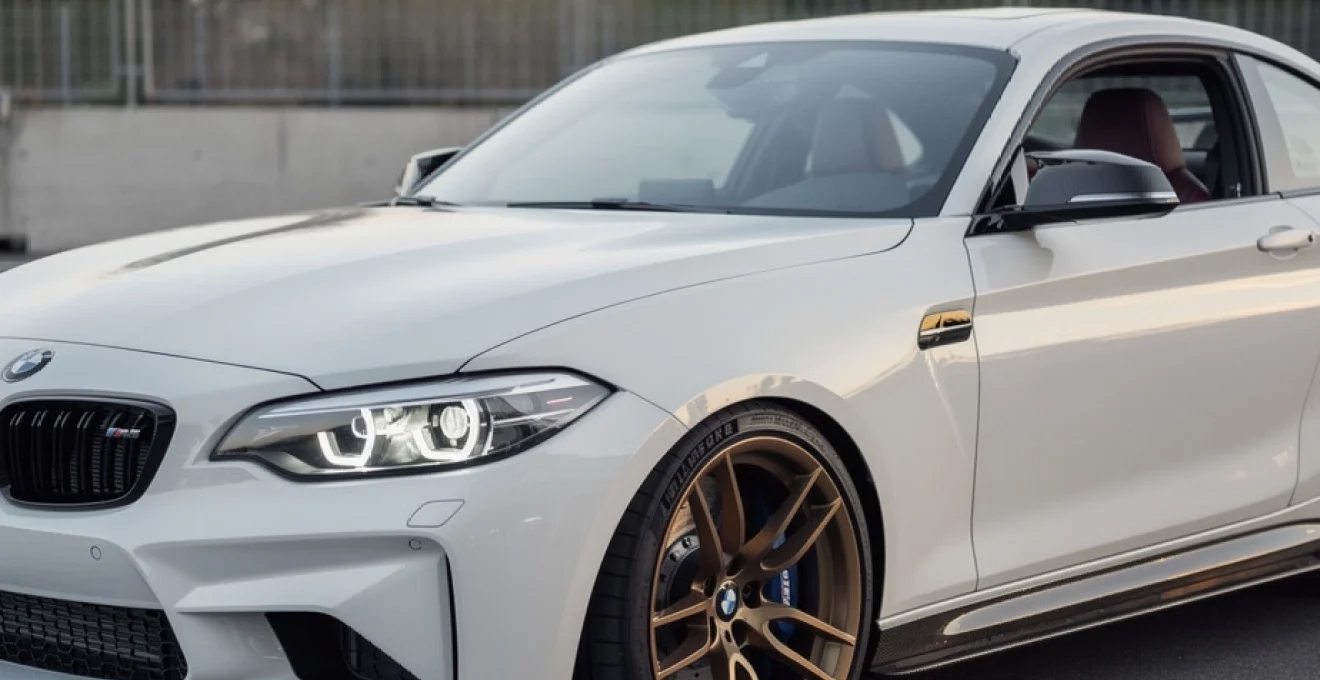
The BMW M2 has firmly established itself as one of the most compelling driver’s cars in the modern performance landscape, combining raw power with surprising everyday usability. While much attention has been lavished on vibrant hues like Toronto Red and Zandvoort Blue in official marketing materials, the white-painted G87 M2 presents a distinctive aesthetic proposition that deserves considerable attention. White paint finishes offer a unique canvas that dramatically alters the visual presence of this compact performance machine, emphasising architectural lines whilst providing striking contrast opportunities with carbon fibre accents and wheel choices. The first real-world sightings of Alpine White M2 models emerging from the San Luis Potosi production facility have reignited discussions about colour selection’s impact on perceived vehicle character. This comprehensive examination explores how white paintwork transforms the M2’s aggressive styling language, examines the technical specifications of available white finishes, and investigates the broader aesthetic considerations that position white as a compelling alternative to BMW’s more flamboyant colour offerings.
Alpine white III vs mineral white: paint finish specifications for the G87 M2
BMW’s white paint portfolio presents prospective M2 owners with nuanced choices that extend beyond simple aesthetic preference. Understanding the technical composition and visual characteristics of each white variant proves essential when specifying your performance machine, particularly given the significant investment required.
Non-metallic alpine white III paint composition and UV protection
Alpine White III represents BMW’s standard non-metallic white offering, featuring a solid pigment structure without metallic particles or pearlescent additives. This formulation delivers a crisp, clinical appearance that emphasises the M2’s sculpted bodywork without distraction. The paint system incorporates advanced UV-resistant polymers that maintain colour stability across extended exposure periods, addressing historical concerns about white finishes yellowing over time. Modern clearcoat technology provides scratch resistance comparable to metallic alternatives, though the absence of metallic flake means surface imperfections may appear marginally more visible under certain lighting conditions. The non-metallic composition actually offers advantages in repair scenarios, as colour matching proves considerably simpler than with complex metallic or pearlescent finishes. Alpine White III has adorned countless BMW M models throughout the marque’s history, establishing strong heritage credentials that appeal to enthusiasts valuing traditional specification approaches.
Mineral white metallic flake technology and light refraction properties
Mineral White Metallic introduces aluminium flake particles suspended within the paint matrix, creating subtle sparkle effects as light interacts with the surface from varying angles. This metallic composition delivers greater visual depth compared to solid Alpine White III, particularly noticeable in direct sunlight where the finish exhibits dynamic character absent from non-metallic alternatives. The flake particles measure between 15-25 microns, carefully calibrated to provide noticeable metallic shimmer without overwhelming the base white pigmentation. Light refraction properties mean Mineral White appears slightly warmer in tone compared to Alpine White III’s cooler, more clinical presentation. This warmth proves particularly effective when paired with gold or bronze wheel finishes, creating sophisticated contrast combinations. The metallic finish also demonstrates superior resistance to minor swirl marks and fine scratches, as the flake particles help mask superficial surface imperfections that might telegraph more obviously on solid paint. However, you should anticipate extended paint correction times should restoration prove necessary, as achieving consistent finish across repaired sections demands meticulous colour-matching protocols.
Cost differential and resale value analysis between white variants
Alpine White III typically arrives as a no-cost option on M2 specifications, positioning it as the economically rational choice for budget-conscious buyers. Mineral White Metallic commands a premium approximating £750-£995 depending on market and specification timing, placing it within BMW’s standard metallic paint tier. This cost differential may appear modest within the M2’s £70,000+ purchase price context, yet represents a meaningful consideration when accumulating optional extras. Resale value analysis presents interesting dynamics: whilst metallic finishes traditionally command marginal premiums in used markets, white vehicles demonstrate relatively consistent residual performance regardless of metallic versus non-metallic status. Data from automotive valuation specialists suggests white M2 models maintain strong desirability across both variants, with condition and specification exerting greater influence than paint finish technicalities. Geographic market variations prove significant—certain regions demonstrate pronounced preference for non-metallic finishes, whilst others favour
greater significance. For buyers concerned about optimal liquidity, prioritising popular option combinations (automatic transmission, key driver assistance packages, and carbon roof) typically yields more predictable resale outcomes than agonising over Alpine versus Mineral White. Ultimately, the cost differential between these white paint finishes should be viewed as a personal aesthetic investment rather than a decisive financial lever in long-term ownership calculations.
Paint thickness measurements and stone chip resistance ratings
Factory paint thickness on the G87 M2 generally falls between 110 and 140 microns across most panels, encompassing primer, basecoat and clearcoat layers. Independent paint depth readings on Alpine White III and Mineral White Metallic cars suggest minimal variation between the two finishes, with differences of 5-10 microns typically attributable to panel location rather than paint type. The clearcoat layer, which provides the majority of stone chip resistance and gloss retention, remains functionally identical across both white variants on standard production cars. Consequently, chip resistance is dictated more by driving conditions and following distances than by the choice between solid and metallic white.
That said, real-world observations indicate that stone chips tend to appear marginally less conspicuous on Mineral White Metallic due to light scattering from the metallic flake, which can visually soften the harsh contrast of exposed primer. Alpine White III, with its uniform solid tone, makes high-contrast dark chips marginally easier to detect when scrutinised at close range. From a protection standpoint, owners planning frequent motorway use or spirited B-road drives may wish to consider supplementary measures such as paint protection film across the front bumper, bonnet leading edge and mirror caps. When combined with regular decontamination and ceramic protection, both white finishes can maintain showroom-level appearance for many years despite the M2’s performance-focused usage profile.
Aerodynamic enhancements: M2 carbon fibre exterior components in white
Pairing a white BMW M2 with carbon fibre exterior components creates one of the most visually striking configurations available from the M Performance catalogue. The stark contrast between bright paintwork and exposed weave not only amplifies the car’s motorsport-inspired character, it also highlights the aero devices that subtly influence stability at speed. On a dark-coloured car, these components can blend into the background; on an Alpine or Mineral White M2, they read more like deliberate design statements. Understanding how each carbon element interacts with the bodywork and airflow helps you spec a car that looks cohesive rather than cluttered.
Carbon fibre front splitter contrast against white bodywork
The M Performance carbon fibre front splitter is arguably the most transformative single piece you can add to a white M2. Against Alpine White III, the rich, glossy carbon weave delivers razor-sharp visual definition along the lower leading edge, effectively lowering the perceived ride height and broadening the car’s stance. On Mineral White Metallic, the effect is slightly softer due to the warmer paint tone, but the interplay of metallic sparkle and carbon gloss gives the nose a more layered, premium appearance. Functionally, the splitter helps manage airflow at the front axle by reducing lift, particularly noticeable at autobahn or track speeds, though its benefits remain subtle in everyday driving.
From a styling standpoint, the dark carbon element acts like eyeliner on a face: it frames the front end and draws attention to the large air intakes and squared-off bumper architecture. This is especially impactful on white cars, where the bumper surfaces can otherwise appear monolithic. Owners should, however, be aware that a protruding splitter increases the risk of kerb rash and stone impacts, which will be more visually obvious on pristine carbon than on painted plastic. If your M2 will spend significant time negotiating steep driveways or aggressive speed bumps, you may wish to balance the aesthetic gain against the practical realities of daily use.
M performance side skirts and rear diffuser visual integration
Continuing the carbon theme along the flanks, M Performance side skirt extensions visually tie the front splitter to the rear diffuser, creating a cohesive lower body line on white cars. On Alpine White, these side blades carve a strong horizontal graphic between the arches, which helps reduce the apparent vertical mass of the M2’s boxy sides. Mineral White again offers a marginally softer contrast, but the dark carbon still anchors the profile and makes the factory wheel arches appear even more muscular. Viewed from three-quarter angles, this combination emphasises the car’s rear-driven stance and gives the impression of a lower centre of gravity.
At the rear, the M Performance carbon diffuser introduces sharper fin geometry around the exhaust outlets, lending the back end a more technical, motorsport-like aesthetic. Against a white bumper, the individual fins and central cut-out are much easier to read than on darker paintwork, avoiding the visual “blob” effect that can occur on all-black valances. Beyond appearance, the diffuser plays a modest role in smoothing airflow as it leaves the underbody, contributing to high-speed stability. The more exposed areas of carbon at the rear are also prime candidates for protective coatings or film, as road grime and exhaust soot will be more apparent when contrasted against bright paint.
Gloss black mirror caps and window trim detailing
For buyers who find full carbon exterior packs a step too far, gloss black mirror caps and Shadowline window trim offer a subtler way to sharpen a white M2’s appearance. On Alpine White III, black mirrors provide a classic motorsport-inspired accent, reminiscent of touring car liveries where mirrors were often differentiated for visibility. The contrast visually slims the mirror housings and ties in neatly with the black window surrounds, grille elements and lower bumper inserts. On Mineral White, the warmer body tone makes the black highlights feel particularly premium, similar to high-end audio equipment with white casings and black control interfaces.
From a design perspective, these gloss black details serve as visual punctuation marks that break up larger white surfaces without competing with the car’s core body lines. They also offer a degree of practical benefit; stone chips or minor scuffs on black mirror caps can often be corrected more easily than on carbon fibre weave, and replacement parts are generally less expensive. If you’re considering carbon mirrors but are unsure about long-term wear and tear, starting with gloss black caps can be a sensible compromise that still delivers strong contrast on a white M2.
Gurney flap boot spoiler: functional downforce and aesthetic balance
The optional carbon fibre Gurney flap boot spoiler is a small component with disproportionately large impact on both the look and aero balance of a white BMW M2. Sitting at the very trailing edge of the bootlid, the subtle upturned lip cleans up airflow separation and adds a touch of rear downforce at higher speeds, particularly useful on track days or during high-speed lane changes. Think of it as the final brushstroke on a painting: without it, the rear profile can look slightly unfinished; with it, the composition feels resolved and purposeful. On Alpine or Mineral White, the dark carbon element outlines the boot’s upper edge, neatly echoing the rear window’s black surround.
Visually, the Gurney flap is more understated than a full pedestal wing but still communicates intent, making it ideal for owners who want performance credibility without drifting into overtly aftermarket territory. Because it sits higher on the car and is framed by white paint rather than blending into a dark background, the delicate carbon weave is particularly noticeable in bright light. This is one area where adding paint protection film or at least a durable ceramic coating is strongly recommended, as the trailing edge of the bootlid tends to attract dust and micro-abrasions during washing. When combined with a carbon diffuser, the spoiler helps visually bookend the rear of the car, creating a balanced, layered effect that suits the M2’s squat proportions.
Wheel and brake caliper configurations for white M2 models
Wheel and brake choices play an outsized role in defining how a white BMW M2 is perceived on the road. Because the bodywork effectively becomes a neutral backdrop, wheel finish and caliper colour assume centre stage, much like footwear and accessories can transform an otherwise simple outfit. The G87’s exaggerated arches invite bold configurations, yet the wrong combination can easily tip from assertive to overwrought. Understanding how different finishes interact with Alpine and Mineral White helps you build a specification that looks intentional rather than improvised.
Style 826M forged alloys in jet black vs gold finish combinations
The 19/20-inch staggered Style 826M forged wheels remain the de facto choice for performance-focused M2 builds, and their finish dramatically alters the character of a white car. In Jet Black, the 826M wheels deliver maximum contrast against Alpine or Mineral White, visually shrinking the wheel spokes and placing emphasis on the car’s wide, muscular stance. This “black-on-white” combination evokes classic track cars and photography test mules, where wheels and aero parts appear as dark silhouettes against white bodywork. The downside is that brake dust and minor kerb rash are more noticeable on glossy black surfaces, requiring diligent cleaning to maintain their mirror-like appearance.
By contrast, the bi-colour or Gold finishes available through M Performance parts introduce a more exotic, almost concept-car aesthetic when paired with Mineral White Metallic. The warm metallic paint harmonises with the gold tones, creating a cohesive, layered palette that feels more boutique than brutal. On Alpine White III, gold wheels stand out more starkly, evoking classic rally and touring car builds where white shells wore bronze or gold competition wheels. As with all strong statements, this combination is polarising: if you prefer understatement, Jet Black or orbit grey may be safer choices, but if you’re seeking maximum curb appeal, gold on white is difficult to ignore.
M compound braking system with blue or red caliper options
The M Compound braking system’s caliper colour options provide another opportunity to fine-tune the look of a white M2. Standard blue calipers create a subtle yet recognisable M signature, particularly effective against Jet Black 826M wheels where the blue flashes through the spokes like glimpses of a team jersey beneath a racing suit. On Alpine White, blue calipers introduce a cool-toned accent that complements the paint’s clinical character, whereas on Mineral White their impact is slightly softened by the warmer body colour. If you favour a classic BMW motorsport vibe, blue calipers remain the safe, heritage-appropriate choice.
Red calipers, by contrast, project a more overtly aggressive, track-focused persona. Against a white M2, they provide an almost supercar-like contrast, especially when combined with dark wheels and a carbon exterior pack. This “tricolour” combination of white body, black wheels and red brakes has long been popular in performance-car culture because it reads clearly from distance and in photographs. From a functional perspective, caliper colour does not affect braking performance, but darker shades may mask brake dust more effectively between washes. When ordering new, it’s worth considering how your chosen caliper colour will interact with both wheel finish and exterior trim, as changing caliper colour later is significantly more involved than swapping wheels.
Tyre sidewall aesthetics: michelin pilot sport 4S lettering visibility
While often overlooked, tyre sidewall design can subtly influence the visual impression of a white BMW M2, particularly in close-up photography or at shows. The factory-fit Michelin Pilot Sport 4S tyres feature bold sidewall lettering that stands out more distinctly against dark wheels on a white car. On Jet Black 826M wheels, the white and embossed lettering creates a motorsport-inspired “track rubber” aesthetic, especially if the tyres are kept clean and treated with a satin (rather than glossy) dressing. This combination can make the M2 look like a scaled-down GT racer, underlining its performance credentials even when parked.
Because the bodywork is white, the visual weight around the wheelarches is largely dictated by the darkness and texture of the tyres and wheels. A lightly dressed, deep-black sidewall provides crisp separation from the bright paint, enhancing the car’s sculpted arches. Overly shiny tyre dressings, however, can reflect the white bodywork and create a less defined edge, slightly blurring the M2’s powerful stance. If you plan to photograph your white M2 frequently, paying attention to tyre condition and sidewall presentation can be as impactful as washing the paint itself. It is one of those small details that enthusiasts notice immediately, even if casual observers cannot articulate what makes the car look so “right”.
Interior cabin contrast: upholstery pairings with external white paintwork
Moving inside, the interplay between a white exterior and the M2’s interior trims can significantly influence the car’s perceived ambience. Because you catch glimpses of the cabin every time the doors open, upholstery colour and material choices either reinforce or counterpoint the clean, technical feel of Alpine and Mineral White. BMW’s palette for the G87 includes Black Vernasca Leather with M colour stitching, Cognac Vernasca Leather and Black Full Merino Leather, each creating a distinct mood when paired with a white shell. Choosing the right interior for your white M2 is a bit like selecting the lining of a tailored suit; most people will only see it occasionally, but you will appreciate the harmony every time you drive.
Black Vernasca Leather with M colour stitching delivers the most classic, motorsport-oriented combination. Against a white exterior, the dark cabin creates a strong inside-outside contrast, making the doors feel like portals from a bright paddock into a focused driving environment. The subtle M tri-colour accents echo the exterior’s M-specific cues, such as the badges and, where specified, coloured brake calipers. If you frequently drive at night or in overcast climates, the darker interior can feel cocooning and purposeful, although some may find it visually heavy compared with the light, crisp exterior paint.
Cognac Vernasca Leather offers a more luxurious, GT-flavoured pairing with white paintwork, particularly Mineral White Metallic. The warm tan tones introduce a sense of craftsmanship and comfort, transforming the M2 from an unapologetic track tool into something closer to a junior grand tourer. From outside, the Cognac interior reads clearly through the side glass against the white bodywork, much like high-end furniture visible inside a modern white-walled apartment. This combination is particularly attractive for owners who split usage between spirited weekend drives and longer road trips, as the cabin feels both inviting and distinctive compared with the more common all-black specification.
For those seeking maximum material quality and a subtle aesthetic, Black Full Merino Leather with optional carbon fibre interior trims pairs beautifully with a white exterior. Merino’s finer grain and softer feel elevate perceived quality, while the carbon inlays echo any exterior carbon aero components to create a consistent visual theme. On an Alpine White M2 with carbon roof and exterior pack, this “monochrome plus weave” specification results in an almost technical, laboratory-grade atmosphere, where textures rather than colours provide differentiation. Practical considerations still apply: lighter interiors will show dye transfer and wear more readily, while darker cabins are more forgiving on daily-driven cars.
Regardless of upholstery choice, contrasting seatbelts, stitching and the optional M Carbon bucket seats can be used to dial the interior’s visual intensity up or down. For example, the sculptural carbon buckets with their exposed backs look especially dramatic when glimpsed against white paint, turning every open door into a mini showroom moment. As with wheel and brake combinations, the goal is coherence: when exterior white paint, interior colour and performance options are thoughtfully aligned, the M2 feels like a cohesive design statement rather than a list of unrelated options.
Photographic appeal: white M2 positioning in automotive photography
The BMW M2 in white holds particular appeal for photographers because the bright bodywork acts like a reflective panel, catching and shaping light in ways that darker colours simply cannot. Whether you’re a professional content creator or an owner capturing images for social media, a white M2 offers a flexible canvas that rewards careful positioning and exposure control. However, shooting white cars introduces its own challenges: blown highlights, loss of panel definition and excessive reflections can all conspire to flatten the car’s sculpted surfaces if not managed correctly. Understanding how to work with light, location and motion will help you showcase the M2’s aggressive yet compact form to full effect.
Natural light exposure settings for white paint documentation
When photographing a white BMW M2, managing exposure is critical to preserving detail in the paint while maintaining enough contrast to define the car’s sharp creases and muscular arches. Shooting in soft, diffused light—such as during golden hour or under light cloud cover—helps avoid harsh specular highlights that can clip to pure white on digital sensors. In manual or aperture-priority modes, slightly underexposing by 1/3 to 2/3 of a stop compared with the camera’s meter reading often yields better results, as in-camera metering can be fooled by the large expanse of white. This minor adjustment preserves highlight detail, which you can later lift in post-processing if needed.
Using the histogram on your camera or smartphone is invaluable; aim to keep the right-hand side from pushing hard against the edge, which would indicate blown highlights in the paint. Setting a lower ISO and using a polarising filter can also help reduce unwanted reflections and reveal more of the paint’s texture, especially on Mineral White Metallic where flake structure becomes visible in strong light. If you’re documenting the differences between Alpine and Mineral White, consider capturing both cars under identical lighting and exposure settings; subtle tonal and flake variations only become apparent when variables are tightly controlled. Think of your camera setup as a dynamometer for light—it needs consistency to deliver meaningful comparisons.
Urban architecture backdrops: concrete and glass complementary environments
In terms of location, white M2s respond particularly well to urban backdrops dominated by concrete, glass and steel. The car’s crisp paintwork harmonises with neutral architectural tones, while the darker window frames, vents and carbon elements stand out like mechanical jewellery against a minimalist gallery wall. Multi-storey car parks, modern office districts and industrial estates with clean lines all provide excellent environments, especially when shot early or late in the day to avoid cluttered backgrounds. The repeated geometry of windows and pillars can echo the M2’s squared-off styling cues, enhancing the sense of cohesion between car and setting.
Positioning the car near reflective glass surfaces can introduce interesting secondary reflections that add depth without overwhelming the subject. A white M2 parked parallel to a glass façade may pick up soft hints of sky or surrounding buildings along its flanks, subtly breaking up large panels without distorting the car’s proportions. Concrete underpasses or tunnels, meanwhile, create controlled lighting “boxes” where you can experiment with side lighting and leading lines. Because white paint readily picks up colour casts from the environment, pay attention to nearby coloured walls or neon signage; these can either add creative flair or inadvertently tint the car in ways that feel unnatural.
Motion panning techniques showcasing white against blurred backgrounds
To convey the BMW M2’s dynamic character, motion panning shots work particularly well with white paint, as the bright car remains legible against a blurred, darker background. Panning involves tracking the moving vehicle with your camera using a relatively slow shutter speed—typically between 1/30 and 1/80 of a second depending on speed—to keep the car sharp while streaking the surroundings. With a white M2, this technique creates a striking visual contrast: the bright shell appears almost carved out of the scene, while the background melts into painterly lines that emphasise speed. It is akin to spotlighting a dancer on a darkened stage; your subject becomes the undeniable focus.
For best results, choose backgrounds with horizontal elements such as barriers, tree lines or buildings, as these convert into clean motion streaks that accentuate the direction of travel. Pre-focus on a point in the road where you plan to capture the car, then smoothly follow its movement through that point while firing a burst of shots. Accept that many frames will be unusable; even experienced photographers often achieve only a small percentage of perfectly sharp pans. The reward, however, is an image that communicates something static photographs rarely convey: the sense that the compact, wide-arched white M2 is straining against the confines of the frame, eager to surge forward.
Paint protection film application considerations for white finishes
Given the BMW M2’s performance capabilities and the vulnerability of white paint to visible road rash, many owners consider paint protection film (PPF) a critical part of their ownership strategy. On Alpine and Mineral White cars, PPF not only guards against stone chips and light abrasions but also simplifies bug and tar removal, which can otherwise stain bright finishes if left untreated. However, applying film to white paint introduces specific considerations that differ from darker cars, particularly around edge visibility, yellowing over time and installation quality. Getting these details right can mean the difference between an almost invisible shield and a distracting patchwork of edges and seams.
First, film selection matters. Premium PPF brands now offer advanced TPU (thermoplastic polyurethane) films with enhanced clarity, self-healing top coats and improved resistance to yellowing, an especially important factor on white cars where any discolouration is immediately obvious. While no film is entirely immune to ageing, choosing a top-tier product backed by a reputable installer significantly reduces the risk of visible yellowing within the first five to seven years. It is also worth discussing edge-wrapping options with your installer: where panel design allows, wrapping film around the back of edges rather than stopping short reduces the chance of visible dirt lines forming along cut edges, a common complaint on light-coloured vehicles.
Coverage strategy is another key decision. A “front end” package—typically including the front bumper, bonnet leading edge, front wings and mirror caps—offers the best cost-to-benefit ratio for most white M2 owners, as these areas bear the brunt of road rash. Enthusiasts who log frequent motorway miles or track time may opt for full-body coverage, which delivers the most uniform appearance and simplifies washing, albeit at a higher upfront cost. Because white paint can make film boundaries more apparent under certain lighting, full bonnet and wing coverage often look cleaner than partial pieces, avoiding visible lines across large panels. As with specifying factory options, it’s wise to balance budget, usage patterns and aesthetic expectations before committing to a coverage level.
Maintenance practices also influence how well PPF performs over time on white finishes. Regular, gentle washing using pH-neutral shampoos, prompt removal of bird droppings and insects, and periodic application of film-safe sealants or ceramic coatings will help preserve clarity and hydrophobic performance. While some owners worry that coatings might make film more visible, modern products designed specifically for PPF integrate well and can actually reduce dirt adhesion along edges. In the long run, a well-installed, properly maintained PPF system on a white BMW M2 not only preserves the visual drama of Alpine or Mineral White but also protects your investment, allowing you to enjoy the car’s performance without constantly worrying about every pebble and tar spot it encounters.