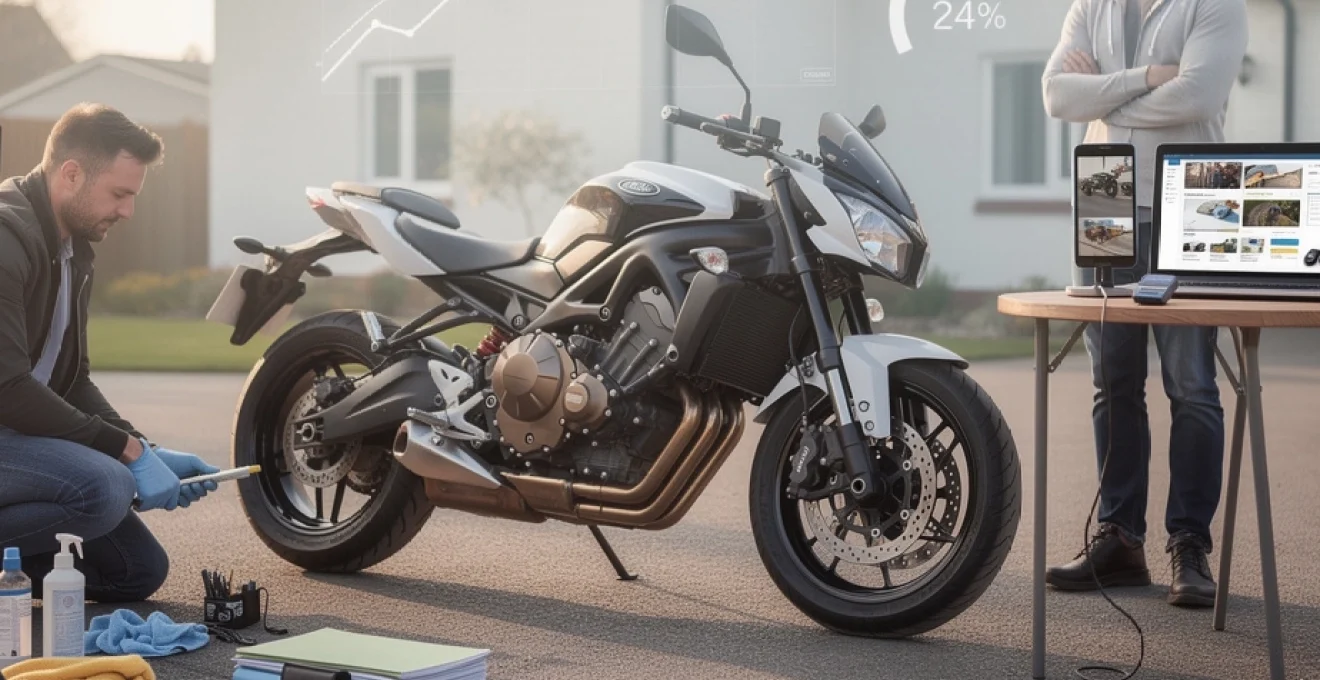
The motorcycle market in 2026 presents unique opportunities for sellers who understand the current landscape. With emission standards stabilising after the Euro 5+ transition and insurance premiums creating distinct market segments, timing your sale correctly can mean the difference between securing top dollar and settling for less than your bike’s true worth. Whether you’re upgrading to a newer model, downsizing your collection, or simply moving away from motorcycling altogether, understanding the modern selling process has become more sophisticated than ever before.
Today’s marketplace demands strategic thinking beyond simply posting an advertisement and hoping for the best. Digital platforms dominate the sales process, professional presentation standards have risen significantly, and buyers expect comprehensive documentation alongside transparent pricing. The convergence of these factors creates both challenges and opportunities for motivated sellers.
Pre-sale motorcycle preparation and documentation requirements
Preparing your motorcycle for sale involves considerably more than a quick wash and basic inspection. The modern buyer expects meticulous attention to detail, comprehensive documentation, and transparent disclosure of any issues or modifications. This preparation phase often determines whether your bike sells quickly at asking price or languishes on the market for months.
DVLA V5C logbook transfer procedures and legal obligations
The V5C logbook represents the cornerstone of legitimate motorcycle ownership transfer in the UK. Sellers must understand their legal obligations regarding this document, as improper handling can result in continued liability for traffic violations, unpaid tolls, and even criminal activities involving your former motorcycle. The DVLA requires notification within 28 days of any ownership change, though this responsibility technically falls to the new owner.
When presenting your V5C to potential buyers, ensure all details match precisely with your motorcycle’s identification numbers. Discrepancies between the logbook and actual vehicle can indicate cloning, theft recovery, or administrative errors that significantly impact value. Keep the original V5C secure throughout the viewing process, allowing buyers to examine it without providing unsupervised access or permitting photography of sensitive details.
MOT certificate validity and advisory item resolution strategies
An MOT certificate with substantial remaining validity provides buyers with confidence and reduces their immediate post-purchase expenses. However, simply having a valid certificate isn’t sufficient in today’s market. Buyers increasingly scrutinise MOT history through the government’s online checker, examining failure patterns, advisory notes, and testing frequency to assess overall maintenance standards.
Advisory items on MOT certificates deserve particular attention during pre-sale preparation. Items like worn brake pads, slightly perished tyres, or minor corrosion spots might not constitute immediate failures, but they signal upcoming maintenance costs to prospective buyers. Addressing these items proactively demonstrates commitment to proper maintenance and can justify premium pricing. Consider obtaining a fresh MOT if your current certificate expires within three months, as this investment often pays dividends through improved buyer confidence.
Service history compilation and maintenance record digitalisation
Comprehensive service records have become increasingly valuable as motorcycles age and maintenance costs rise. Buyers view detailed maintenance history as insurance against hidden problems and unexpected expenses. Compile all service receipts, warranty information, and maintenance records into a organised folder that tells your motorcycle’s maintenance story clearly.
Digital documentation has gained acceptance alongside traditional paper records. Photographs of service stamps, receipts stored electronically, and even video evidence of recent maintenance work can supplement traditional documentation effectively. However, maintain original paper receipts for major services and component replacements, as these provide the highest credibility with serious buyers. When dealing with aftermarket modifications or performance upgrades, include installation receipts and any relevant certification documents to demonstrate professional installation standards.
Professional detailing techniques for maximum visual appeal
First impressions during motorcycle viewings are formed within seconds, making professional-standard presentation crucial for achieving optimal sale prices. Modern buyers often begin their assessment process through online photographs, making visual presentation a critical factor in generating initial interest and serious enquiries.
Engine bay presentation requires particular attention, as knowledgeable buyers use this area to assess overall care and maintenance standards. Clean, organised engine compartments suggest meticulous ownership, while grimy, neglected areas raise immediate concerns about hidden problems. Use appropriate degreasers and detailing products designed specifically for motorcycle applications, avoiding household cleaners that might damage sensitive components or leave residues that attract dirt rapidly.
Professional detailing
Professional detailing should extend beyond cosmetics to subtle signs of care that experienced buyers look for in 2026. Lightly greased pivot points, clean chain and sprockets, corrosion-free fasteners, and well-presented brake components all indicate consistent maintenance rather than last-minute preparation. Avoid over-dressing tyres or seats with silicone products, as this can appear deceptive and may even create safety concerns during test rides. Instead, aim for a clean, factory-correct look that suggests honest ownership and a motorcycle that has been used but properly cared for.
Digital marketplace platform selection and optimisation strategies
Choosing where to sell your motorbike in 2026 is almost as important as how you present it. Different online platforms attract distinct buyer profiles, operate under different fee structures, and reward different listing strategies. Rather than posting the same basic advert everywhere, you can significantly improve your chances of a quick, profitable sale by tailoring your approach to each marketplace. Thinking strategically about where your specific motorcycle is likely to attract the right buyer will save time, reduce tyre-kickers, and help you secure a stronger price.
Autotrader premium listing features and performance analytics
AutoTrader remains one of the most trusted destinations for serious motorcycle buyers, especially those searching for relatively new or higher-value machines. In 2026, its premium listing features give private sellers access to tools that were once the preserve of dealers. Upgraded adverts can include enhanced photo slots, priority placement in search results, and visibility in broader geographic areas, all of which can dramatically increase the number of quality enquiries you receive.
Where AutoTrader really stands out is its performance analytics. You can track advert views, save rates, and search position changes over time, then adjust your pricing or description accordingly. If you notice high view counts but low enquiry levels, that usually signals an issue with price, photos, or perceived condition rather than a lack of demand. Monitoring this data weekly and making small, data-driven tweaks is far more effective than simply re-posting the same advert elsewhere and hoping for a different result.
Ebay motors auction format vs buy it now pricing dynamics
eBay Motors continues to play a unique role in the UK used motorcycle market, offering both auction and fixed-price (Buy It Now) options. Auctions can be effective when selling rare, highly sought-after models where competitive bidding may push the final price beyond expectations. However, for more common bikes, auctions can introduce unnecessary risk, particularly if you misjudge the reserve price or choose a quiet ending time. Think of auctions as a spotlight: powerful when conditions are right, but unforgiving if you mis-time the switch.
The Buy It Now format suits sellers who want more control over pricing and are prepared to wait for the right buyer. In 2026, many private sellers find success with a hybrid strategy: listing at a realistic fixed price while enabling the “Best Offer” feature to encourage negotiation. When deciding between auction and fixed-price, study completed listings for similar bikes, paying attention not just to asking prices but to actual sale prices and time-on-market. This real-world evidence will help you set a starting point that balances speed of sale with strong returns.
Facebook marketplace algorithm optimisation and local targeting
Facebook Marketplace has become a dominant force for local motorcycle sales, but its algorithm-driven feed means simply posting your bike once is rarely enough. The platform prioritises listings that generate engagement, respond quickly to messages, and are frequently updated. You can use this to your advantage by refreshing photos, updating the description with new information, or adjusting the price slightly if interest stalls. Each small change sends a positive signal to the algorithm and can push your listing back in front of more potential buyers.
Local targeting is another strength of Facebook Marketplace, particularly for mid-capacity commuters and affordable beginner bikes. Mentioning nearby towns and cities in your description helps your listing appear in more geographically relevant searches. You can also share the advert into local motorcycle groups, where enthusiasts are actively looking for their next machine. Just be prepared for a higher volume of casual inquiries and be clear and firm about your viewing times, payment terms, and test ride conditions to filter out time-wasters.
Gumtree safety protocols and verified seller badge requirements
Gumtree still attracts a wide spectrum of buyers, from budget-conscious commuters to first-time riders looking for low-cost transport. However, its open nature means you need to apply robust safety protocols when selling a motorbike. In 2026, Gumtree continues to promote safer trading through guidance on in-person meetings, reporting suspicious messages, and avoiding off-platform payment requests. Following these recommendations not only protects you but also reassures genuine buyers that you are a careful, legitimate seller.
The platform’s emphasis on verified profiles and consistent account history is increasingly important. While Gumtree’s “verified” and “trusted” indicators may vary by category and region, maintaining a complete profile, accurate contact details, and a history of honest adverts all help build credibility. Buyers are more likely to engage with a seller whose identity feels anchored in the real world rather than an anonymous account created yesterday. Combine this with clear payment terms—preferably instant bank transfer at the point of sale—and you significantly reduce your exposure to common scams.
MCN bike mart professional photography standards
MCN Bike Mart (often reached via the wider MCN platform) attracts a particularly informed audience of enthusiasts, many of whom follow market trends and know exactly what they’re looking for. As a result, the presentation bar is set higher than on more general marketplaces. Professional-level photography isn’t just appreciated; it is often expected. Crisp, well-framed images taken in good natural light can make the difference between your advert standing out as a cherished machine or blending into a sea of mediocre listings.
MCN’s audience pays attention to detail: close-ups of service books, MOT certificates, quality aftermarket parts, and clean mechanical components can all work in your favour. Think of each photo as a visual answer to a question a serious buyer might ask: “How clean is the chain?”, “What condition are the tyres in?”, “Is the exhaust standard or upgraded?” By pre-emptively answering these questions through photography, you reduce back-and-forth messaging and attract buyers who already feel comfortable with the bike before they arrive.
Accurate valuation methodologies using industry-standard tools
Arriving at a fair, realistic asking price is one of the most challenging parts of selling your motorbike in 2026. Price too high and your listing may sit idle for weeks; price too low and you leave money on the table in a strong used market. Rather than relying on gut feeling or sentimental value, you can use industry-standard valuation tools and structured methods to calculate a rational starting point. These tools mirror the data used by dealers and trade buyers, helping you compete on equal footing.
Parkers motorcycle valuation database analysis techniques
The Parkers motorcycle valuation database remains a widely used reference for ballpark values in the UK. When using Parkers, avoid the temptation to focus only on the top-of-the-range price band for your model. Instead, study the full range of values and read the condition assumptions behind each band. If your bike has patchy service history or cosmetic wear, anchoring your expectations to the “excellent” bracket will only lead to frustration and slow responses from buyers.
A useful approach is to treat Parkers as your baseline, then cross-check with real-world asking prices on major platforms. If Parkers suggests a private sale value of £4,500 but most comparable bikes are advertised at £4,995, you might position your bike around £4,750–£4,850 depending on mileage and extras. This method gives you a rational framework for negotiation while leaving a little room to accommodate reasonable offers. Remember, buyers will likely perform similar checks, so a price that aligns with widely recognised guides will feel more credible.
CAP HPI data integration for market price benchmarking
CAP HPI data underpins much of the trade side of the motorcycle market, from dealer part-exchange valuations to finance settlement figures. While full CAP access is usually reserved for industry professionals, many online valuation tools in 2026 use CAP HPI data behind the scenes. When you request a quote from a “we buy any bike” style service or run an instant valuation on a dealer’s website, you are effectively seeing a filtered version of this trade-focused pricing.
By comparing multiple instant valuations from different CAP-powered tools, you can estimate the trade value and the likely margin a dealer would aim for. If trade offers cluster around £3,800 for your bike and similar examples are retailing at £4,600, you have a reasonable sense of the “wholesale-to-retail” spread. Pricing your private sale somewhere in the middle gives buyers a clear saving against dealer prices while ensuring you achieve more than a straight trade-in. This benchmarking process brings objectivity to negotiations and helps you respond calmly when a buyer cites a lower “book price.”
Mileage depreciation calculations and adjustment factors
Mileage remains one of the most visible drivers of motorcycle depreciation, but the impact is not linear. A well-serviced 25,000-mile tourer may be more attractive than a 10,000-mile example with sporadic maintenance. As a rough guide, you can think of mileage in bands: low (up to 5,000 miles), average (5,000–15,000), and high (15,000+), adjusted for the bike’s age and category. Sportsbikes and 125cc commuters tend to attract buyers who are more sensitive to odometer readings than big adventure or touring bikes, which are expected to cover distance.
To calculate a realistic mileage adjustment, start with a typical annual usage figure—often around 3,000–4,000 miles for larger bikes in the UK—and compare your actual mileage to that benchmark. If your four-year-old machine has only 4,000 miles and full history, you may be justified in asking a 5–10% premium over average values. Conversely, a high-mileage bike may need a 10–15% reduction, unless it comes with exceptional maintenance records and recent major work (such as valve clearances or suspension refresh). Being transparent about how you’ve factored mileage into your price helps buyers understand your logic and reduces lowball offers.
Aftermarket modification impact on resale value assessment
Aftermarket modifications are a double-edged sword when it comes to resale value. Performance exhausts, quickshifters, upgraded suspension, and quality luggage systems can make your bike more attractive to certain buyers, but they rarely return their full cost. As a rule of thumb, you might recover 30–50% of the value of desirable, branded upgrades when selling privately, provided you can show receipts and evidence of professional fitting. Cosmetic add-ons of questionable taste or safety-critical changes with no documentation, however, can actively reduce appeal.
One effective strategy is to separate modifications into two categories: value-adding and neutral/negative. Value-adding items, like top-tier suspension or premium panniers, can be highlighted in the listing and rolled into the asking price. Neutral or polarising mods—loud exhausts, tinted lights, extreme graphics—are often best removed and sold separately, returning the bike closer to factory specification. Think of this as “de-modularising” your value: you unlock the highest resale price by offering a clean, original-looking bike alongside the option for the buyer to purchase extras if they wish.
Professional photography and listing content creation
In a crowded 2026 digital marketplace, your photos and written description function as your bike’s shop window. Most buyers will decide in a matter of seconds whether to click into your advert based on the main image alone. High-quality photography and carefully crafted copy are therefore not luxuries; they are core components of achieving the best possible sale price. The goal is to balance honesty with persuasion, giving buyers enough confidence to travel and view the bike in person.
Think of your listing as a structured story. Begin with a clear, information-rich title that includes the year, make, model, mileage, and one or two standout features (such as “full dealer history” or “one owner from new”). Follow with a concise but detailed description that covers ownership history, servicing, MOT status, modifications, and your reason for selling. Being upfront about minor flaws—stone chips, small scratches, or age-related corrosion—builds trust and reduces the risk of awkward negotiations on the driveway.
On the photography side, aim for a consistent set of shots: both sides of the bike, front three-quarter, rear three-quarter, cockpit/dash, tyres, chain and sprockets, exhaust, and any aftermarket parts. Use natural daylight, avoid harsh shadows, and choose a simple background that doesn’t distract from the bike. A smartphone camera is more than capable if you take your time and check focus. Before uploading, review your images from a buyer’s perspective and ask yourself: “Would I feel confident this bike has nothing to hide based on these photos?” If the answer is no, take a few more shots.
Secure transaction processing and legal transfer protocols
Once you have found a serious buyer, the focus shifts from marketing to safe and secure completion of the sale. This phase carries both financial and legal risk if not handled correctly. In 2026, instant bank transfers and digital DVLA notifications have made the process faster, but the fundamentals remain the same: you should never release your bike or documents until you are fully satisfied that payment is genuine and ownership has been properly transferred. Treat this stage like a formal contract, even if the buyer is friendly and enthusiastic.
For payment, Faster Payments transfers between UK banks are now near-instant and are the preferred method for larger sums. Arrange to complete the transfer while both parties are present, ideally inside your home rather than on the street or in a car park. Once you have confirmed cleared funds in your account via your own banking app or website, you can proceed with handing over the keys. If a buyer insists on using cash, consider meeting at your bank so the cash can be counted, checked, and deposited immediately, reducing the risk of counterfeit notes.
On the legal side, the DVLA’s online service allows you to transfer ownership in real time using the V5C reference number. Completing this together with the buyer on a smartphone or computer ensures both of you receive confirmation emails and reduces the chance of missed notifications or lost post. It is also wise to prepare a simple, written bill of sale capturing the date, full names and addresses, registration number, sale price, and a brief statement that the bike is sold as seen, tried, and approved. Both parties should sign and retain a copy; this document can be invaluable if any disputes arise later regarding liability or outstanding fines.
Alternative disposal methods and trade-in opportunities
While private sales often yield the highest headline figures, they are not the only viable way to sell your motorbike in 2026. Depending on your priorities—speed, convenience, risk tolerance, or the need to clear outstanding finance—alternative disposal methods may offer better overall value. Dealer trade-ins, online bike-buying services, and even commission sales through specialist dealers can all play a role, particularly if your motorcycle is in high demand or belongs to a niche category.
Dealer part-exchange deals remain a popular option for riders upgrading to a new or nearly new bike. Although the trade-in price is usually lower than a private sale, you may gain in other areas, such as manufacturer finance contributions, loyalty discounts, or reduced hassle. When assessing a trade-in offer, look at the “change cost” (the difference between your trade-in value and the price of the new bike) rather than the trade figure in isolation. This holistic view often reveals that a strong dealer package can be more competitive than it first appears.
Online bike-buying services and large dealer groups that advertise “we buy any bike” propositions provide an increasingly streamlined way to sell quickly. These services typically offer instant online valuations based on your registration, mileage, and condition, followed by an in-person inspection and fast bank transfer. While the offer may sit below private sale prices, the convenience of free collection, handled paperwork, and finance settlement can be compelling if you need a rapid, low-stress exit. As always, obtain quotes from multiple providers and compare them with your private sale expectations before deciding which route best suits your circumstances.