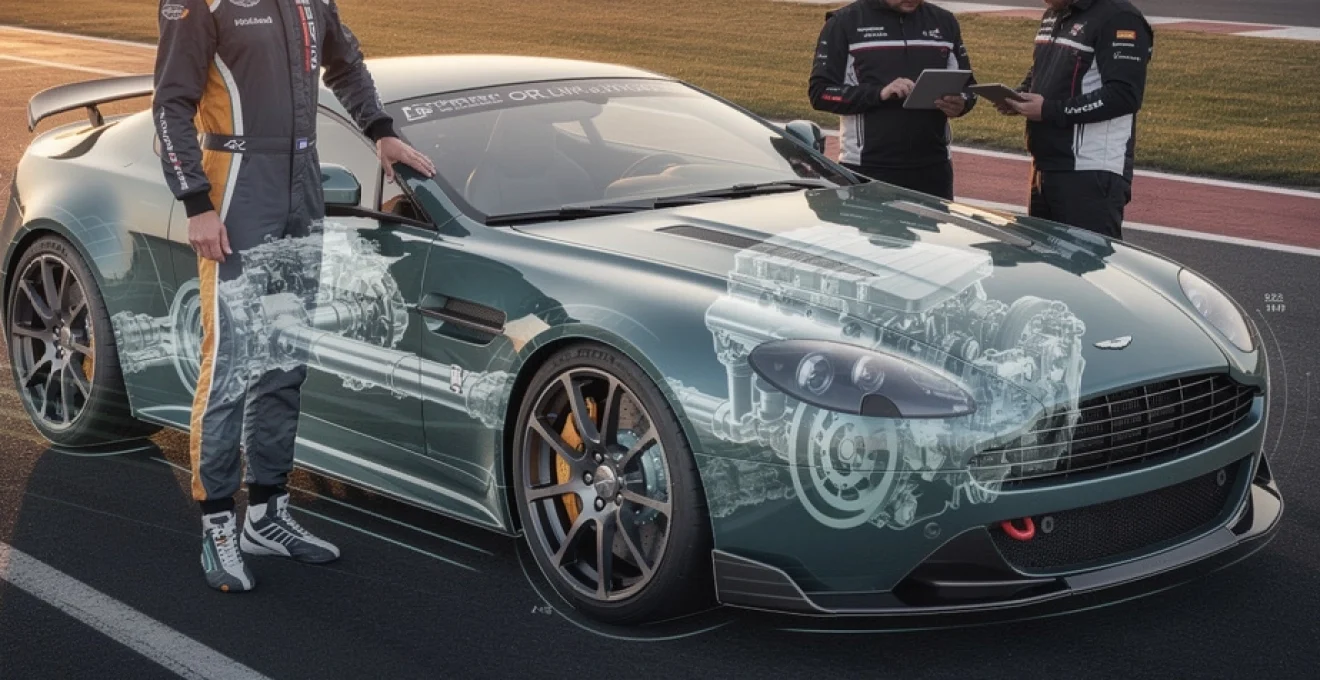
The Aston Martin V8 Vantage N430 represents a fascinating moment in automotive history—a bridge between analogue driving purity and the relentless march toward digital performance enhancement. Launched as a limited-edition model celebrating Aston Martin’s connection to the Nürburgring, this variant promised enthusiasts a more focused iteration of the beloved V8 Vantage platform. With 430 horsepower channelled through a naturally aspirated V8 engine, the N430 arrived at a crossroads when turbocharged rivals were redefining performance benchmarks. Yet beneath the marketing messaging and special edition badging lies a more nuanced story about what this model truly offered, and whether it represented genuine advancement or merely clever packaging of existing components.
Understanding the N430’s position within Aston Martin’s lineup requires examining not just its specification sheet, but the philosophy underpinning its development. This wasn’t a revolutionary reimagining of the Vantage formula—instead, it crystallised a decade of incremental refinement into a package that celebrated traditional sports car values at a time when the industry was pivoting decisively toward forced induction and electronic driver aids.
N430 heritage: evolution from the standard V8 vantage platform
The V8 Vantage N430 arrived in 2014, marking the second time Aston Martin had used the ‘N’ nomenclature to denote a Nürburgring-inspired variant. The original N400, introduced in 2007, featured genuine mechanical upgrades including a bespoke version of the 4.3-litre V8 with an additional 20 horsepower, purpose-developed dampers, upgraded springs, and a recalibrated rear anti-roll bar. These modifications delivered tangible performance improvements that justified the model’s premium positioning. The N430, however, took a markedly different approach—one that prioritised visual distinction over mechanical innovation.
Rather than engineering new performance hardware, Aston Martin essentially rebadged the existing Vantage S specification with its optional sports suspension package. The 4.7-litre quad-cam, dry-sump V8 engine came directly from the Vantage S parts bin, delivering identical power and torque figures. The suspension components mirrored those available on the standard car when equipped with the sports setup. This meant buyers were essentially purchasing a cosmetically enhanced Vantage S at a slightly reduced price point—£89,995 compared to the Vantage S’s £95,000 asking price. The £5,000 saving represented an interesting value proposition, particularly when you considered the exclusive paint schemes and interior appointments included in the N430 package.
By 2014, the Vantage platform had been on sale for nearly a decade, having launched in 2005. This longevity worked both for and against the N430. On one hand, Aston Martin had refined the design to near perfection, eliminating the quality concerns and minor mechanical niggles that plagued early production examples. The manufacturing processes had matured, suppliers had optimised component quality, and the engineering team understood every nuance of the platform’s behaviour. Conversely, the fundamental architecture remained rooted in mid-2000s thinking, lacking the sophisticated electronic systems, lightweight materials, and aerodynamic efficiency characterising contemporary rivals from Porsche, BMW, and Mercedes-AMG.
The N430 represented a culmination of evolutionary development rather than revolutionary advancement—a philosophy that resonated with traditionalists but frustrated those seeking cutting-edge technology.
Powertrain architecture and performance specifications
At the heart of the N430 experience sat Aston Martin’s all-alloy quad overhead cam 4.7-litre V8 engine—a powerplant that defined the brand’s naturally aspirated performance philosophy during this era. This engine represented the evolution of the original 4.3-litre unit, expanded to 4,735cc to extract additional torque and power without resorting to forced induction. The engineering approach favoured traditional displacement increases over turbocharging, maintaining throttle response immediacy and linear power delivery that turbocharged alternatives often struggled to replicate.
4.7-litre V8 engine tuning and power output
In N430 guise, that 4.7-litre V8 was rated at 430bhp and 361lb ft, modest gains over the standard V8 Vantage but aligned with the Vantage S tune. Aston Martin achieved this output not through radical internal changes, but by optimising intake and exhaust flow, recalibrating the ECU, and taking advantage of the larger displacement introduced earlier in the model’s lifecycle. The result was an engine that felt eager to rev, with a progressive surge of performance that built cleanly from the mid-range to a raucous top-end. Rather than offering a sudden turbocharged hit, the N430 delivered its power like a rising tide, giving you ample opportunity to enjoy the soundtrack and throttle precision. For drivers who value a natural, linear response over outright numbers, this tuning philosophy remains a major part of the N430’s appeal.
Compared to contemporary turbocharged rivals such as the BMW M4 and later Mercedes-AMG C63 models, the N430’s peak figures might look underwhelming on paper. However, out on the road, the immediacy of the naturally aspirated powertrain, combined with its long gearing, meant that third gear covered an enormous spread of speeds. This allowed you to lean on the engine’s character rather than constantly chasing the right gear. The trade-off, of course, was that the N430’s 0–62mph time of around 4.6 seconds placed it half a second behind some of its rivals, particularly when specified with the manual gearbox. Yet for many enthusiasts, that slight deficit in objective pace was more than compensated by the subjective enjoyment delivered every time the needle swept past 6,000rpm.
Sportshift II automated manual transmission calibration
While purists often gravitated toward the six-speed manual, a significant part of the N430’s technical story lies in the optional Sportshift II automated manual transmission. This system was not a conventional torque-converter automatic, but rather a single-clutch automated manual derived from a traditional gearbox and actuated by hydraulics and software. In the N430, Aston Martin used a shorter final drive on Sportshift-equipped cars, which helped sharpen in-gear acceleration and partially offset the long ratios that blunted the manual car’s sprint figures. For a car built on a relatively old platform, this transmission represented Aston’s attempt to keep the V8 Vantage competitive in an era increasingly dominated by dual-clutch gearboxes.
From behind the wheel, Sportshift II required a certain level of mechanical sympathy and driver involvement to get the best from it. In automatic mode around town, shifts could feel hesitant and occasionally clunky, reminding you that this was still a single-clutch unit. However, once you adopted a more committed driving style—lifting slightly on upshifts and using the paddles proactively—the gearbox responded with faster, more assertive changes. The calibration in N430 form prioritised engagement over seamless refinement, which suited the car’s analogue, motorsport-inspired character. If you approached Sportshift II expecting the glass-smooth behaviour of a modern dual-clutch system, you might be disappointed—but treat it as a race-bred tool and it made much more sense.
Acceleration metrics and top speed capabilities
Officially, the Aston Martin V8 Vantage N430 recorded a 0–62mph time of approximately 4.6 seconds with the Sportshift II transmission, and marginally slower with the manual gearbox. Top speed was quoted at 190mph, placing it squarely in traditional GT territory rather than at the bleeding edge of contemporary supercar performance. What these numbers don’t fully convey is how the N430 delivered its acceleration in the real world, particularly on challenging back roads where traction, gearing, and driver confidence matter more than headline figures. The car’s long-legged ratios meant that second and third gears stretched impressively far, allowing you to exploit the engine’s broad powerband without constantly working the shifter.
In-gear acceleration was where the N430 felt most at home, especially from 40 to 120mph—the kind of speeds you might realistically see on fast A-roads or autobahns. Thanks to the naturally aspirated V8’s crisp throttle response, you could precisely meter out power on corner exit, building speed in a way that always felt transparent and predictable. Was it as explosively fast as a turbocharged Porsche 911 Carrera S of the same era? Not quite. But the N430’s performance envelope was still more than adequate for spirited driving, and the car’s analog character meant that you always felt a direct connection to how quickly you were travelling, rather than simply being slingshotted forward by boost and electronics.
Engine sound characteristics and active exhaust system
Ask many owners why they chose an Aston Martin V8 Vantage N430 over its rivals, and the conversation often turns quickly to sound. The 4.7-litre V8 was renowned for its operatic soundtrack, combining a deep-chested burble at low revs with a hard-edged, almost race-car-like howl as it approached the redline. In N430 guise, this character was amplified by an active exhaust system that altered its behaviour depending on throttle position and drive mode. At gentle speeds the system kept things relatively discreet, but once you pushed the pedal deeper, valves opened to unleash a far more aggressive, metallic timbre.
This dual personality made the N430 surprisingly liveable on long journeys, while still delivering the theatre buyers expected from an Aston Martin sports car. The exhaust note had layers: a rich bass at idle, an increasingly angry snarl through the mid-range, and a raw, almost thrash-metal wail at higher revs. It was the kind of soundscape that encouraged you to chase the upper third of the rev counter, even when you didn’t need to. In a world where many performance cars were beginning to rely on synthesised cabin audio and artificial enhancement, the N430’s organically generated soundtrack felt refreshingly authentic. You weren’t listening to a sound designer’s interpretation of performance—you were hearing the engine’s mechanical heart, unfiltered.
Chassis dynamics and suspension configuration
If the powertrain gave the Aston Martin V8 Vantage N430 its character, the chassis gave it credibility. Rather than reinventing the wheel, Aston Martin borrowed heavily from the Vantage S’s sports suspension package, effectively turning the N430 into a greatest-hits compilation of the platform’s best dynamic traits. The aluminium structure, double-wishbone suspension, and carefully tuned damping combined to deliver a driving experience that straddled the line between GT comfort and track-ready poise. On a flowing B-road, the N430 felt planted yet communicative, offering the kind of feedback that made you want to keep driving long after your passengers had suggested a coffee stop.
Of course, this balance came with compromises. By modern standards, the N430 did display some body roll and a degree of chassis movement that more clinically engineered rivals had engineered out. But this was also part of its appeal. Instead of isolating you from what the tyres were doing, the car transmitted subtle cues through the seat and steering wheel, helping you build confidence as you explored its limits. In many ways, the N430’s chassis was like a well-worn leather jacket: not the sharpest or newest item in your wardrobe, but the one that fitted you best and told the best stories.
Bilstein damper setup and spring rate adjustments
The N430’s suspension featured Bilstein monotube dampers and unique spring rates that matched the Vantage S’s sportier calibration. This setup was firmer than the standard V8 Vantage, but crucially, it stopped short of being punitive on real-world roads. Bilstein’s valving provided strong body control over larger undulations, yet retained enough compliance to absorb smaller imperfections without constantly jostling occupants. On typical European B-roads, the car settled into a rhythm that rewarded smooth, flowing inputs rather than aggressive, sudden steering or braking corrections.
In practical terms, this meant you could drive the N430 hard without feeling like it was trying to shake itself apart on every bump or expansion joint. The springs and dampers worked together to keep the body tied down during cornering, reducing pitch and dive under braking and acceleration. However, Aston Martin deliberately avoided the ultra-stiff, track-biased approach seen in some special-edition rivals, maintaining the grand touring DNA that has long defined the brand. If you were cross-shopping the N430 against more hardcore offerings, this might seem like a compromise—but for many buyers, it made the car far more usable as a daily driver and long-distance companion.
Anti-roll bar specifications and cornering stability
Complementing the Bilstein damper setup, the N430 utilised anti-roll bars tuned in line with the Vantage S’s more focused configuration. The front and rear bars were specified to reduce body roll while preserving a natural, progressive transition at the limit. This tuning philosophy meant that the car did not feel artificially flat in corners; instead, there was a subtle degree of lean that communicated load transfer and grip levels. For keen drivers, this feedback was invaluable, particularly on unfamiliar roads where you rely on the car’s reactions to gauge how much speed you can safely carry.
From a stability standpoint, the anti-roll bar setup helped the N430 remain poised during rapid direction changes, such as those encountered on tight, technical sections or during quick lane changes at motorway speeds. Understeer and oversteer characteristics were generally benign, with the chassis tending toward mild understeer at the limit unless you deliberately provoked the rear with throttle. This balance made the car approachable for intermediate drivers while still offering enough adjustability for experienced enthusiasts who wanted to play with weight transfer and throttle steering. In essence, the anti-roll bars acted like the conductor of an orchestra, ensuring that springs, dampers, and tyres all worked in harmony rather than competing for attention.
Limited-slip differential integration and torque distribution
Power in the N430 was sent exclusively to the rear wheels via a mechanical limited-slip differential, a configuration that remained refreshingly old-school at a time when many rivals were embracing electronically controlled torque vectoring. The LSD’s primary job was to manage torque distribution between the rear wheels under acceleration, improving traction when exiting corners and on low-grip surfaces. In practice, this meant the inside rear wheel was less likely to spin away power, allowing you to deploy the V8’s 361lb ft more effectively and cleanly.
Unlike the sophisticated, multi-mode electronic differentials found on cars such as the Jaguar F-Type R, the N430’s mechanical unit delivered a more consistent, predictable behaviour. When you applied throttle mid-corner, you could feel the diff progressively locking up, subtly nudging the car into a neutral or mildly oversteering attitude depending on your inputs. This made the driving experience more transparent: you knew that any slide was the result of your right foot and steering angle, not a software engineer’s algorithm. For drivers who value learning and mastering a car’s dynamics over simply going as fast as possible, this level of honesty is a key part of the N430’s lasting charm.
Steering rack ratio and driver feedback enhancement
Steering feel is often the defining factor in whether a sports car feels truly special, and the Aston Martin V8 Vantage N430 largely delivered in this department. The car employed a hydraulically assisted steering rack with a relatively quick ratio, offering 2.7 turns lock-to-lock in standard Vantage form and a similarly direct feel in the N430. This setup provided a linear, weighty response that many enthusiasts preferred over the electrically assisted systems rapidly becoming the industry norm. On centre, the steering was stable and reassuring; as you wound on lock, it built weight consistently, helping you judge front-end grip with confidence.
That said, the system wasn’t perfect. Some testers reported a slight judder or kickback at very low speeds during rapid steering inputs—a quirk likely tied to the geometry and assistance characteristics rather than a fundamental flaw. Once moving at typical road speeds, however, the rack came into its own, translating camber changes and surface textures into subtle movements at your fingertips. Compared to many rivals whose steering felt numb or over-filtered, the N430’s helm offered an analogue clarity that suited the rest of the package. If you enjoy feeling like you are physically connected to the front wheels rather than issuing remote commands, this steering system remains one of the car’s strongest assets.
Aerodynamic package and carbon fibre components
Although the Aston Martin V8 Vantage N430 did not receive an aggressive, track-focused aero package akin to modern GT3-style specials, it still benefitted from a considered approach to airflow management. The bodywork, fundamentally unchanged from the standard Vantage, was enhanced with subtle elements designed to improve stability and cooling rather than chase headline downforce numbers. This made sense given the car’s role as a road-biased sports car rather than a dedicated circuit weapon. Carbon fibre components, such as front splitters, rear diffusers, and various trim pieces, served a dual purpose: shaving small amounts of weight while visually underlining the N430’s performance intent.
Visually, the N430’s aerodynamic cues were modest but effective. Two-tone paint schemes, contrasting roof and mirror caps, and optional carbon fibre exterior packs helped distinguish it from more conventional Vantage models. Yet the overall silhouette remained unmistakably Aston Martin—long bonnet, short rear deck, and muscular haunches over the rear wheels. This was not a car trying to look like a race car with oversized wings and vents; instead, it refined an already timeless shape for slightly improved function and a stronger sense of occasion. For many buyers, this balance of subtlety and purpose was a major part of the N430’s allure.
Front splitter design and downforce generation
The front splitter on the N430 was designed to be more than just a visual flourish. Extending slightly further than the standard Vantage item and often finished in contrasting dark or carbon-effect materials, it helped manage airflow beneath the car at higher speeds. By reducing the amount of air flowing under the nose and directing more around the sides, the splitter contributed to a small but meaningful increase in front-end stability. At motorway and autobahn velocities, this translated into a more planted feel and reduced tendency for the front axle to feel light or nervous.
From a technical standpoint, you shouldn’t expect GT-level downforce figures—Aston Martin’s priorities here were stability and balance rather than outright front grip. However, the splitter did help fine-tune the car’s aero balance, ensuring that the front end remained proportionally supported relative to the natural rear-biased weight distribution. If you regularly drive on fast, open roads, you’d likely appreciate how the car seemed to hunker down as speeds rose, rather than floating or wandering in crosswinds. It’s a subtle change, but like many aspects of the N430, it adds up to a more confidence-inspiring driving experience.
Rear diffuser architecture and airflow management
At the rear, the N430 featured a diffuser-style lower bumper element that helped tidy up airflow as it left the car. While not as aggressively sculpted as those on full-blown track cars, this diffuser played a role in reducing turbulence and drag behind the vehicle. By managing how the high-speed airflow under the car rejoined the slower-moving air behind it, the diffuser contributed to both stability and efficiency—albeit in incremental rather than transformative fashion. Think of it as the finishing touch on a well-tailored suit rather than a radical redesign.
In dynamic terms, the rear aero treatment worked in concert with the front splitter to maintain a neutral high-speed balance. When you were travelling at 130mph or more—on a circuit or unrestricted road—it helped the car feel secure under heavy braking and during rapid lane changes. You won’t find dramatic marketing claims about “X kilograms of additional downforce” in the N430’s brochure, but in practice, the aero package nudged the Vantage platform toward greater composure. This kind of low-drama stability is particularly valuable on long journeys or during spirited driving, where a twitchy or unsettled rear end can quickly erode driver confidence.
Carbon fibre bonnet vents and heat extraction
One of the more visually striking elements on some N430 specifications was the use of carbon fibre bonnet vents. These weren’t purely for show; they served a functional role in managing under-bonnet temperatures by allowing hot air to escape more efficiently. With a naturally aspirated V8 generating significant heat during sustained high-load driving—think repeated high-speed runs or track-day sessions—improved thermal management can enhance durability and maintain more consistent performance. The vents also helped reduce under-bonnet air pressure, which can have a marginal positive effect on front-end lift at higher speeds.
From a materials perspective, the use of carbon fibre for these components shaved a small amount of weight from the car’s nose, aiding weight distribution and steering response, even if only marginally. Visually, the exposed weave added a motorsport-inspired flavour that aligned with the N430’s Nürburgring-themed branding. For owners, these details functioned like the subtle cues on a mechanical watch—the kind of touches that only enthusiasts might notice, but which collectively enhance the perception of engineering depth and attention to detail. If you value both form and function, the bonnet vents offered a neat intersection of the two.
Braking system and lightweight wheel configuration
Bringing a 430bhp, front-engined sports car to a halt repeatedly and reliably is just as important as how quickly it accelerates, and the N430’s braking system reflected this reality. Aston Martin equipped the car with large ventilated discs and multi-piston calipers, designed to withstand enthusiastic road use and occasional track work. While not as exotic as carbon-ceramic setups found on some contemporary rivals, the steel brakes offered a more progressive pedal feel and lower replacement costs—an important consideration for owners who planned to use their V8 Vantage N430 regularly rather than treating it solely as a garage queen.
Complementing the braking hardware were lightweight forged alloy wheels that contributed to a 20kg overall weight saving versus standard items. Reducing unsprung mass at each corner improved both ride quality and handling response, allowing the suspension to react more quickly to surface changes. Combined with carefully chosen tyre fitment, this wheel and brake package gave the N430 the stopping power and agility to match its performance credentials. For anyone considering an N430 on the used market today, inspecting brake condition and wheel integrity should be a priority, as these components play a critical role in both safety and driving enjoyment.
Ventilated disc dimensions and material composition
The N430’s front brakes featured large, ventilated discs clamped by multi-piston calipers, while the rear axle used slightly smaller ventilated rotors with simpler caliper designs. Though exact dimensions varied slightly depending on market and specification, the hardware was broadly in line with the Vantage S’s performance-focused setup. The discs themselves were typically cast from high-carbon steel, a material choice that balanced heat resistance, durability, and cost. Internal ventilation vanes helped dissipate heat more effectively during repeated heavy braking, reducing the risk of fade and maintaining consistent pedal feel.
In terms of on-road behaviour, the braking system provided strong, confidence-inspiring performance with a firm and communicative pedal. Initial bite was measured rather than aggressive, which some drivers preferred for smoother modulation in daily use. As you pressed harder, the system responded linearly, giving you a clear sense of how much stopping power remained in reserve. For track use, upgrading pads and fluid could unlock further capability, but for most owners, the standard setup struck a sensible balance between performance and day-to-day usability. Compared with some rivals that offered more dramatic braking responses but less feel, the N430’s system felt like a well-judged compromise.
10-spoke lightweight alloy wheel specification
One of the N430’s tangible mechanical advantages over the standard V8 Vantage lay in its forged lightweight alloy wheels. Typically presented in a distinctive 10-spoke design, these wheels were not just a styling flourish—they were a key contributor to the car’s 20kg weight reduction. Forging allowed Aston Martin to use less material while maintaining structural rigidity, resulting in lower unsprung mass. This is crucial because unsprung weight has a disproportionately large impact on how a car rides and handles; shave a few kilograms from each corner, and the suspension can operate more efficiently.
On the road, the benefits manifested as slightly sharper turn-in, improved ride compliance over sharp-edged bumps, and marginally better traction over rough surfaces. While the differences might not be night-and-day for casual drivers, experienced enthusiasts would likely notice the added crispness in the N430’s responses compared with a standard Vantage on heavier cast wheels. Aesthetically, the 10-spoke design also helped visually differentiate the car, signalling its special-edition status without resorting to gimmicky styling. For buyers today, ensuring that any replacement wheels maintain similar weight characteristics is important if you want to preserve the N430’s carefully tuned dynamics.
Tyre selection: bridgestone potenza fitment strategy
Factory-fit tyres play a significant role in how any sports car feels, and Aston Martin’s decision to equip the V8 Vantage N430 with Bridgestone Potenza rubber was a considered one. The Potenza range is known for its blend of dry grip, progressive breakaway, and acceptable wet-weather performance—attributes that align well with a road-focused performance car. The N430’s staggered tyre setup, with wider rubber at the rear, helped manage the V8’s torque delivery while preserving crisp steering response at the front. Tyre sidewall stiffness, tread pattern, and compound were all chosen to complement the Bilstein dampers and lightweight wheels, creating a cohesive dynamic package.
For owners and prospective buyers, tyre choice remains one of the most impactful variables in how an N430 will feel today. Swapping to a different premium tyre—such as Michelin Pilot Sport or Pirelli P Zero—can subtly alter steering feel, ride comfort, and ultimate grip levels. If you’re considering track days or regularly drive in colder climates, you may even explore dedicated performance or all-season options. However, it’s worth remembering that Aston’s original chassis tuning was built around the Bridgestone Potenza, so using a like-for-like replacement, or at least maintaining similar load ratings and performance characteristics, is advisable if you want to retain the car’s intended balance.
N430 market positioning against contemporary rivals
When it launched, the Aston Martin V8 Vantage N430 found itself in a fiercely competitive landscape populated by some of the most accomplished sports cars of the 2010s. Turbocharged performance, dual-clutch transmissions, and increasingly advanced electronic driver aids were rapidly becoming the norm. Against this backdrop, the N430’s naturally aspirated V8, largely analogue chassis, and modest technical updates might have seemed out of step. Yet Aston Martin cleverly positioned the car not as a numbers-obsessed rival to the latest 0–62mph champions, but as an emotive alternative—an old-school sports car with just enough modern polish to remain viable as a daily or weekend companion.
Price-wise, the N430’s £89,995 list figure undercut the Vantage S it was based on by around £5,000, while bringing the cost into direct competition with a well-specified Porsche 911 Carrera S of the same era. This placed buyers in an interesting dilemma: choose the clinical capability and unimpeachable performance credentials of a 911, or opt for the more characterful, less technologically advanced but arguably more charismatic Aston Martin. For those who prioritised brand heritage, design, and emotional appeal over outright lap times, the N430 offered a compelling proposition.
Porsche 911 carrera S performance comparison
Any deep dive into the Aston Martin V8 Vantage N430’s market context has to address the Porsche 911 Carrera S, perhaps its most direct and formidable rival. At the time, the 991-generation Carrera S delivered similar or better straight-line performance, superior braking, and more advanced chassis technologies, including active anti-roll systems and optional rear-wheel steering in later iterations. Its dual-clutch PDK gearbox also offered lightning-fast shifts and greater efficiency compared with both the N430’s manual and Sportshift II options. On a track or even a challenging mountain road, the 911’s objective performance edge was difficult to ignore.
Yet numbers don’t tell the whole story. Many drivers found the N430’s naturally aspirated V8 more characterful than the 911’s flat-six, particularly as turbocharging became more prevalent in Porsche’s lineup. The Aston’s front-engined, rear-drive layout also delivered a different kind of balance and driving experience, one that some enthusiasts preferred to the 911’s rear-engined dynamics. In cabin terms, the Porsche offered more modern ergonomics and infotainment, but the Aston countered with a sense of occasion and craftsmanship that felt more bespoke. Ultimately, the choice between the two often came down to whether you valued clinical excellence or romantic, slightly imperfect charm.
Jaguar F-Type R dynamic benchmarking analysis
Another key rival, especially from a character and emotional standpoint, was the Jaguar F-Type—particularly the V8-powered versions such as the F-Type R. Like the N430, the F-Type embraced the idea of a loud, charismatic engine and rear-driven layout, but it did so with far more modern underpinnings. Supercharged V8 power, adaptive dampers, and sophisticated traction and stability control systems gave the Jaguar a more contemporary dynamic repertoire. In outright acceleration, the F-Type R comfortably outgunned the N430, with all-wheel-drive variants later adding even greater usability in poor conditions.
However, when it came to feel and feedback, the Aston Martin often held the upper hand. The N430’s more analogue steering and mechanical limited-slip differential delivered a purer, less mediated connection between driver and road. Some enthusiasts likened the difference to listening to vinyl versus streaming: the Jaguar was undoubtedly more convenient and technologically advanced, but the Aston offered a tactile richness that appealed to those who valued involvement over ease. In interior design, both cars leaned heavily on heritage-inspired cues, but the Vantage’s hand-finished ambience and timeless silhouette arguably aged more gracefully than the more flamboyant F-Type. For buyers cross-shopping the two, test drives would often reveal that the “better” car depended more on personal priorities than spec sheets.
Production numbers and collectability trajectory
As a limited-edition model, the Aston Martin V8 Vantage N430 was never intended to be a high-volume seller. Exact production figures can vary by source, but estimates typically place global output in the low hundreds, split between coupe and roadster body styles and across manual and Sportshift II transmissions. This relative scarcity, combined with the car’s position as one of the last naturally aspirated V8 special editions on the VH platform, has started to influence its collectability trajectory. Enthusiasts increasingly view the N430 as a snapshot of a transitional era before turbocharging and hybridisation became near-universal in the performance car segment.
On the used market, values for well-maintained N430s have tended to hold up better than those of standard V8 Vantage models, particularly for low-mileage, well-documented examples with desirable colour combinations and factory options. Will the N430 ever reach the blue-chip status of limited-run Aston Martin homologation specials or flagship models? Probably not. But as interest grows in analogue-feeling, naturally aspirated sports cars from the 2000s and early 2010s, the N430’s blend of rarity, character, and usable performance positions it as a quietly appealing modern classic. For buyers today, focusing on condition, service history, and originality is likely to pay dividends—both in driving enjoyment and long-term desirability.